Jharkhand’s Crumbling Roads Raise Serious Questions

 an hour ago
Repeated Repairs, Poor Road Conditions and Questions over Public Expenditure Call for an Independent Technical and Financial Audit
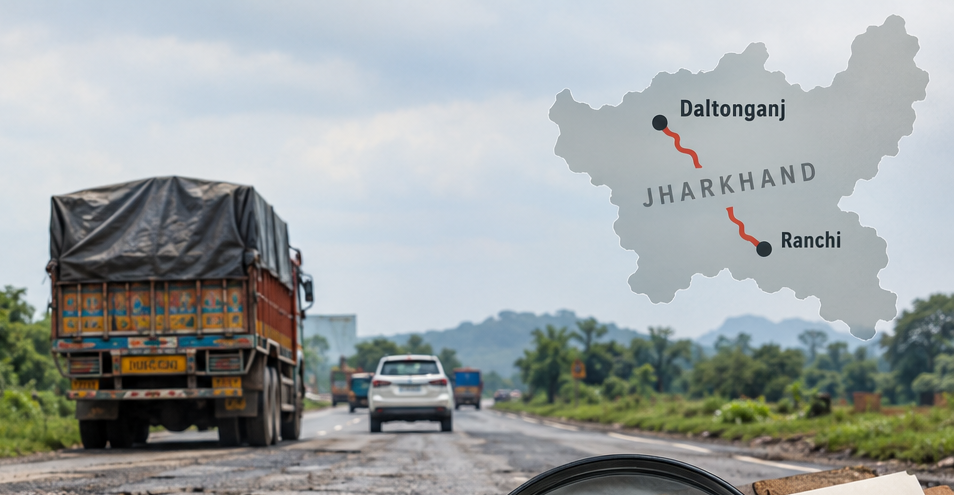
The deteriorating condition of roads in Jharkhand has become a matter of serious public concern, with the Daltonganj–Ranchi route drawing particular attention. Despite the importance of this road for commuters, commercial transport and access to essential services, its reported poor condition has raised questions about road construction standards, maintenance practices and the accountability of agencies responsible for keeping the route motorable.
Road infrastructure is a key component of economic development. It connects people to healthcare, education, markets and employment opportunities. When an important route remains in poor condition or deteriorates soon after repair, the consequences extend beyond inconvenience. Travellers face delays, vehicles incur additional maintenance costs, and road safety becomes a major concern.
The situation calls for a comprehensive assessment of the affected stretches of the Daltonganj–Ranchi route and a transparent review of the construction and repair works undertaken over the years.
Repeated Repairs, Yet No Lasting Solution?
One of the central questions concerning road infrastructure is why certain stretches require repeated repairs without delivering durable results. If public money is being spent on construction, resurfacing and maintenance, the public has a legitimate right to know whether the work meets prescribed technical standards.
Were the required construction materials used in the specified quantities? Was the thickness of the road surface maintained according to the approved design? Were quality tests conducted at the appropriate stages? Did the contractors fulfil their contractual obligations? And were defects identified during the stipulated maintenance or defect-liability period addressed promptly?
These questions should be answered through documentary evidence and independent technical assessment rather than assumptions or political allegations. The concerned authorities must also examine whether inadequate drainage, excessive traffic loads, poor construction practices or delayed maintenance have contributed to the deterioration of the road.
NHAI and Other Road Agencies Must Explain Their Responsibilities
The respective responsibilities of the National Highways Authority of India (NHAI), the Jharkhand Road Construction Department and any other implementing agencies must be clearly established for each affected stretch.
A road-wise review should cover the projects sanctioned in previous years, tender documents, work orders, estimated costs, contractor details, completion certificates, quality-control reports and payments released against completed work.
Where a particular stretch has undergone repeated repairs, the authorities should establish whether the expenditure was justified and whether the work delivered the intended results.
An independent technical team should inspect the affected stretches and compare the actual condition of the road with the approved specifications. Where necessary, laboratory testing of road materials and an examination of measurement books and payment records should form part of the investigation.
If evidence of substandard construction, false measurement, irregular payments or misuse of public funds emerges, the matter should be referred to the appropriate vigilance or anti-corruption authorities for further action in accordance with the law.
Allegations of Irregularities Require a Transparent Investigation
Concerns about possible irregularities in road construction and maintenance cannot be dismissed without examination. At the same time, allegations of corruption or a scam should not be treated as established facts without supporting evidence.
The appropriate response is an impartial inquiry that determines whether public funds were utilised in accordance with approved estimates, contractual obligations and technical standards.
The findings should be made public, subject to applicable legal requirements. Where wrongdoing is established, responsibility must be fixed and appropriate legal and departmental action initiated.
Transparency in public works is essential not only to protect government revenue but also to restore public confidence in infrastructure development.
Road Safety Cannot Be Compromised
Damaged road surfaces, potholes and inadequate drainage can create hazardous driving conditions, particularly during adverse weather and periods of reduced visibility. Sudden braking and evasive manoeuvres may increase the risk of accidents, while poor road conditions can delay ambulances and other emergency services.
The administration and the responsible road agencies should immediately identify hazardous locations and undertake essential temporary repairs wherever necessary. Proper warning signs, safety measures and drainage arrangements should be ensured until permanent repairs are completed.
However, temporary measures must not become a substitute for a durable solution. The authorities should publish a clear repair schedule, identify the agency responsible for each stretch and provide periodic updates on the progress of the work.
Five Demands for Accountability
To address the concerns surrounding the Daltonganj–Ranchi route and improve road infrastructure management across Jharkhand, the following measures deserve urgent consideration:
Independent inquiry: Conduct a comprehensive review of construction, repair and maintenance works undertaken on the affected stretches over the past several years.
Financial audit: Examine sanctioned funds, tender values, work orders, contractor payments and actual work completed.
Technical inspection: Independently test road materials, surface thickness, construction quality, drainage arrangements and compliance with approved specifications.
Fix responsibility: Take appropriate action against officials, contractors or agencies wherever negligence, contractual violations or financial irregularities are established.
Time-bound repairs: Publish a schedule for repairing damaged stretches and disclose the progress of corrective work to the public.
A Wider Challenge for Jharkhand’s Infrastructure
The condition of the Daltonganj–Ranchi route also raises a broader policy question: how effectively are road construction and maintenance funds being translated into reliable public infrastructure?
A systematic, state-wide assessment of vulnerable roads could help identify recurring defects, delayed projects and weaknesses in maintenance arrangements. Publishing project-wise expenditure and quality-inspection findings would strengthen transparency and make it easier for citizens to monitor public works.
The government should also establish a mechanism through which commuters can report damaged roads and track the action taken by the responsible agencies.
(Author, a senior journalist, is RE to TEW Palamu edition.)








[[comment.comment_text]]