VOICE FOR THE VOICELESS

 50 minutes ago
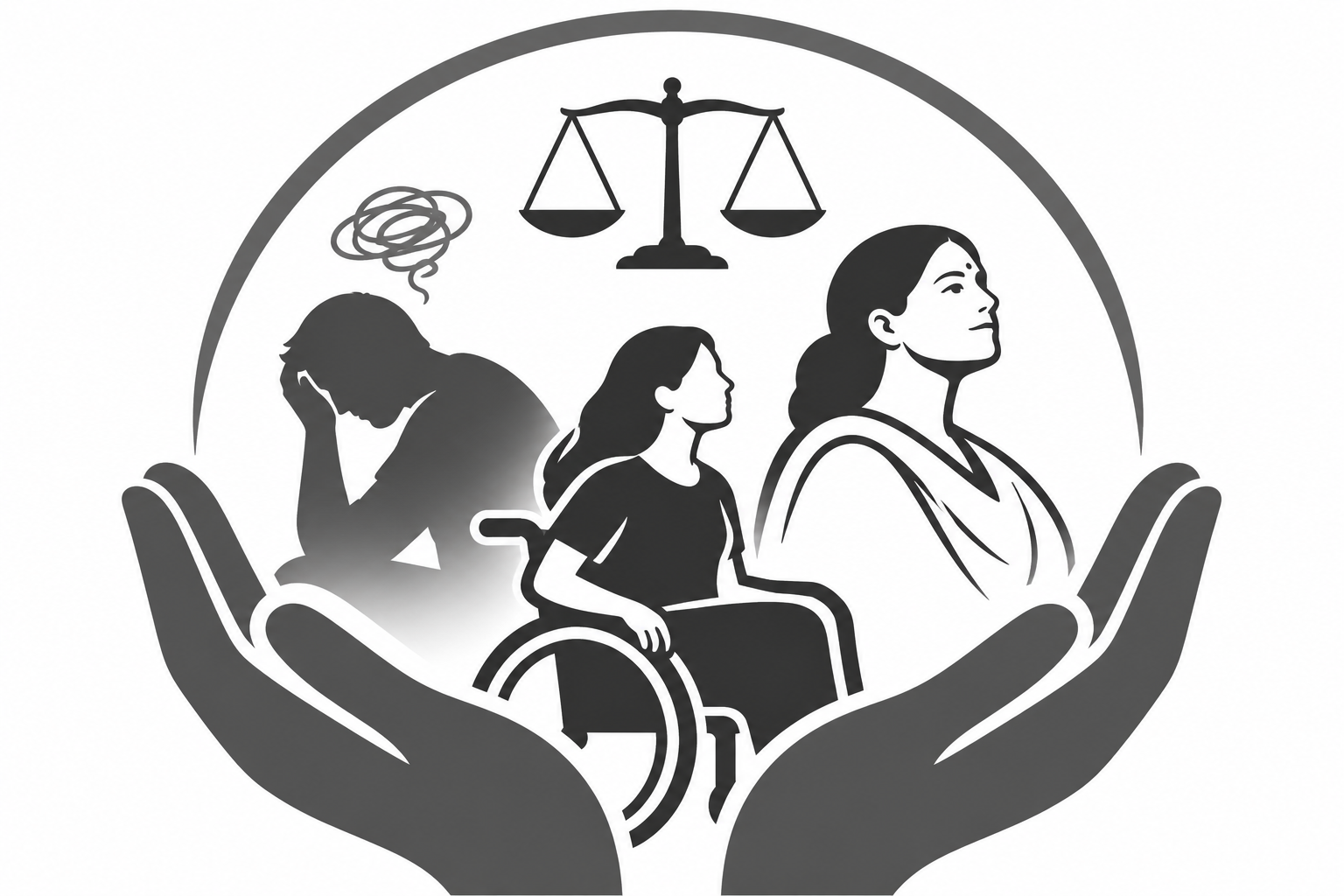
A society is ultimately judged not merely by its economic prosperity, technological advancement or physical infrastructure, but by the protection and dignity it extends to those who are least able to defend themselves. Among the most vulnerable sections of our population are persons with intellectual disabilities, persons living with mental illness and women who, because of disability, dependency, social circumstances or lack of support, remain particularly exposed to abuse, exploitation, violence, neglect and abandonment. Their suffering frequently goes unnoticed, their complaints remain unheard, and their access to justice is often obstructed by circumstances beyond their control.
India has made significant legislative progress in recognising the rights of these vulnerable citizens. The Rights of Persons with Disabilities Act, 2016, provides safeguards against abuse, violence and exploitation, recognises the rights of women and children with disabilities, and addresses community living, reproductive rights and access to justice. The Mental Healthcare Act, 2017, guarantees the right to live with dignity and protects persons with mental illness against cruel, inhuman and degrading treatment, including physical, verbal, emotional and sexual abuse. Similarly, the Protection of Women from Domestic Violence Act, 2005, establishes a framework for protecting women against different forms of domestic violence through Protection Officers, service providers, medical facilities and judicial intervention.
Yet, legislation alone cannot guarantee safety. The real challenge lies in translating statutory rights into effective protection at the grassroots level. For many vulnerable individuals, particularly women with intellectual or psychosocial disabilities, the distance between having a legal right and being able to exercise it remains considerable. This gap demands urgent and coordinated national intervention.
The Multiple Vulnerabilities of Women and Persons with Disabilities
Women with intellectual disabilities, psychosocial disabilities or mental illness frequently experience overlapping forms of discrimination. They may find it difficult to recognise exploitation, communicate abuse, approach the police independently or access medical and legal assistance. In many instances, they depend upon family members, caregivers or institutional authorities for their basic needs. Tragically, the very individuals entrusted with their protection may sometimes become sources of abuse.
The risks include physical and sexual violence, domestic abuse, economic exploitation, unlawful appropriation of property and inheritance, forced relationships, trafficking, abandonment, deprivation of food and healthcare, unlawful confinement, institutional abuse and denial of reproductive and other legal rights. Misuse of guardianship arrangements and financial dependency can further compound their vulnerability.
A particularly disturbing aspect is that victims may have neither the practical means nor the freedom to report offences committed against them. Fear, social stigma, communication difficulties and dependence on alleged perpetrators can silence even the most serious complaints. In such circumstances, the State cannot remain a passive observer. Its protective responsibility must become more active, accessible and accountable.
The Case for a National Mission
There is a compelling case for establishing a dedicated National Mission for the Protection, Safety and Dignity of Vulnerable Persons, with special emphasis on persons with intellectual disabilities, persons with mental illness and vulnerable women.
The proposed Mission should function through coordinated action involving the Ministry of Social Justice and Empowerment, the Department of Empowerment of Persons with Disabilities, the Ministry of Health and Family Welfare, the Ministry of Women and Child Development, the Ministry of Home Affairs, State Governments, police authorities, legal services institutions and credible civil-society organisations.
Rather than creating an isolated administrative structure, the Mission should integrate existing schemes, legal protections and institutional resources into a comprehensive system of identification, prevention, intervention, rehabilitation and accountability.
A District-Level Protection Framework
The foundation of the proposed Mission should be a district-level mechanism capable of identifying and responding to cases involving serious risks of abuse, neglect, exploitation or abandonment. Confidential assessments could identify individuals living alone, without adequate family support, or in circumstances where their safety is seriously compromised. Such assessments must respect privacy, autonomy and individual rights and must never become instruments of unnecessary surveillance or discrimination.
Every district should have specially trained Vulnerable Persons Protection Officers responsible for coordinating complaints and interventions involving disability, mental illness and gender-based vulnerability. These officers should work closely with the police, healthcare institutions, social-welfare departments, rehabilitation professionals and legal services authorities.
A multidisciplinary district committee could provide institutional oversight. Its membership should include representatives of disability welfare authorities, mental-health services, women’s welfare institutions, police, the District Legal Services Authority, local administration, rehabilitation experts and credible non-governmental organisations. The committee should review difficult cases, facilitate urgent intervention and monitor whether victims receive sustained protection rather than temporary relief.
Accessible Complaints and Rapid Response
A vulnerable person should never have to navigate complicated departmental procedures to obtain protection. The proposed Mission should establish accessible complaint mechanisms through telephone helplines, text messages, online platforms, hospitals, police stations, community workers and local administrative offices.
A nationally integrated, round-the-clock helpline and rapid-response system should enable any concerned individual—including a neighbour, doctor, teacher, social worker, relative or citizen—to report credible cases of serious abuse or abandonment. Complaints should be automatically referred to the appropriate district authority, with a tracking mechanism to ensure that action is taken within prescribed timelines.
Every credible report of serious abuse should trigger a prompt risk assessment. Where an immediate threat exists, the authorities must ensure appropriate protection, medical attention, police intervention and access to legal assistance. The system should also provide for follow-up so that rescued individuals are not returned to unsafe circumstances without a proper assessment.
Specialised Police Training and Accessible Justice
Police officers are often the first point of contact for victims, making their training particularly important. Specialised programmes should equip them to communicate sensitively with persons with intellectual and psychosocial disabilities, recognise indicators of abuse, record statements appropriately, handle sexual-violence complaints, preserve privacy and prevent further trauma.
Disability or mental illness must never become grounds for dismissing a complaint or questioning a person’s entitlement to justice. Accessible legal assistance should be made available to those who cannot independently understand or navigate judicial proceedings. Support persons, interpreters and appropriate communication arrangements should be provided wherever required, while respecting the individual’s autonomy and legal rights.
Allegations of sexual exploitation involving women with disabilities or mental illness require particular sensitivity. Medical examinations, evidence collection, counselling and judicial procedures must protect the dignity of survivors while ensuring impartial and effective investigation.
Safe Accommodation, Community Living and Rehabilitation
Rescue from an abusive environment is only the beginning of protection. The State must ensure that vulnerable individuals have access to safe accommodation, healthcare, counselling, rehabilitation and long-term support.
Indefinite institutionalisation should not become the default response to family neglect or abuse. The Rights of Persons with Disabilities Act, 2016, recognises the right to live in the community and envisages appropriate support for independent living. This principle should guide the development of supported-living arrangements, halfway homes, short-term protective accommodation, supervised community care and family-support services.
Non-governmental organisations with proven experience in disability care, mental-health support, women’s protection and rehabilitation can play a valuable role in delivering these services. Government should actively partner with credible NGOs through transparent accreditation, financial assistance, professional standards and independent monitoring. Their involvement can strengthen outreach, identify hidden cases and provide specialised support that government institutions may not always be equipped to deliver.
At the same time, families providing genuine care should receive counselling, financial assistance and respite support where necessary. Caregiving difficulties arising from poverty, inadequate facilities or social isolation should be addressed through assistance rather than automatically treated as deliberate neglect.
Protecting Property and Financial Interests
Economic exploitation is another serious but frequently overlooked dimension of vulnerability. Persons who depend on others for financial management may be exposed to the unlawful transfer, sale, occupation or misuse of their property and assets. Women with disabilities may be particularly vulnerable to dispossession and denial of inheritance.
The Mission should promote safeguards against such exploitation through independent oversight, accessible legal advice, transparent financial arrangements and appropriate scrutiny of transactions where conflicts of interest arise. Guardianship and supported decision-making arrangements must operate in accordance with applicable law, preserving the individual’s rights, preferences and autonomy to the greatest extent possible.
Independent Inspection and Institutional Accountability
Residential institutions, shelter homes, hospitals and other facilities caring for vulnerable persons should undergo regular and meaningful independent inspections. Residents must have confidential opportunities to report abuse without fear of retaliation. Inspection findings should be documented, and serious violations should attract appropriate legal and administrative consequences.
A national information system should also monitor reported cases of abuse, exploitation, abandonment and deaths among vulnerable persons. Such a database would help identify geographical patterns, institutional shortcomings and gaps in public policy. However, strict safeguards must protect the identity, privacy and personal information of victims. Data collection should serve prevention and accountability, not stigmatise individuals or expose them to further harm.
Institutions and caregivers who deliberately abuse, exploit or abandon persons entrusted to their care must be held accountable under applicable law. Equally important is ensuring that oversight mechanisms distinguish deliberate misconduct from genuine caregiving difficulties.
Moving from Charity to Rights and Dignity
India must move beyond viewing vulnerable persons merely as recipients of charity or welfare. They are citizens with constitutional guarantees and statutory rights. A person with an intellectual disability or mental illness is no less entitled to dignity, autonomy and security. A woman who cannot communicate conventionally is not without a voice, and dependence upon another person does not amount to consent to exploitation.
The intersection of gender and disability requires particular attention. Women with disabilities may experience discrimination both because they are women and because of their disabilities. Their inability to communicate in conventional ways must never be interpreted as an absence of rights, and their vulnerability must never become an excuse for denying their freedom or dignity.
The proposed National Mission should therefore operate within a clear framework of measurable objectives, time-bound implementation and public accountability. Its priorities should include:
A comprehensive national framework for preventing abuse, exploitation, violence and abandonment of vulnerable adults.
District-level multidisciplinary protection mechanisms with designated officers.
Accessible complaint channels and an integrated 24-hour rapid-response system.
Specialised training for police, medical professionals, judicial officers and welfare officials.
Expansion of community-based supported living and safe accommodation.
Strong safeguards against financial and property exploitation.
Effective implementation and monitoring of existing disability, mental-health and women’s-protection laws.
Periodic independent inspection of institutions and residential facilities.
Special protection measures for women with disabilities and women living with mental illness.
Annual public reporting on implementation, outcomes and institutional accountability.
A National CommitmentInternationally, India’s commitment to inclusive development will be judged not only by the opportunities it creates for those who can compete, but also by the protection it extends to those who cannot independently defend their interests. The true measure of a compassionate and progressive society lies in whether its institutions can recognise suffering that remains unseen and respond to voices that are rarely heard.
If even one vulnerable woman is rescued from abuse, one abandoned individual is provided a safe home, one survivor obtains justice, or one person with a disability is enabled to live with dignity rather than fear, the effort will have served a profound national purpose.
I therefore earnestly urge the Union Government to consider launching a nationwide, time-bound and accountable Mission for the Protection, Safety and Dignity of Vulnerable Persons, with the active participation of State Governments, professional institutions and experienced NGOs.
India must send an unequivocal message to every citizen:
No woman is disposable.
No person with a disability is invisible.
No person living with mental illness is without rights.
And no vulnerable citizen should ever be left without protection.
(The author, a former Cabinet Minister and Acting Chief Minister in UP government, is a widely respected political leader and educationist. A life President for The Organisation of Nuclear Disarmament and World Peace, he has extensively traveled to the US, UK, Turkey, Afghanistan, Hong Kong, Italy, Russia, Iran, Iraq,Kuwait and South East Asian countries.)









[[comment.comment_text]]