WHETHER COUNTRIES AGREE FOR TRANSITION AWAY FROM FOSSILFUEL AT CoP31

 2 hours ago
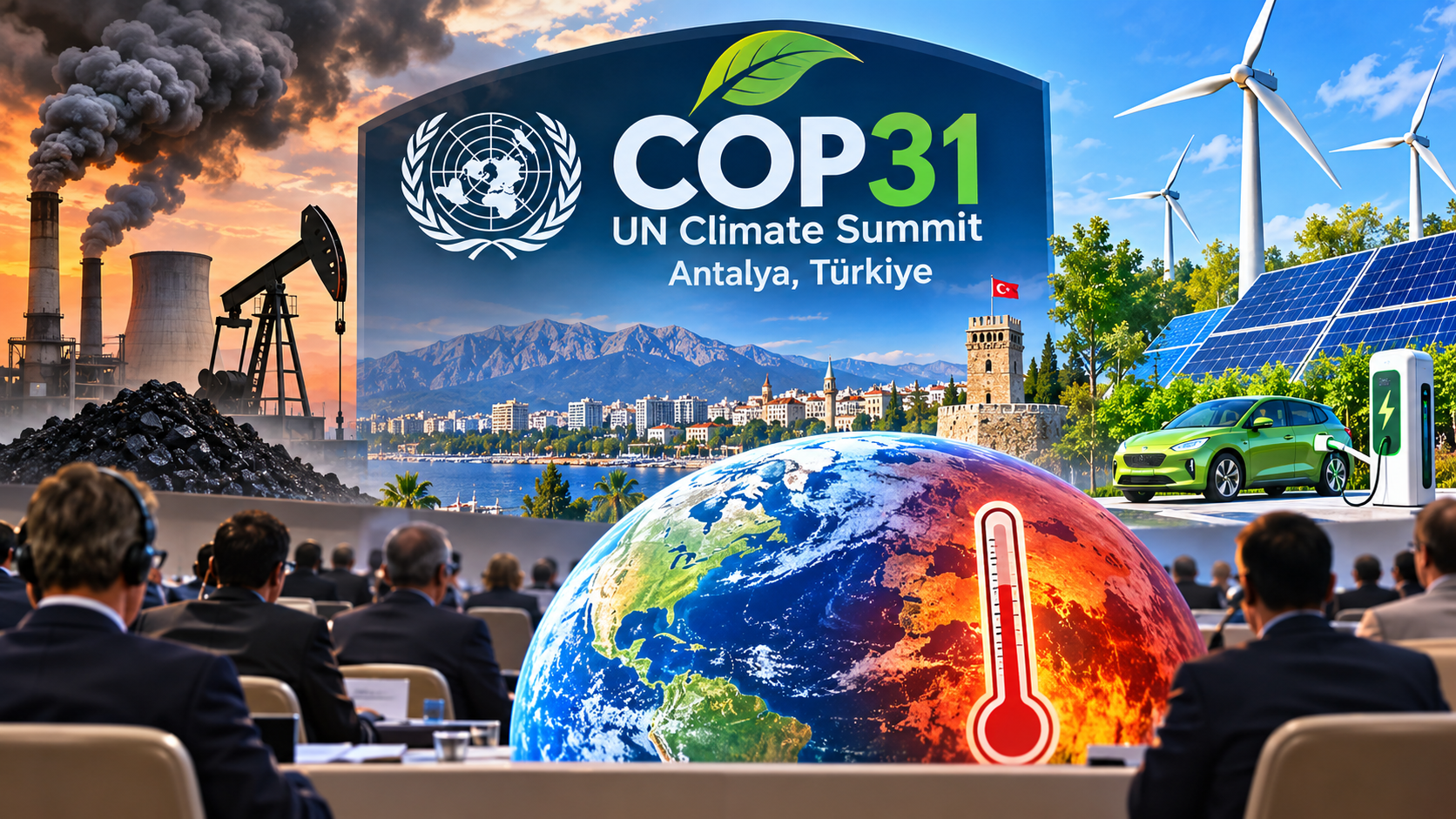
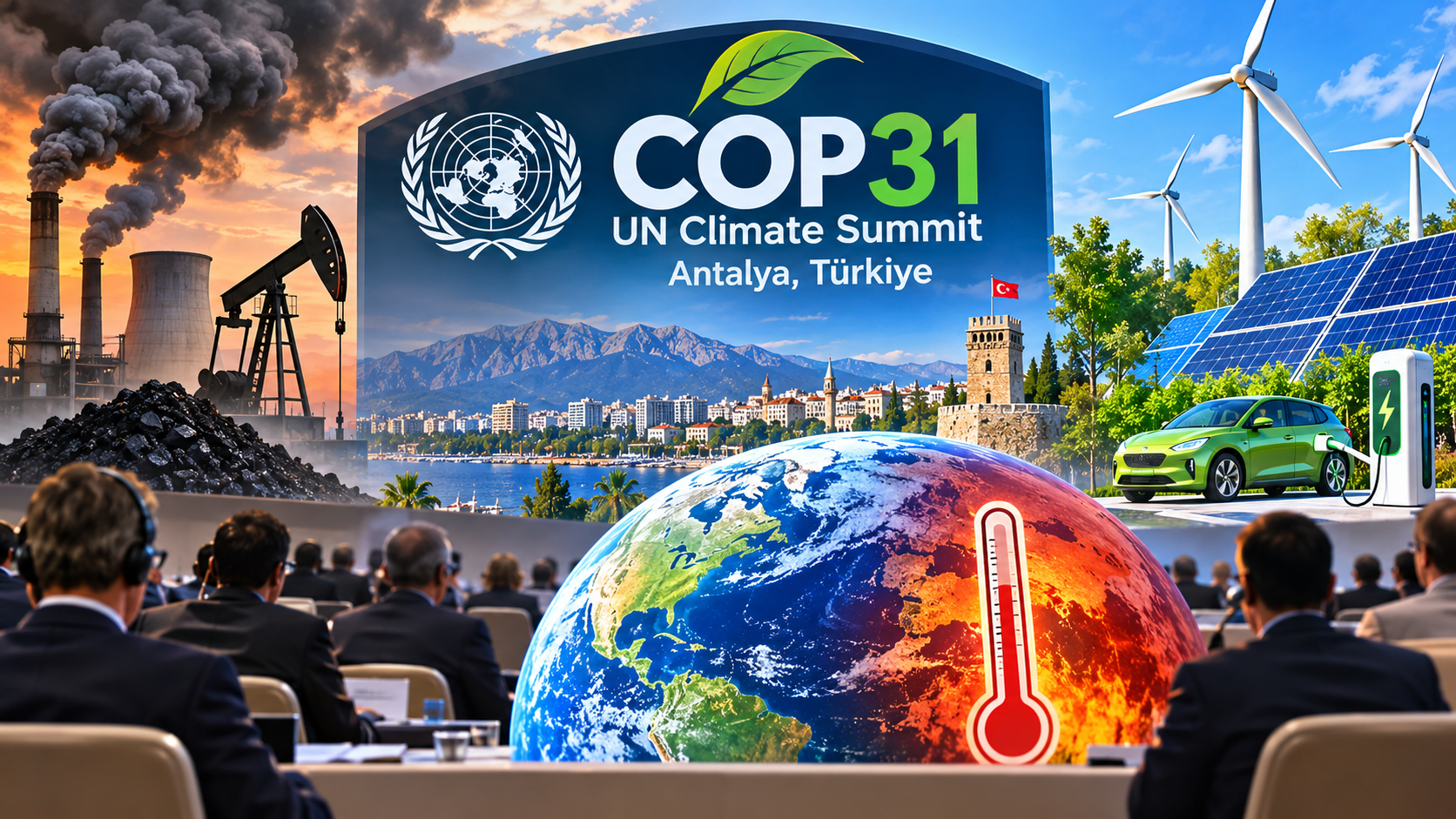
The UN climate summit CoP31 has commenced on 9th November in Turkiye’s Mediterranean city of Antalya. As an annual ritual, talks are to focus on emissions cuts, climate finance, transition away from fossil fuels, as climate impacts are accelerating. The targets set in 2015 Paris climate accord by each country in terms of nationally determined contributions (NDC) have largely remained unfulfilled and governments are under growing pressure to turn NDC pledges into concrete actions and to translate into measurable results. The summit is being held under a theme,’ CoP for future – CoP of Implementation’. Turkiye’s Environment Minister is conference President, while Australian Climate Change and Energy Minister Chris Bowen is leading the negotiations. Presidency’s action agenda prioritizes clean energy transition and electrification, zero waste and methane reduction, climate resilient cities, green industrialization, food security and protection of ocean and sea.
Climate activist Greta Thunberg has called the event a greenwash circus filled with corporate lobbyists. She is attending it for the first time after 2021. The activists are generally disillusioned with annual CoP process, which have not succeeded in bringing out any major breakthroughs in past few years. The fossil-fuel producing nations have been obstructing concrete actions in cutting emissions. No cut is observed in the consumption of coal, oil and gas and 2026 is projected to be warmest year in the recorded history of the planet.
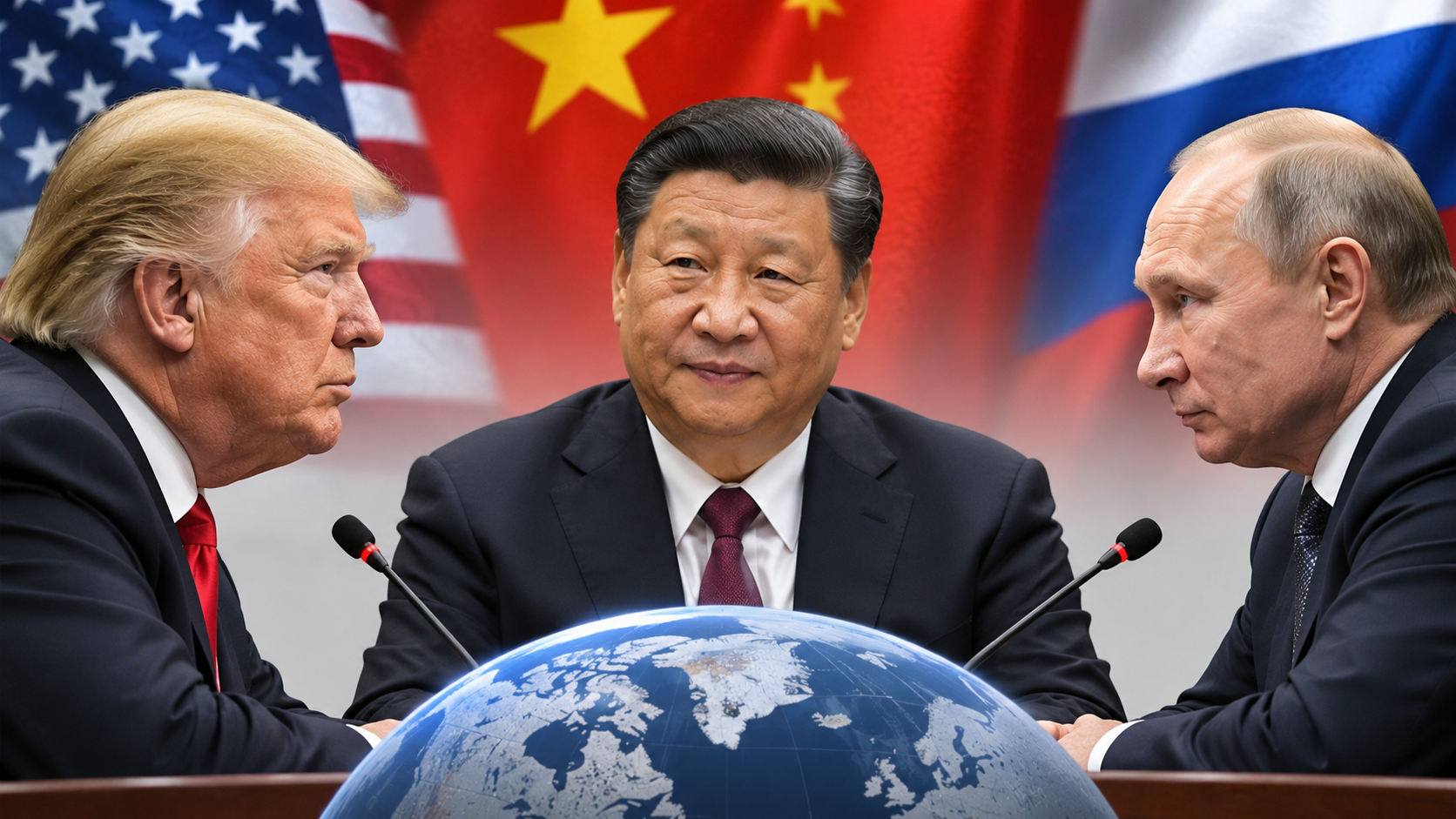
It is two weeks long conference scheduled from 9th to 20th of November and 3rd and 4th day are reserved for the address by heads of states. Barring Brazilian President and European Union Chief, no other heads of state from G7 nations are attending. US has already walked out of the climate accord and other historical emitters of greenhouse gases like Canada, France, Germany, UK, and Japan etc. have done very little to keep the warming of the planet within 1.5 degree Celsius since the industrialization begun. The largest emitter China, continues to dominate the manufacturing and the economic growth and all its efforts to transition to renewable sources of energy has not translated in actually slashing the emissions. China and US still contribute more than 40% in annual global emission, and are squarely responsible for the accelerated warming of the planet fueling all the climatic catastrophes, the humanity is facing. The year 2026 is marked by devastating flood, the deadly heatwaves, droughts, the glacial lake bursts that devastated Nepal and yet another bust that damaged infrastructures in Bhutan, a faster emission cuts and financial support is needed.
Climate campaigners breathed a sigh of relief, when Brazilian President Lula da Silva, who had championed lowering deforestation rates, defeated right wing rival Flavio Bolsonaro in last month election. Last year’s CoP30 was held in Belem, where Lula’s proposal to end the deforestation of tropical forests was shot down. He wanted rich countries to contribute $165 billion to compensate tropical countries pledging to end deforestation. Rich countries responsible for the warming of the planet, could not raise even this small sum to agree to the Brazil’s proposal of TFFF.
This year in CoP31, Turkiye is championing the voluntary initiative to accelerate the electrification of transport, buildings and industry and proposed a target of raising electricity’s share of global energy consumption to 35% by 2035. EU has stressed that the electricity must be generated from renewable sources. This could spark debate, as Turkish proposal is not to cut the consumption of coal, oil and gas. Host country’s proposal to increase electrification in energy share to 35%, would have no meaning as long as electricity is generated from coal.
In CoP26 at Glasgow in 2021, countries had not agreed to phase out fossil fuel, instead they had agreed to phase down. This agreement has remained on paper and no concrete action was taken by any country to bring down the annual consumption of coal, oil and gas. What would be challenging for Turkiye is whether the countries are made to agree to transition away from fossil fuel at speed and scale, resulting in a visible and measurable cut in the emissions?
UN Environment program’s 2026 ‘Emissions gap report’ projects global warming of 2.6 degrees Celsius by the turn of this century, if countries fully implement their climate pledges in response to Paris Climate Accord 2015. The report adds that the developing countries would need $305 billion annually for adaptation by 2025. The developed countries, who are responsible this scenario on planet, are hesitant to pay for the loss and damage. In 2024, a public finance of approximately $30 billion has been generated. The gap is too large; the developed countries must show large heart to raise the fund required for adaptation.
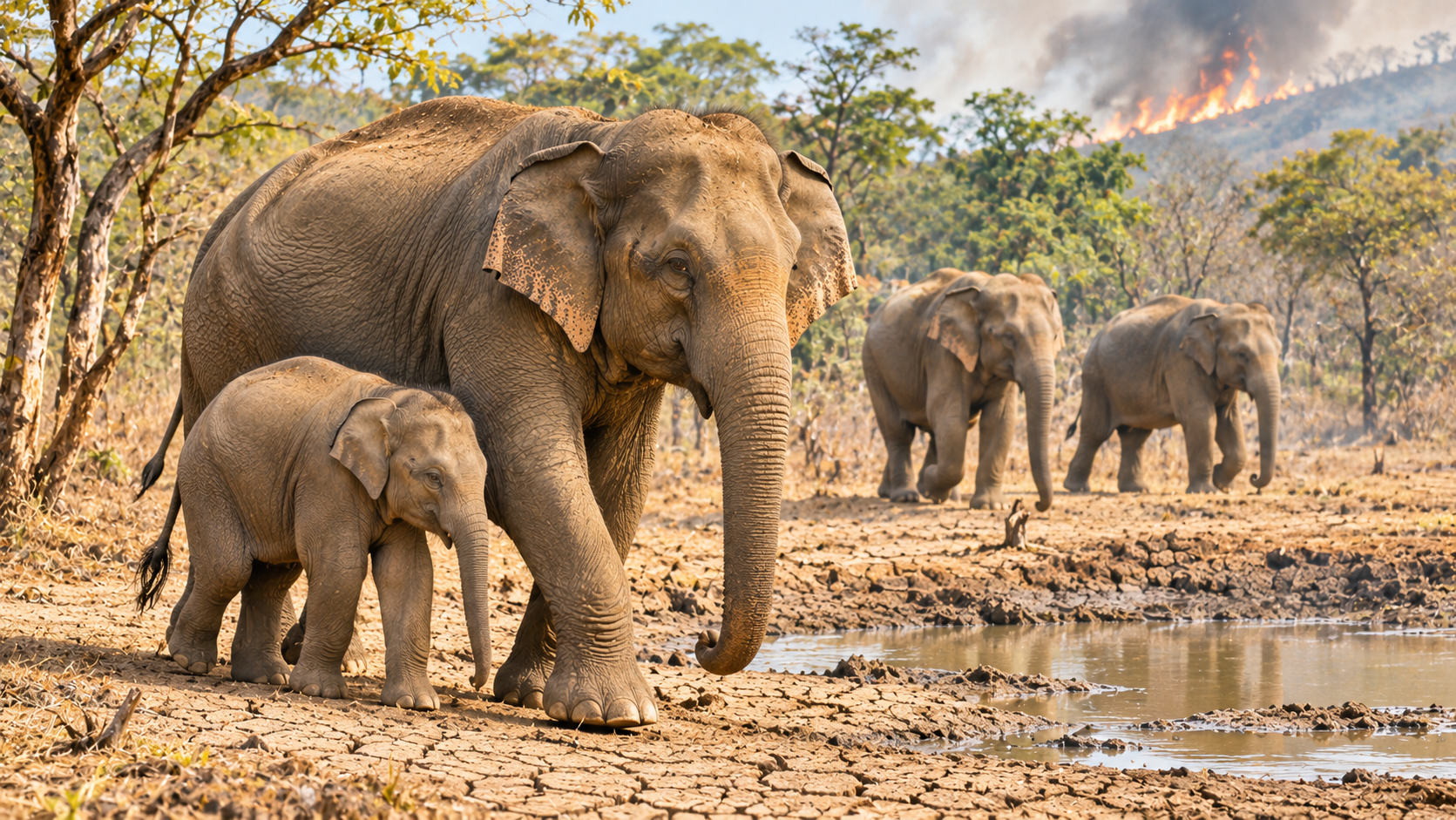
Based on a study report published in ‘Nature Climate Change’, the scientists have made a presentation during the second day of CoP31 explaining that there would be .4% emission reduction in carbon emission in 2026, as compared to the emission in 2025. The study has based its argument on choking the flow of oil trade from gulf countries owing to the Iran war. There has been global expansion of cheap renewable energy, chiefly solar and wind power, as people are flocking to electric vehicles to economize on fuel use. This fall however, would be temporary and even offset by increased emission from deforestation and land use changes. It is mainly driven by repeated and prolonged forest fires in almost all European countries during the summer. The low precipitation this year has brought down the level of water flow in rivers, causing undue hardship for trade and commerce making transportation of goods expensive. This has also been a bottleneck for nuclear power generation, thus impacting lives and livelihoods.
The regular deforestation in Indonesia for clearing lands for palm oil cultivation, and setting fire due to warm weather on account of El Nino has considerable impact on the health of humans residing not only in Indonesia, but in other neighboring countries like Philippines, Singapore, Malaysia. The forest fires in Europe and Indonesia may cause huge surge in carbon emissions.
According to the Global Carbon budget, 38.2 billion tons of greenhouse house gases would be emitted this year. The assessment is from scientists from scores and science institutions around the world and published in the journal Earth Science System Science data and has not considered all factors into account. With a larger population gaining access to electricity and rising emissions from deforestation and land use changes, the total carbon emission this year is projected to be 43.3 billion tons as compared to last year’s 42.2 billion tons.
Scientists have also warned that the carbon that can be pumped into the atmosphere before global heating is likely to be permanently exceeding 1.5 degrees is only 150 billion tons. At the current rate of emission, it would at the most take four years to warm the planet beyond 1.5 degrees Celsius. It is important to see whether CoP31 reaches an agreement among the parties to transition away from fossil fuels.
B( K Singh retired Head of Forest force, Karnataka )








[[comment.comment_text]]