THE HYDROLOGICAL MATRIX OF INDIAN MINING

 an hour ago
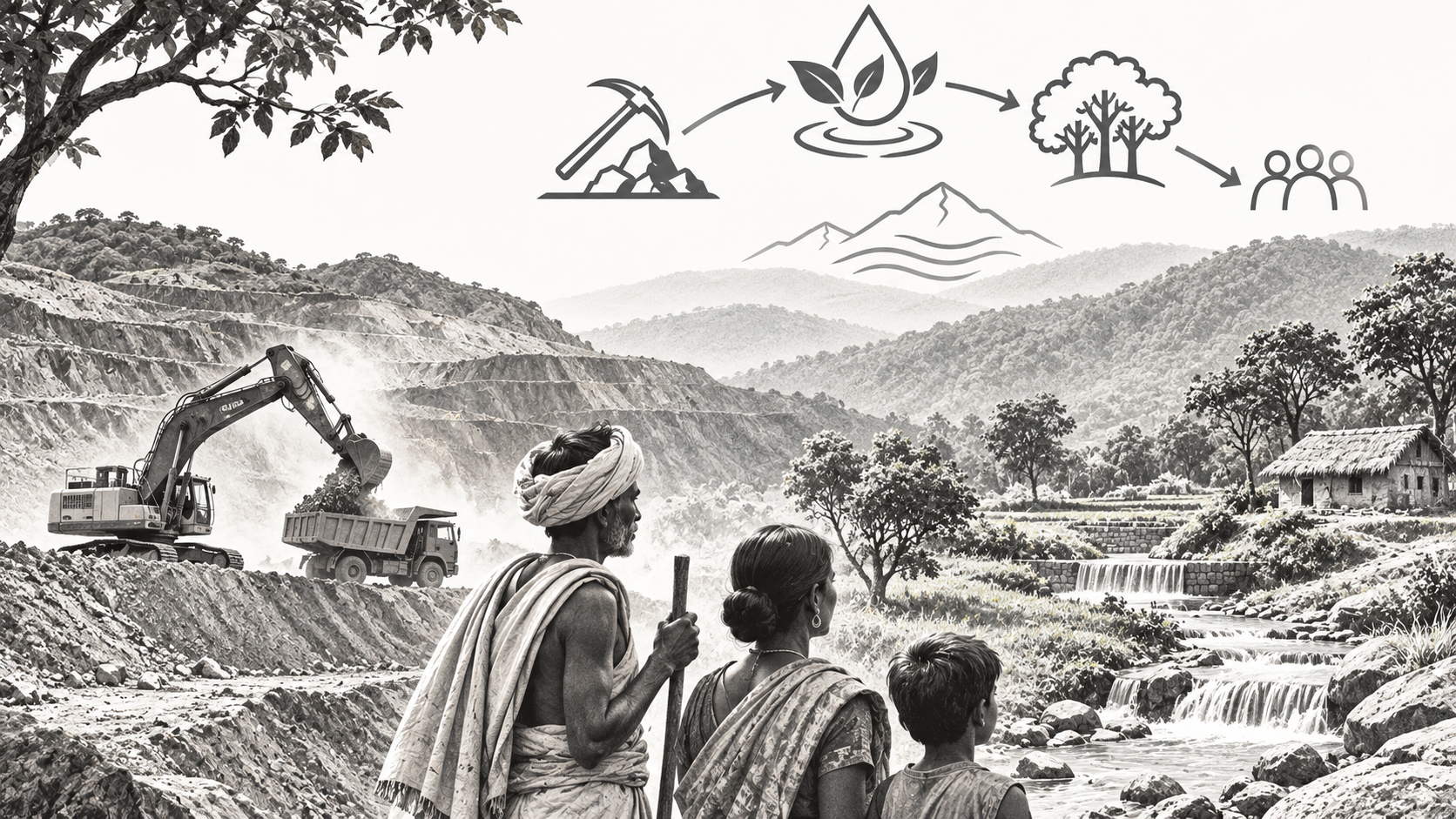
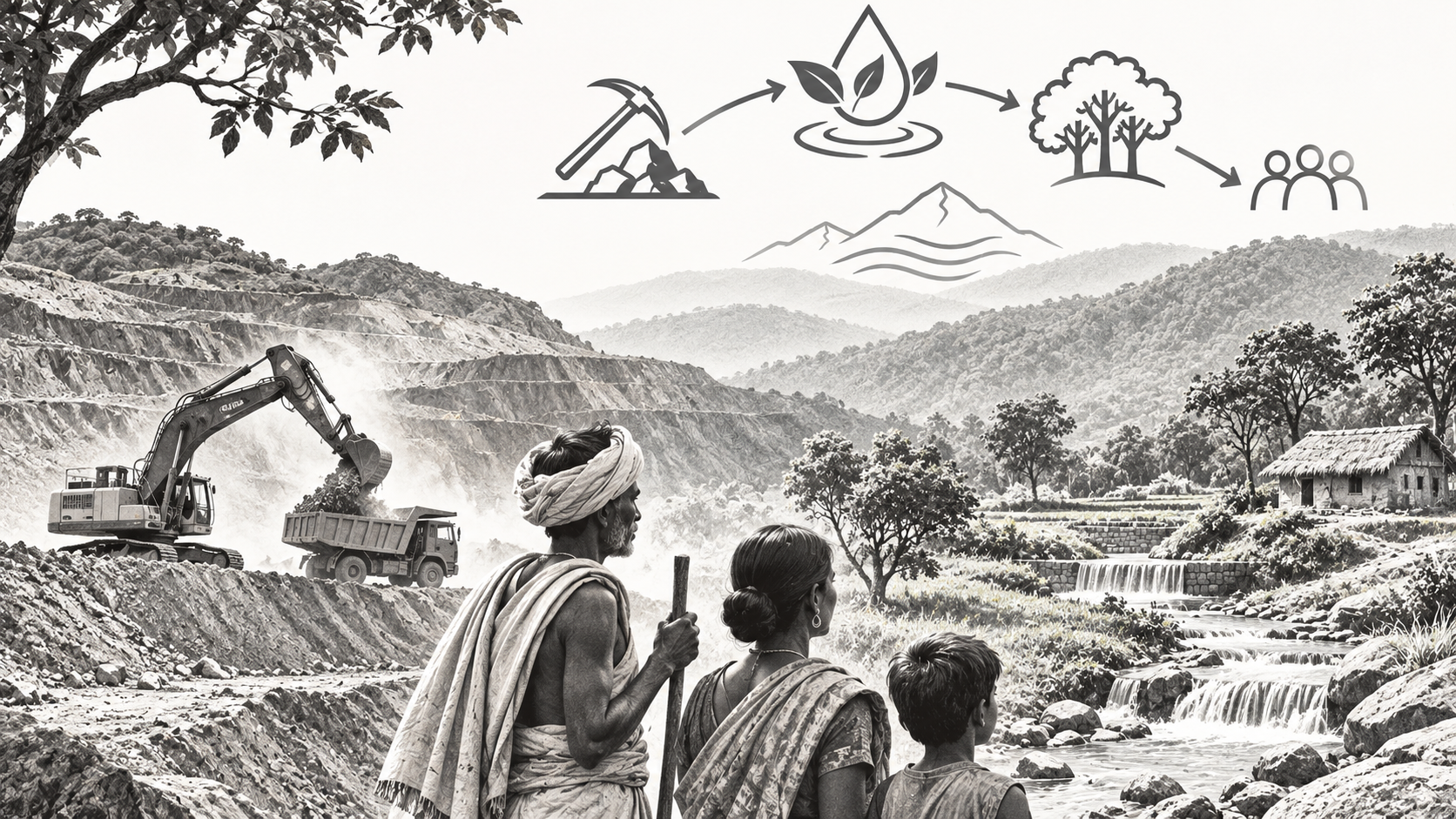
India’s mineral landscape represents an arena of immense economic ambition as well as profound environmental challenges. As one of the world’s leading producers and consumers of aluminium, steel and coal, the country depends considerably on the extraction of its geological resources. However, a fundamental geographical reality complicates this dependence: many of India’s richest mineral deposits, including bauxite, iron ore and coal, are located beneath or adjacent to ecologically fragile forests, critical watersheds and ancestral tribal territories.
This geographical overlap has created an enduring conflict between industrial development, environmental conservation and the rights of indigenous communities. The challenge is not simply whether mining should take place, but how mineral resources can be utilised without irreversibly damaging the ecological foundations and livelihoods of the regions concerned.
In recent years, public attention has focused particularly on resistance to certain bauxite mining projects in Odisha, including the Niyamgiri and Sijimali blocks. This has raised important questions about the nature of environmental activism, the constitutional rights of tribal communities and the differing levels of scrutiny applied to various mining sectors.
Why do some bauxite projects attract intense national and international resistance while extensive coal and iron ore operations receive comparatively less attention? Are these differences rooted entirely in ecological concerns, or do political, ideological and institutional factors also influence the nature of such movements?
A comprehensive assessment must move beyond these polarised narratives. It should examine the hydrological consequences of all major open-cast mining operations, understand the competing perspectives surrounding resistance movements and, most importantly, identify practical solutions through corporate-community partnerships, scientific watershed management and the protection of tribal livelihoods.
The Common Ecological Cost: How Coal, Iron Ore and Bauxite Mining Disrupt Hydrology
One of the weaknesses in contemporary environmental debates is the tendency to examine different minerals in isolation, without adequately considering their common ecological consequences. In reality, all large-scale open-cast mining operations can fundamentally disturb the natural hydrological cycle, although the mechanisms and intensity of their impact differ according to geology, terrain and mining practices.
Coal extraction, particularly across the Gondwana formations of Jharkhand, Chhattisgarh and Odisha, frequently involves deep mining operations in river valleys and plains. To keep deep open-cast pits dry and operationally safe, mining companies undertake extensive dewatering, often withdrawing substantial quantities of groundwater.
Such continuous pumping can lower groundwater levels and create a cone of depression extending beyond the immediate mining area. This may adversely affect wells, agricultural water sources and local water-dependent ecosystems.
Another serious concern is Acid Mine Drainage (AMD). When sulphur-bearing geological formations are exposed to air and water during mining, oxidation can generate acidic runoff. This water may mobilise heavy metals from surrounding rocks and contaminate nearby streams and groundwater.
The resulting damage can extend well beyond the mining lease, affecting aquatic ecosystems, agricultural productivity and the availability of safe drinking water.
Iron ore mining: Sedimentation and disruption of natural drainage
Iron ore extraction, particularly in Odisha’s Keonjhar and Sundargarh districts and parts of Karnataka, presents a different but equally serious hydrological challenge.
Large-scale excavation, blasting and the accumulation of overburden generate substantial quantities of loose soil and mineral waste. During the monsoon, inadequately contained sediments can enter streams and river systems, increasing turbidity and accelerating siltation.
As riverbeds become progressively choked with sediments, their natural drainage and water-retention capacities may deteriorate. This can aggravate flooding during periods of intense rainfall while reducing the availability of water in downstream channels during the dry season.
Thus, the consequences of iron ore mining are not confined to the immediate excavation site. They can affect the stability of entire catchments.
Bauxite Mining: Destruction of Natural Plateau-based Water Systems
Bauxite mining presents a particularly distinctive hydrological challenge because of the geological characteristics of the plateaus on which the deposits occur.
Across parts of the Eastern and Western Ghats, bauxite is commonly found in horizontal deposits beneath lateritic soil formations on elevated plateaus and tablelands. These landscapes frequently perform an important role in collecting, absorbing and gradually releasing monsoon rainfall into surrounding valleys.
The porous lateritic upper soil facilitates water absorption, while underlying geological layers influence the movement and discharge of groundwater. Water gradually emerges along slopes, fractures and seasonal drainage channels, sustaining streams and local water sources.
Open-cast mining can severely disturb this natural arrangement. Removal of topsoil, excavation of bauxite deposits and blasting of underlying formations may interrupt infiltration and alter the natural movement of groundwater.
Where drainage and soil-restoration systems are inadequate, rainfall can produce accelerated surface runoff, soil erosion and sediment deposition in downstream areas. The gradual release of water that sustains seasonal streams may also be affected.
The critical point is that plateau ecosystems are not merely mineral-bearing geological formations. They are often important components of regional watershed systems.
Consequently, the environmental consequences of coal, iron ore and bauxite extraction must be assessed through a common hydrological framework rather than through isolated mineral-specific debates.
The Politics of Selective Resistance: Understanding the Bauxite Controversy
Despite the ecological consequences associated with all three categories of mining, resistance to certain bauxite projects, particularly in Odisha, has attracted exceptional public attention.
This phenomenon has produced two sharply contrasting interpretations.
The security and ideological perspective
Some state security agencies, pro-industry organisations and nationalist groups argue that resistance to major mining projects cannot always be understood exclusively through environmental concerns or local grievances.
They point to the involvement of external organisations, ideological networks and activists operating in remote tribal regions. According to this perspective, certain organisations establish long-term connections with indigenous communities through healthcare, education, literacy and community-development programmes, subsequently using these relationships to mobilise resistance against industrial and infrastructure projects.
Some critics have also alleged ideological and organisational overlaps between sections of activist networks, religious organisations and Left-Wing Extremist groups operating in forested and mineral-rich regions.
They contend that opposition to infrastructure development can sometimes be exploited to sustain local instability, obstruct economic investment and project India’s internal challenges through selective international advocacy.
However, such allegations require credible evidence and independent investigation. The involvement of an NGO, a religious organisation or an activist in tribal welfare activities cannot, by itself, establish an association with extremist activity or an external conspiracy.
The distinction between legitimate civil society engagement and unlawful interference must be maintained through evidence-based scrutiny.
The constitutional rights and environmental perspective
On the other hand, environmental organisations, civil liberties groups and tribal rights advocates argue that resistance to bauxite mining is primarily rooted in genuine concerns over land, forests, water, culture and livelihood.
They maintain that many mineral-bearing areas fall within Fifth Schedule regions, where constitutional safeguards provide special protections for tribal communities.
The Panchayats (Extension to Scheduled Areas) Act, 1996 (PESA), and the Forest Rights Act, 2006 (FRA), provide important institutional and legal protections concerning community participation, forest rights and the role of Gram Sabhas.
These safeguards cannot be treated as procedural formalities. The applicable statutory requirements concerning consultation, consent, recognition of forest rights and land diversion must be followed in accordance with the law.
The controversy surrounding the Sijimali bauxite block illustrates the depth of these concerns. Tribal communities, including sections of the Kondh and Kui populations, have expressed apprehensions about the potential impact of mining on their forests, water sources, customary rights and religious traditions.
For many communities, the hills and plateaus are not merely geographical features. They are associated with ancestral beliefs, sacred landscapes and cultural identities.
Allegations concerning irregularities in Gram Sabha proceedings, including questions about the authenticity of consent documents, also underline the necessity of independent verification and transparent administrative processes.
When communities believe that their voices are being disregarded, or that their constitutional protections are being weakened, resistance becomes more intense. The presence of security personnel and the detention of local leaders can further deepen mistrust if grievances are not addressed through transparent and accountable institutions.
The lesson is clear: environmental activism should not automatically be dismissed as anti-development, just as every claim made in the name of environmental protection should not be accepted without scrutiny.
A democratic framework must accommodate legitimate dissent while ensuring that unlawful activities, if established through evidence, are dealt with in accordance with the law.
India’s mining debate has become trapped between two seemingly irreconcilable positions: unrestricted industrial expansion and uncompromising opposition to mining.
Neither approach offers a sustainable long-term solution.
The country requires mineral resources for infrastructure, manufacturing, energy security and economic growth. At the same time, development cannot be pursued at the cost of permanently damaging watersheds, forests and tribal livelihoods.
The way forward lies in establishing a legally accountable Corporate-Community Watershed Co-Stewardship Model.
Rather than concentrating exclusively on protests, litigation and administrative confrontation, environmental organisations should also become active participants in ecological restoration, community empowerment and livelihood development.
Mining companies, for their part, must move beyond conventional compliance and corporate social responsibility programmes to assume measurable responsibility for the ecological security of the regions in which they operate.
Scientific Catchment Management and Community Participation
Mining companies possess engineering capabilities, financial resources and technical expertise that can be mobilised for large-scale watershed restoration.
In the rugged terrain of the Eastern Ghats, for example, an integrated system of continuous contour trenches, check dams, gabion structures and desiltation traps can help slow down monsoon runoff, reduce soil erosion and improve local water retention.
Such interventions must be based on detailed hydrological assessments rather than standardised engineering designs.
Equally important is the participation of tribal communities. Generations of local experience have given these communities an intimate understanding of their landscape. They know which seasonal streams are prone to sudden flooding, where water accumulates naturally and which drainage channels sustain agricultural and domestic requirements.
Gram Sabhas and local institutions should therefore have meaningful oversight in the preparation, implementation and monitoring of watershed-management plans.
Corporate technical expertise must complement, not displace, indigenous knowledge.
Revitalising Traditional Waterbodies and Transforming Agriculture
Regions such as Kalahandi experience pronounced seasonal variations in water availability. Intense monsoon rainfall may be followed by prolonged dry periods, creating serious challenges for agriculture.
One of the most effective responses would be the systematic revival of traditional ponds, tanks and other community water bodies.
CSR resources should be directed towards desilting, deepening and strengthening existing ponds, constructing appropriate bunds and restoring traditional water-harvesting structures.
Where technically and economically feasible, solar-powered drip and sprinkler irrigation systems can help farmers utilise stored water efficiently.
Mining companies can also support local agricultural institutions through micro-weather stations, soil-moisture monitoring and scientific crop advisories.
Agricultural diversification is equally important. In water-stressed lateritic regions, excessive dependence on water-intensive crops can increase vulnerability.
Promoting indigenous millets such as ragi and suan, along with pulses and suitable oilseed varieties, can help align agricultural practices with local rainfall patterns and soil conditions.
Such transitions must be undertaken with farmers’ participation, assured market linkages and appropriate price support. Conservation cannot succeed if it undermines household incomes.
Concurrent Reclamation and Community Employment
Another essential reform concerns the timing of mine-site restoration.
Traditionally, comprehensive reclamation has often been treated as an activity to be undertaken towards the end of a mining lease. This approach must give way to concurrent reclamation, under which exhausted mining pockets are restored progressively while operations continue elsewhere.
Where technically suitable, excavated areas should be recontoured, stabilised and covered with conserved topsoil before being replanted with appropriate native vegetation.
Restoration plans must include measurable targets for soil stability, vegetation survival, drainage rehabilitation and water quality.
The employment potential of ecological restoration also deserves greater attention.
Local tribal youth and community members could be engaged through a formal, adequately funded Watershed Stewardship Programme. Their responsibilities could include maintaining nurseries, monitoring plantation survival, clearing silt traps, maintaining check dams and reporting changes in local water systems.
Such a programme would create meaningful employment while transforming local communities from passive recipients of development programmes into active custodians of their natural resources.
It would also help address the persistent problem of livelihood insecurity in mining-affected regions.
Conclusion: Making Mining Compatible with Ecological and Social Responsibility
The conflict surrounding India’s mining sector cannot be resolved by ignoring environmental damage or by dismissing legitimate tribal concerns. Equally, the country’s development requirements cannot be addressed through an approach that treats every mining proposal as inherently unacceptable.
Coal, iron ore and bauxite extraction can all disrupt fragile hydrological systems, although their impacts differ according to geological conditions and mining methods. Their environmental consequences must therefore be assessed through rigorous, scientifically informed and region-specific studies.
At the same time, the polarisation between industrial interests and environmental organisations must give way to constructive engagement.
Environmental NGOs should expand their role beyond confrontation and become partners in watershed revitalisation, ecological monitoring, tribal livelihood security and institutional accountability. Mining companies must accept enforceable obligations for environmental restoration, transparent community engagement and long-term ecological protection.
Most importantly, tribal communities must be recognised as stakeholders with constitutional rights, legitimate aspirations and invaluable traditional knowledge.
India does not have to choose between mineral development and environmental security. It must, however, abandon the assumption that economic growth can be sustained by weakening the ecological foundations on which communities and industries alike depend.
The real measure of responsible mining will not be the volume of minerals extracted, but the condition of the rivers, forests, agricultural lands and communities that remain after extraction.
Nation-building demands nothing less.
(The author, a former Deputy Conservator of Forests Karnataka, is a known expert on envi ronment and forestry.)










[[comment.comment_text]]