Sweet Dreams, Dry Fields: The Paradox of Bihar’s Sugar Industry Expansion

 an hour ago
Expecting industrial expansion while offering farmers fewer incentives than neighbouring states, amid recurring floods and crop diseases, is a policy contradiction. Bihar must move beyond announcing new mills and make sugarcane cultivation economically viable.
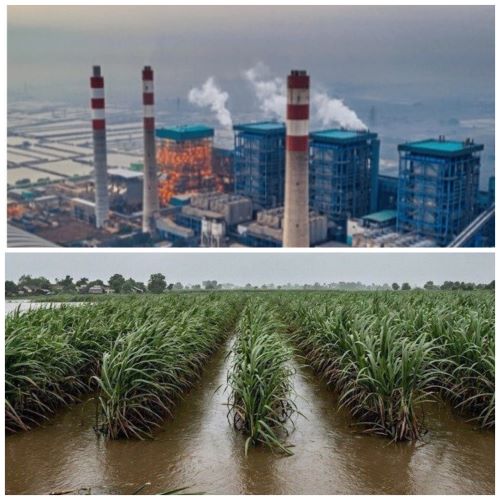
Bihar's sugar industry is confronting more than natural disasters and an agricultural crisis. It is also suffering from a widening gap between government priorities and ground realities. On the one hand, the state government has expressed its resolve to establish 25 new sugar mills and revive nine defunct ones. On the other, the existing 10 mills are struggling to procure enough sugarcane to operate at their installed capacity. The question is unavoidable: if the state cannot supply adequate cane to its existing mills, where will the raw material for the proposed new factories come from? Is Bihar planning to expand its industrial infrastructure before securing the agricultural foundation on which it must rest?
India is the world's largest sugarcane producer and the second-largest sugar producer. Maharashtra accounts for approximately 32-33% of the country's sugar production, followed by Uttar Pradesh, with around 29%, and Karnataka, with approximately 15-16%. In the 2026 season, Maharashtra produced about 9.92 million tonnes of sugar, Uttar Pradesh around 8.92 million tonnes, and Karnataka between 4.715 million and 4.801 million tonnes. Together, these three states account for more than 80% of national production, while Bihar contributes a mere 3-4%.
If Bihar, once a stronghold of the sugar industry, hopes to reclaim its position, it must offer farmers competitive returns while addressing constraints related to productivity, agricultural research and water management.
The Bihar Sugar Mills Association's demand for government subsidies comparable to those offered by other sugar-producing states exposes this policy contradiction. Its demand is not merely an attempt by an industry to secure concessions. It is an appeal to sustain an agricultural-industrial ecosystem whose success depends on three interlinked outcomes: higher farm incomes, commercially viable sugar mills and rural employment.
Bihar's 10 operational sugar mills have a combined crushing capacity of 68,500 tonnes per day (TCD). Seven distilleries have a combined capacity of 520 kilolitres per day (KLPD), while seven cogeneration units also operate in the state. The industrial infrastructure, therefore, already exists. What is missing is an adequate and reliable supply of sugarcane.
The mills receive only 55-60% of their total capacity in cane. The average crushing season has shortened to 97 days, compared with 107 days earlier and an intervening average of 100 days. These figures reflect more than declining production. Shorter crushing seasons mean underutilised machinery, labourand capital. Lower sugar recovery than in neighbouring Uttar Pradesh, combined with underutilised capacity, pushes up production costs. Bihar's sugar industry is thus trapped in a vicious cycle: insufficient cane raises costs, higher costs weaken competitiveness, and declining competitiveness further undermines the industry's ability to attract farmers.
Floods, Disease and the Failure of Agricultural Infrastructure
Nature has compounded the crisis. Recent heavy rainfall, strong winds and water released from Nepal into rivers have caused flooding and prolonged waterlogging in border districts, severely damaging sugarcane crops. Widespread lodging of cane reduces its quality and sugar recovery. The sprouting of buds can also compromise the crop's suitability for use as planting material.
According to mill reports, several areas continue to experience waterlogging. Approximately 40-45% of Bihar's sugarcane-growing area is affected. Without adequate drainage, annual rainfall and floods repeatedly destroy farmers' efforts while disrupting the supply of raw material to factories.
Natural disasters cannot be prevented entirely, but their consequences can be mitigated. Persistent drainage problems across such a large cultivation area are not simply the result of adverse weather; they also expose deficiencies in agricultural infrastructure. Compensation can provide immediate relief, but lasting solutions require effective field drainage, scientific water management and systems to salvage crops after floods.
The second major failure lies in agricultural research. Following the spread of red rot disease in Co 0238, a prominent high-sugar-recovery sugarcane variety, Bihar has yet to establish a suitable replacement at scale. Although red rot is a serious national challenge, states such as Punjab and Haryana have moved more quickly in developing alternative varieties.
Bihar's lag highlights the need to accelerate research into disease-resistant planting material and ensure its timely distribution to farmers. Cultivators need varieties that deliver higher yields, resist disease and generate returns commensurate with their investment. Appeals to increase cultivation cannot substitute for scientific innovation and sound farm economics.
The Price Gap That Drives Farmers Away
The sharpest contradiction is visible in sugarcane pricing. In 2025-26, the price payable by mills in Bihar was ₹380 per quintal. The state government provided a subsidy of ₹10 directly to farmers, taking their total receipt to ₹390 per quintal.
By comparison, the corresponding prices were ₹400 in Uttar Pradesh, ₹416 in Punjab, ₹400 in Tamil Nadu and ₹425 in Chhattisgarh. These figures include government subsidies of ₹68.50 per quintal in Punjab, ₹70.95 in Tamil Nadu and ₹70 in Chhattisgarh.
Consequently, Bihar's farmers receive 26 less per quintal than their counterparts in Punjab and ₹35 less than those in Chhattisgarh. They also receive ₹10 less than farmers in Uttar Pradesh and Tamil Nadu. If Chhattisgarh, a relatively newer sugarcane-producing state, can offer a subsidy of ₹70 per quintal, how can Bihar expect its ₹10 incentive to persuade farmers to expand cultivation? This disparity is not merely about money. It reveals a difference in policy priorities.
Sugarcane cultivation demands considerable investment in time, labour, irrigation and crop management. Floods, waterlogging and disease add further risks. If farmers cannot earn adequate returns compared with alternative crops, shifting towards paddy, wheat or maize is hardly surprising. No agricultural sector can survive on tradition or government appeals alone when risks are high and returns inadequate. Farmers make decisions based on economic calculations, not emotional appeals.
Ethanol: An Opportunity, Not a Substitute for Cane
The expansion of ethanol and green energy offers Bihar an additional opportunity. The state's seven distilleries, with a combined capacity of 520 KLPD, and seven cogeneration units provide a foundation for integrating sugarcane into the wider energy economy. The Union government has amended the Central Motor Vehicles Rules, 1989, to provide legal
approval for E100 fuel. However, E100 and E85 can be used only in flex-fuel vehicles specifically designed and certified for these fuels. They cannot be used in ordinary petrol or E20 vehicles, as doing so may damage their engines or fuel systems. The government has also increased the gross vehicle weight limit for light vehicles running on petrol and diesel from 3,000 kg to 3,500 kg.
Ethanol-blending policies have benefited sugar mills in Maharashtra and Uttar Pradesh. Bihar, too, can capitalise on this opportunity, but only if it first secures a consistent and adequate supply of sugarcane. Distillery capacity becomes an economic asset only when sufficient raw material arrives from the fields.
Put Farmers Before Factories
Bihar's government must establish a clear sequence of priorities. First, sugarcane prices and subsidies must become competitive enough to restore farmers' confidence. Second, drainage and water-management infrastructure must be strengthened across the 40-45% of the sugarcane-growing area affected by waterlogging. Third, research into disease-resistant varieties to replace Co-0238 must be accelerated, alongside effective seed multiplication and distribution. Fourth, before announcing new mills, the government must assess the cane availability, capacity utilisation and commercial viability of existing units.
Industrial expansion cannot be built on an agricultural foundation that is steadily weakening. Nor can the revival of a historic industry be achieved through announcements alone. The proposed 25 new mills and the revival of nine closed units may appear ambitious, but ambition without a credible plan for raw-material supply risks creating additional underutilisedinfrastructure.
Bihar needs policy coherence more than grand declarations. The revival of its sugar industry must begin in the fields, not in factory blueprints. Make sugarcane cultivation profitable, protect crops against floods and disease, invest in research, and ensure that farmers receive a fair share of the value they create.
(The writer is a senior Delhi-based journalist and political analyst. Views are personal.)










[[comment.comment_text]]