The Price of War: Assessing Trump’s Iran Policy

 54 minutes ago
The results of the 3 November 2026 United States midterm elections carry a message that extends well beyond Washington: even the most powerful president cannot indefinitely insulate foreign policy from the economic and democratic concerns of ordinary citizens.
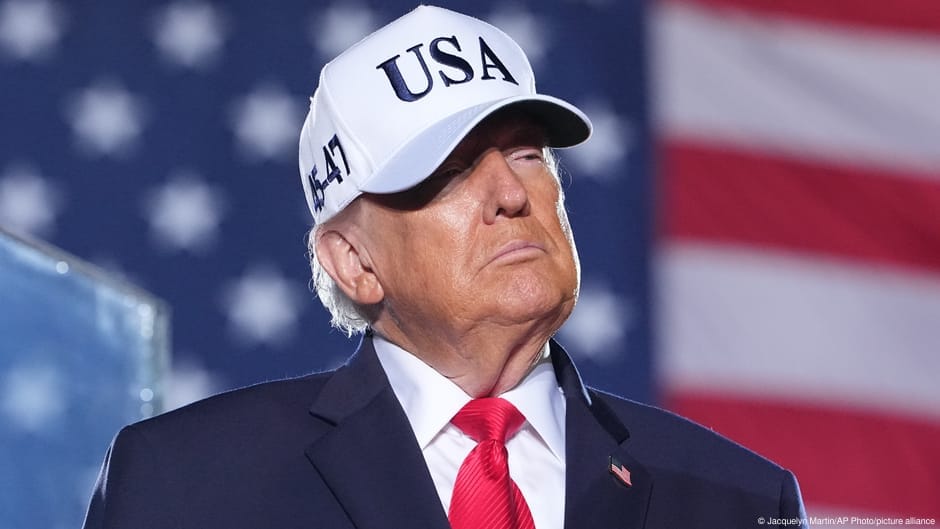
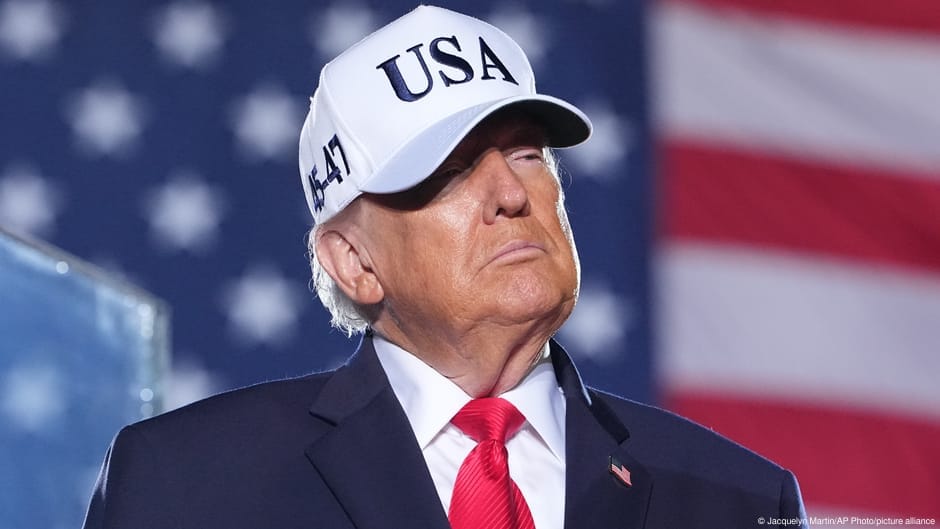
President Donald Trump entered the elections with Republican control of Congress and the confidence that comes with commanding the executive branch of the world’s most influential nation. He now faces a dramatically altered political landscape. The Democratic Party has won control of both the House of Representatives and the Senate, turning what was expected to be a routine midterm contest into a significant rebuke of his administration.
The result raises an important question: has the war with Iran become Trump’s political Waterloo? The answer is more complicated than a simple electoral verdict against military intervention. The conflict, rising living costs and concerns about governance converged to shape voters’ judgment of the administration. Together, they exposed the political limits of presidential authority and created a new balance of power in Washington.
An Electoral Verdict Against the Administration
Midterm elections traditionally serve as a referendum on the sitting president. Although his name does not appear on the ballot, voters use congressional contests to express their satisfaction or frustration with the administration.
The 2026 elections followed this familiar pattern, but the scale of the Democratic gains made the outcome particularly consequential.
As of 8 November, the available seat totals were projections based on Associated Press race calls, rather than certified results. Democrats were projected to hold 54 of the 100 Senate seats, having flipped at least seven Republican-held seats, including Maine and North Carolina. In the House, they had secured a projected majority comfortably above the 218 seats required, although several races were still being counted.
The final margins may change, but the political direction is unmistakable. Trump’s personal influence and campaign interventions proved insufficient to protect Republican candidates from a nationwide backlash.
History offers relevant precedents. The 2006 midterm elections, fought against the backdrop of the Iraq War, handed Democrats control of both chambers of Congress during George W. Bush’s presidency. Earlier, public exhaustion with the Korean War contributed to the political climate that ended Democratic control of the White House in 1952.
Wars that outlast their promised timelines frequently transform strategic disagreements into domestic political liabilities. What distinguishes the 2026 outcome is how quickly the consequences of the Iran conflict translated into electoral discontent, including among voters who had supported Trump in 2024.
What Did Voters Actually Reject?
The polling provides an important, though not entirely uniform, picture of voter sentiment. CBS News exit polling indicated that most voters believed the United States had made the wrong decision in taking military action against Iran. A substantial proportion also identified Trump himself as a factor influencing their House vote.
However, the economy and the cost of living ranked ahead of the war among voters’ principal concerns. The ABC News Voter Poll and the Associated Press survey of voters reflected a similar pattern: dissatisfaction with the conflict was strongly associated with support for Democratic candidates, but the war was not the leading issue for most Americans.
This distinction matters. Foreign policy rarely dominates American midterm elections. Voters generally judge administrations on prices, employment, economic security and conditions at home.
The Iran conflict became politically damaging because its consequences were no longer perceived as distant or abstract. They were increasingly visible in household budgets, particularly through rising fuel prices.
The White House had initially presented the military operation as a relatively short undertaking. Instead, the conflict has continued for approximately eight months. Pentagon figures provided to Congress and reported in late October placed the cost at approximately $47.1 billion through 16 October.
It would nevertheless be misleading to attribute the Democratic victory entirely to the war. Inflationary pressures, the cost of living and concerns about government accountability contributed to the same dissatisfaction. These issues reinforced one another.
For a household struggling with petrol prices, the war was not merely a foreign-policy question. It became a direct economic concern. The election therefore represented a broader judgment of the administration, with Iran emerging as the most visible and expensive symbol of its difficulties.
An Unusual Admission from Within the Administration
One of the most revealing developments after the election came from Vice President JD Vance. In his first public comments on the Republican defeat, he attributed the outcome directly to the conflict, saying: “The reason we lost is the war.”
Such an admission from a senior member of the administration was politically significant. Vance went further, challenging those who believed the conflict was worth the electoral losses to defend that position openly.
Trump adopted a different tone. Responding to Vance’s assessment, he described it as “largely true”, acknowledging the impact of higher fuel prices. However, he insisted that he would not have acted differently and would take the same decision again rather than allow Iran to acquire a nuclear weapon.
The contrast reveals an emerging disagreement within the Republican Party over the political costs of military intervention. While Trump continues to defend the conflict as a strategic necessity, Vance’s remarks suggest growing recognition that its domestic consequences cannot be ignored.
This debate could become central to the Republican Party’s preparations for the 2028 presidential election. Following a major defeat, political parties inevitably reconsider their leadership, priorities and electoral strategies. Whether Republican leaders continue to defend the Iran operation or distance themselves from it will influence that process.
Trump Weakened, But Not Powerless
The election has unquestionably weakened Trump’s political position. However, political weakness should not be confused with the loss of presidential authority.
When the new Congress convenes in January 2027, Democrats will possess significant powers to obstruct the administration’s legislative programme and scrutinise its decisions.
Four developments are particularly important.
First, passing legislation will become more difficult. The administration will have to negotiate with an opposition that has little incentive to provide it with political victories.
Second, congressional committees will gain greater authority to summon officials, demand documents and conduct investigations into the war, military expenditure and executive conduct.
Third, budget negotiations could become contentious. Congress controls federal appropriations, giving Democrats considerable leverage over the financing of government programmes and any prolonged military operation.
Fourth, control of the Senate will influence the confirmation of judges and senior officials, reducing the administration’s ability to shape the judiciary and bureaucracy through appointments. Republicans, however, will retain their existing congressional majorities until the new Congress is sworn in.
Yet Trump remains Commander-in-Chief and retains substantial control over the executive branch. Article II of the Constitution does not transfer presidential authority to Congress simply because the opposition wins legislative elections. Military operations already under way do not automatically end following an electoral setback.
The constitutional position is more complicated when it comes to the continuation of the Iran war.
Article I gives Congress the power to declare war, raise and support armies, and appropriate funds. The War Powers Resolution of 1973 requires the president, wherever possible, to consult Congress before introducing American forces into hostilities and to report to it within 48 hours.
The legislation also provides that military engagement must generally end within 60 days, with an additional 30 days permitted for withdrawal, unless Congress declares war, specifically authorises the operation or extends the period.
Presidents from both political parties have questioned the constitutionality of aspects of this legislation. Its deadlines have rarely compelled an administration to terminate military operations. Nevertheless, the handling of the 60-day provision during an eight-month conflict is likely to attract congressional scrutiny.
Congress can also pass legislation restricting military operations, although overriding a presidential veto requires two-thirds majorities in both chambers, a difficult threshold.
Its strongest instrument remains the power of the purse. Democrats can demand greater transparency, attach conditions to military funding or refuse additional appropriations.
Trump, therefore, is politically weakened and institutionally constrained, but not administratively incapacitated. The American constitutional system deliberately distributes power to prevent any one branch of government from exercising unlimited authority.
Will the Election Change the Iran War?
The most consequential question is whether the electoral setback will alter the course of the conflict.
There is no automatic mechanism through which a midterm defeat forces a president to withdraw troops or abandon a military operation. Trump has maintained that the war must continue until Iran is prevented from acquiring a nuclear weapon, leaving considerable uncertainty about the administration’s exit strategy.
Nevertheless, the political environment has changed substantially.
A Democratic-controlled Congress can demand explanations of the war’s objectives, examine military expenditure and question the administration’s assessment of its strategic achievements. It can also press for diplomatic alternatives and greater accountability.
Incoming Democratic leaders have made ending the conflict a central commitment. They will now face the challenge of translating electoral promises into a credible diplomatic approach.
Even within the administration, Vance has identified ending the war and addressing inflation as necessary steps towards rebuilding support among disaffected voters.
For Tehran, the election may create diplomatic opportunities. Iranian officials are likely to portray the outcome as evidence of American public opposition to the conflict. However, it would be premature to interpret the Democratic victory as an indication of imminent reconciliation.
Iran will assess Washington through its military posture, diplomatic commitments and actual policy decisions rather than electoral rhetoric. Any meaningful de-escalation will require both sides to recognise that prolonged confrontation carries costs that increasingly outweigh its immediate strategic gains.
Global Consequences and India’s Stakes
The political consequences of the election will extend beyond American borders. Governments in Europe, the Gulf and Asia will be watching closely to determine whether Washington’s international commitments remain sustainable under growing domestic opposition.
For America’s allies, the result introduces an additional element of uncertainty into strategic planning. Security guarantees, military cooperation and diplomatic initiatives may become more contentious as Congress demands greater scrutiny of presidential decisions.
China and Russia will also assess what the election reveals about the limits of Trump’s political authority. However, neither should mistake congressional opposition for the disappearance of American influence. The United States remains a formidable military, economic and diplomatic power.
For India, the implications are particularly significant.
New Delhi maintains important relationships with Washington, Tehran, Israel and the Gulf countries. Its interests extend across energy security, trade, regional connectivity and the safety of millions of Indian citizens living and working in West Asia.
A prolonged confrontation between Washington and Tehran threatens these interests simultaneously. Disruption of energy supplies, instability in maritime routes and further regional escalation could impose substantial economic and strategic costs on India.
New Delhi will therefore need to preserve its strategic autonomy, maintain constructive relations with all principal actors and support diplomatic initiatives aimed at preventing a wider conflict.
A politically weakened American president does not necessarily mean a weaker America. Nevertheless, an administration facing sustained domestic opposition may find it more difficult to maintain consistency in its international priorities.
The Democratic Test
The Democratic victory should not be mistaken for an unconditional mandate. Many voters may have voted against the administration’s direction rather than in favour of a clearly defined Democratic programme.
Vance’s observation that some people who supported Trump in 2024 had switched sides in anger is particularly significant. It suggests that the administration’s electoral support was more fragile than its leadership had assumed.
The incoming Democratic leadership must now demonstrate that it can deliver practical results. Reducing the cost-of-living burden, strengthening economic security, ensuring congressional oversight and developing a credible foreign-policy alternative will be essential.
Accountability must strengthen democratic institutions rather than become an instrument of political revenge. The opposition’s credibility will depend not simply on exposing the administration’s failures but on demonstrating its capacity to govern responsibly.
The Larger Lesson
Has Iran become Trump’s political Waterloo? The analogy captures the drama of the moment but exaggerates its finality. The Battle of Waterloo ended Napoleon’s political and military ambitions. Trump, by contrast, remains president, retains his constitutional powers and has two years left in his current term.
What the election has exposed is the political ceiling of his leadership and the emergence of a new institutional balance in Washington.
The larger lesson applies to governments everywhere. Military power may enable a country to begin a conflict, but it cannot guarantee public support for its continuation. A president may possess extensive constitutional authority, but democratic legitimacy ultimately depends on public confidence, institutional accountability and responsible decision-making.
The strength of a democracy is measured not merely by the power of its armed forces or the authority of its executive, but by the ability of citizens to question government decisions and change the direction of their country through elections.
The American electorate has delivered its verdict. Whether Trump responds through reflection, confrontation with Congress or a renewed diplomatic approach will shape the remaining two years of his presidency.
He may command the world’s most powerful military, but the 2026 midterms have delivered a reminder that, in a democracy, the ultimate political authority belongs to the people.
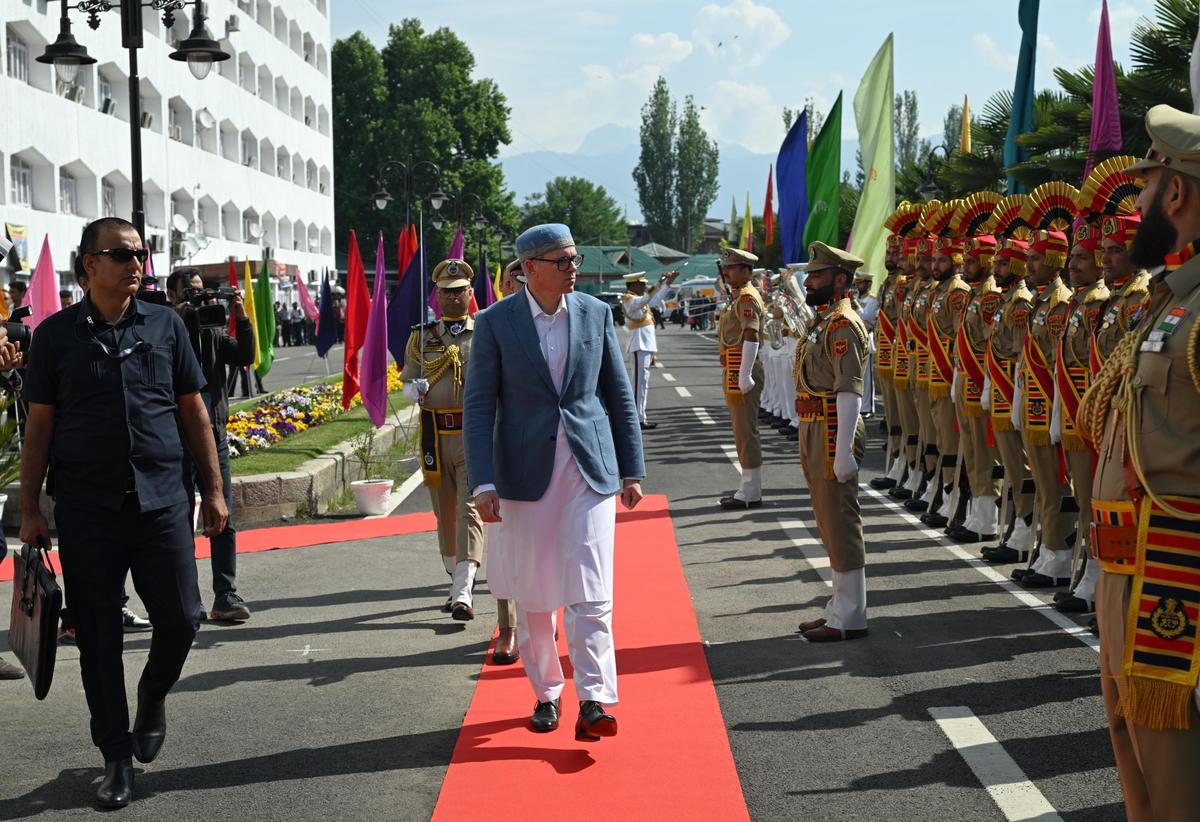
(Mr Rasool, a Kashmiri sociologist, is a writer, researcher, and columnist. His research Interests Include Kashmir Affairs, South Asian Politics, Human Rights, and Public Policy issues.)




[[comment.comment_text]]