Food Adulteration and the Law of Accountability

 2 hours ago
Food Safety Act, 2006: Law, Penalties & Enforcement
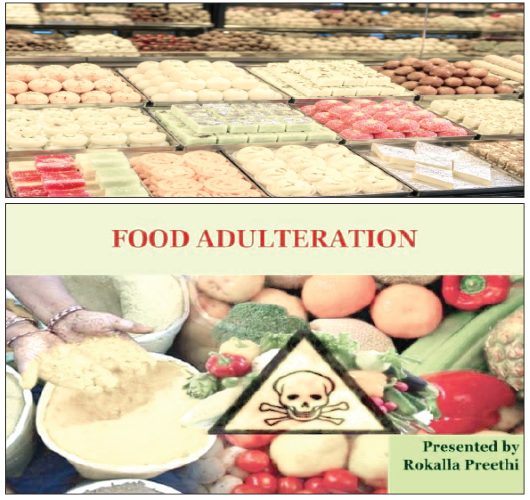
Festivals in India are more than just times to celebrate; they are manifestations of human connection, love, and trust. Only when customers can trust the purity and safety of sweets does the custom of trading them take on significance. The system tasked with safeguarding the public's health is at risk when reports of food adulteration, standard violations, and unsanitary production surface during holiday seasons.
Adulteration of food is more than just business fraud. Human health can be seriously jeopardised by unsafe food. Beyond business wrongdoing, endangering consumers' well-being for excessive profit raises issues of accountability and legal liability.
A thorough legislative framework to protect food safety in India is provided by the Food Safety and Standards Act, 2006. It specifies food standards, outlines the obligations of food business owners, permits laboratory testing and inspections, and sets fines for infractions. However, if special enforcement raids are required every holiday season to stop adulteration, a crucial question emerges: how successful is the regulatory system in stopping infractions before they happen?
The availability of safe food, prompt testing, unbiased enforcement, and accountability for infractions are better indicators of the law's actual effectiveness than the quantity of raids carried out. Safe food is essential to customers' health and dignity; it is not a favour. The government, the food industry, and the law all have a part to play in ensuring its safety.
Legal Penalties, Business Accountability
The goal of the Food Safety and Standards Act of 2006 is to guarantee that food for human consumption is both safe and complies with standards. It controls how food is made, processed, stored, distributed, sold, and imported. The Food Safety and Standards Authority of India (FSSAI) and the appropriate state agencies are empowered by the Act to enforce established standards and take legal action against infraction.
Sections 26–27: Operator Accountability and Food Safety
Operators of food businesses are required by Section 26 to make sure that the food they oversee conforms with the Act's rules and regulations. Regarding the production, storage, distribution, or sale of hazardous or non-compliant food, they are unable to avoid their applicable statutory requirements.
Manufacturers, packers, wholesalers, distributors, and sellers are all subject to liability under Section 27. Therefore, rather than focusing only on the retail location, the source of adulteration needs to be looked into throughout the whole supply chain. However, the individual's role, the available evidence, and the relevant statutory restrictions must all be taken into consideration when determining culpability.
Sections 28 and 31: Licensing and Product Recalls
Under certain conditions, Section 28 permits the removal of dangerous food from the market. Its goal is to shield customers from possible injury and stop dangerous products from being distributed further.
A food business is required under Section 31 to get the necessary licence or registration, depending on its type and category. Nevertheless, the issuance of a licence does not ensure food quality indefinitely. Appropriate regulatory action may be taken in response to standards violations.
Section 59: Strict Penalties for Unsafe Food
Section 59 specifies the following penalties based on the effects of contaminated food on human health: imprisonment for up to three months and a fine of up to ₹3 lakh if there is no harm; imprisonment for up to one year and the same maximum fine if there is a non-grievous injury; imprisonment for up to six years and a fine of up to ₹5 lakh if there is a grievous injury; and imprisonment for at least seven years and a minimum fine of ₹10 lakh if there is a death.
The legislation establishes these limitations. The punishment in a particular instance depends on the type of offence, the proof, and the judicial system. Section 59 does not usually apply to adulteration or quality standards violations. The harmful nature of the food and the pertinent offence must be demonstrated by legally admissible evidence.
Different Violations of the Same Law
Section 51 deals with subpar food. Section 52 deals with misbranded food; Section 54 deals with extraneous matter; Section 56 deals with manufacturing or processing under unhygienic conditions; Section 57 deals with possessing adulterants; and Section 50 may apply when food supplied does not meet the nature or quality demanded by the buyer. Operating a food company without the necessary licence could result in legal action under Section 63.
Each provision's applicability is determined by the appropriate statutory requirements, the facts, and the evidence that is now available.
The Law Must Do More Than Just Exist
Only when inspections are unbiased, samples are obtained in compliance with the law, laboratory testing is accurate and prompt, and prosecution proceeds successfully based on the strength of the evidence can strict penalties fulfil their intended purpose.
It takes more than just consumer awareness to ensure food safety. It is also a duty of the regulatory apparatus and a statutory requirement for food business owners. The law's actual efficacy must be determined by how fairly, consistently, and successfully its provisions are enforced rather than just how harsh they are.
Beyond Raids, Toward Justice!
Inspections, sampling, laboratory testing, corrective instructions, licensing action, and prosecution are all linked phases of food safety enforcement under the Food Safety and Standards Act, 2006. A raid's effectiveness should be determined by its findings and the legal action they prompt, not by the number of seizures or lawsuits that are filed.
Authorities must make sure that scientific testing is conducted in compliance with established protocols, that established infractions are promptly addressed, that dangerous food sales are prevented, that recalls are carried out when necessary, and that licences are suspended or revoked when legally required. Serious cases must also be successfully prosecuted.
Although the centre and the states share responsibility for enforcing food safety, state agencies are crucial to local monitoring, implementation, and ground-level inspections. Transparent enforcement procedures, capable laboratories, and officers with sufficient training are essential.
But suspicion does not equate to conviction. A raid or a dubious sample by themselves does not prove a trader's guilt. Due process and scientific evidence must be the foundation of enforcement. However, needless delays compromise accountability once infractions are proven.
Therefore, evidence-based enforcement, prompt legal processes, and consumer protection are the real indicators of administrative success rather than the quantity of raids.
Beyond Festive Raids: Year-Round Vigilance
The Food Safety and Standards Act of 2006 does not limit food safety to festival raids. While Section 38 gives Food Safety Officers the authority to conduct inspections, gather samples, and take legal action, Section 29 outlines the duties of regulatory bodies. Regular, risk-based, and evidence-driven surveillance must result from these authorities.
Supply-chain inspections, prompt testing by accredited laboratories, and legal action against infractions are necessary to guarantee the safety of milk, edible oils, spices, and other common food items. Units that distribute food on a wide scale and establishments with a history of significant anomalies should be closely examined in proportion to the dangers involved.
Inspection capacity, pending samples, test results, and enforcement schedules must all be routinely reviewed by governments. Gaps in resources must be filled, carelessness must be held accountable, and official cooperation must result in legal action. Food safety credibility is based on ongoing monitoring and unbiased enforcement rather than the quantity of raids.
Statistics Rise, Adulteration Persists?
The Union Government released information on March 17, 2026, stating that during FY 2022–2023 to 2024–2025, 518,559 food samples were examined, 88,192 instances resulted in penalties, 3,614 cases resulted in convictions, and 1,161 food company licences were revoked. In the same time frame, 305 mobile food testing units were available in 35 states and union territories, and 56,259 risk-based inspections were carried out.
These numbers show administrative activity, but they don't prove how common adulteration is or how well it is controlled. Subject to legal restrictions, the government should publicly reveal testing results by state and product, the type of infractions, prosecution information, and the status of final adjudications in order to guarantee meaningful compliance with the Food Safety and Standards Act, 2006.
In the end, the food safety system must be evaluated by quantifiable prevention of infractions, legal action against offenders, and concrete protection of consumer health rather than just raids, samples, or fines.
Beyond Numbers, Accountability Matters
Administrative data by itself cannot determine the actual level of food adulteration or demonstrate how well it is controlled. Subject to legal protections and privacy requirements, the government must disclose inspection results by state and product, the type of infractions, prosecution records, and case outcomes in order to effectively implement the Food Safety and Standards Act of 2006. The effectiveness of the system should be determined by verifiable public health protection, lawful convictions, and demonstrated prevention of infractions rather than by the quantity of raids, samples tested, or fines issued.
Evidence, Justice and Consumer Rights
Legally admissible evidence, accurate sampling techniques, and laboratory findings are the foundation for food adulteration prosecutions. Due process requires an understanding of the difference between an accusation and a court's verdict of guilt. By keeping their bills, examining labels, and reporting suspicious adulteration, consumers may defend their rights. However, their diligence cannot take the place of regulatory bodies' legal responsibilities. It is legally required of food enterprises to provide safe food, and it is the responsibility of competent authorities to properly enforce compliance.
Beyond Raids, Enforce Accountability!
The Food Safety and Standards Act of 2006's monitoring, inspection, and criminal measures must be effectively enforced in order to maintain control over adulteration. Risk-based inspections of supply chains, warehouses, and production facilities must take place all year long, not only during holidays. Scientific testing of food samples must be completed within the allotted period, and legally required public disclosures must specify infractions and the remedies implemented. Penalties must be commensurate with the type, seriousness, and supporting evidence of the offence. Strict regulations pertaining to contaminated food must be successfully enforced. Increased inspection is necessary for repeat offenders, prompt resolution of consumer complaints is necessary, and official accountability is required for proved neglect or corruption. The effectiveness of the law should not be determined by the quantity of raids carried out but rather by preventive, equitable enforcement, and concrete protection of public health.
Sweet Deception, Legal Accountability
Food purity is important for preserving life and health, not just for consumers. Food business owners are required by the Food Safety and Requirements Act of 2006 to guarantee food safety and adhere to specified requirements. The applicable laws may include penalties, fines, licence suspension or revocation, and other statutory action, depending on the type and seriousness of a violation. Section 59 stipulates harsher penalties when contaminated food results in harm or death, whereas Section 65 offers compensation to victims or the families of deceased individuals under certain legal conditions.
A raid or preliminary investigation, however, is not the same as a conviction. A fair process, trustworthy evidence, and scientific testing are the cornerstones of lawful enforcement. It is also necessary to improve laboratory testing capabilities, regulatory supervision, and supply chain accountability.
Only when proved adulteration results in prompt and equitable action against those responsible—and when administrative carelessness is also included in the framework of accountability—will the efficacy of the legislation be demonstrated. A safe Diwali hinges on the state's legal commitment to safeguarding consumer health as well as the purity of the sweets.
(The author, a Doctorate in Laws, is a senior lawyer and civil society activist.)










[[comment.comment_text]]