Reimagining the Resource Bargain: Modern Geopolitics and the Venezuelan Oil Paradigm

 an hour ago
More than a century ago, William Knox D’Arcy struck a landmark bargain with the Shah of Persia, laying the legal and structural foundation for the modern global oil industry. In exchange for cash, company shares, and a modest percentage of net profits, D’Arcy secured exclusive rights to explore, produce, and market oil across the vast majority of Persian territory for six decades. At the time, neither party fully understood the vast economic wealth buried beneath the desert sands. That profound geological and financial uncertainty was central to the early concessionary model: foreign corporate entities supplied capital, technical expertise, and a willingness to absorb high exploration risk, while resource-owning sovereign governments provided territorial access.
As the geopolitical importance and economic value of petroleum came into sharper focus over the twentieth century, that initial bargain was repeatedly tested and renegotiated. The early concession system was not confined to Persia; similar sweeping arrangements emerged across the Middle East. In 1925, the Turkish Petroleum Company acquired a 75-year concession in Iraq, evolving into a multinational consortium spanning British, French, Dutch, and American interests. Meanwhile, the establishment of the Kuwait Oil Company in 1934 eventually unlocked the giant Burgan field, sparking decades of transformative production before the state ultimately moved to nationalize its petroleum assets.
This pattern defined twentieth-century petroleum history: initial foreign dominance gradually yielded to resource nationalism. Saudi Arabia provided the clearest illustration of this structural trajectory. In 1933, Standard Oil of California secured a concession from the Saudi government, discovering commercial quantities of oil five years later. As Saudi reserves proved colossal, Riyadh progressively renegotiated the terms, adopting a 50-50 profit-sharing structure in 1950 before incrementally purchasing ownership in Aramco. By 1980, Saudi Arabia held 100 percent control, completing the historic transformation from a foreign-managed concession to complete sovereign ownership.
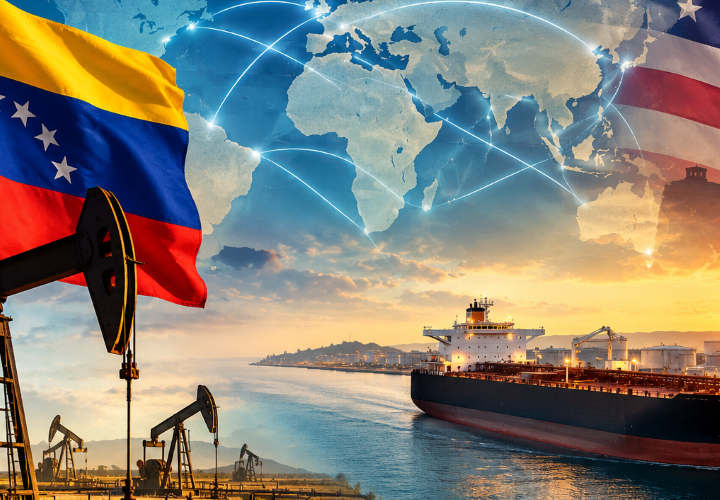
For decades, this upward trajectory toward host-country sovereignty was considered the immutable final destination of resource politics. National oil companies became central instruments of state statecraft, while foreign multinationals were relegated to minority partners, service contractors, or joint-venture operators. However, a landmark arrangement involving North American Blue Energy Partners (NABEP) and Venezuela raises the possibility that the global oil concession model is entering an entirely new, highly complex phase—reversing key aspects of the direction the industry traveled for nearly a century.
The NABEP arrangement in Venezuela is striking not only for its vast physical scope—granting 100-year rights over 17 oil fields linked to an estimated 65 billion barrels of proven reserves—but for the fundamental problem it seeks to solve. Venezuela already holds the largest proven oil reserves on Earth, meaning the primary challenge is not geological exploration or discovery risk. Instead, after years of economic instability, political turmoil, and severe underinvestment, Caracas requires massive infusions of capital, operational technology, and management to rehabilitate decaying infrastructure and restore baseline production levels.
What makes this modern agreement unprecedented is the direct structural role assumed by the foreign sovereign state. Under the terms, the United States government itself enters the ownership and governance architecture of the venture. The Pentagon’s Office of Strategic Capital holds rights to a 35 percent equity stake in NABEP’s corporate parent, structured through warrants designed to protect against dilution. Furthermore, the U.S. State Department retains rights to purchase 20 percent of production at cost, alongside a right of first refusal over the remaining 80 percent, while Washington secures explicit veto authority over corporate board appointments.
This structure introduces a significant hybrid mechanism into resource economics. Rather than an American firm operating strictly as a private enterprise under diplomatic protection, the foreign state acts simultaneously as an equity owner, a preferential buyer, and a central governance authority. Where twentieth-century history saw producing states push foreign powers out of direct resource ownership, this arrangement explicitly embeds a foreign superpower deep within the corporate ownership and operational supply chain of a host nation’s energy sector.
This evolving architecture reflects a broader shift in the global political economy of energy. Amid heightening global tensions, major industrial powers no longer view energy security solely through the lens of open-market commercial transactions or standard long-term supply contracts. Instead, strategic energy access is increasingly treated as an indispensable pillar of national security. Major states are seeking direct, structural influence over the capital, infrastructure, and management entities responsible for extracting critical natural resources at their geographic source.
The broader international implications of this experiment extend far beyond the Western Hemisphere, carrying particular relevance for energy-dependent Asian economies. Nations such as China, Japan, South Korea, and India remain deeply dependent on imported hydrocarbons to sustain their industrial bases. China in particular has spent two decades building extensive credit-backed infrastructure and resource partnerships across Latin America, the Middle East, and Africa. If the Venezuelan framework proves durable, it demonstrates a new pathway for major powers to secure energy access through direct corporate governance rather than traditional state-to-state loans.
Ultimately, while modern petroleum agreements have largely replaced sweeping early concessions with production-sharing contracts and joint ventures, the line between corporate enterprise and state power is blurring once again. By combining long-term resource duration with state-backed equity and supply guarantees, the Venezuelan agreement suggests that resource nationalism may no longer be the final word in petroleum history. Instead, the global energy landscape may be shifting toward a strategic paradigm where resource-rich states and global powers negotiate complex, hybrid structures of shared control.
(Author, a PhD from School of International Studies, JNU, is a senior TEW editorial adviser and columnist.)










[[comment.comment_text]]