India’s Non-West Diplomacy
 1 month, 1 week ago
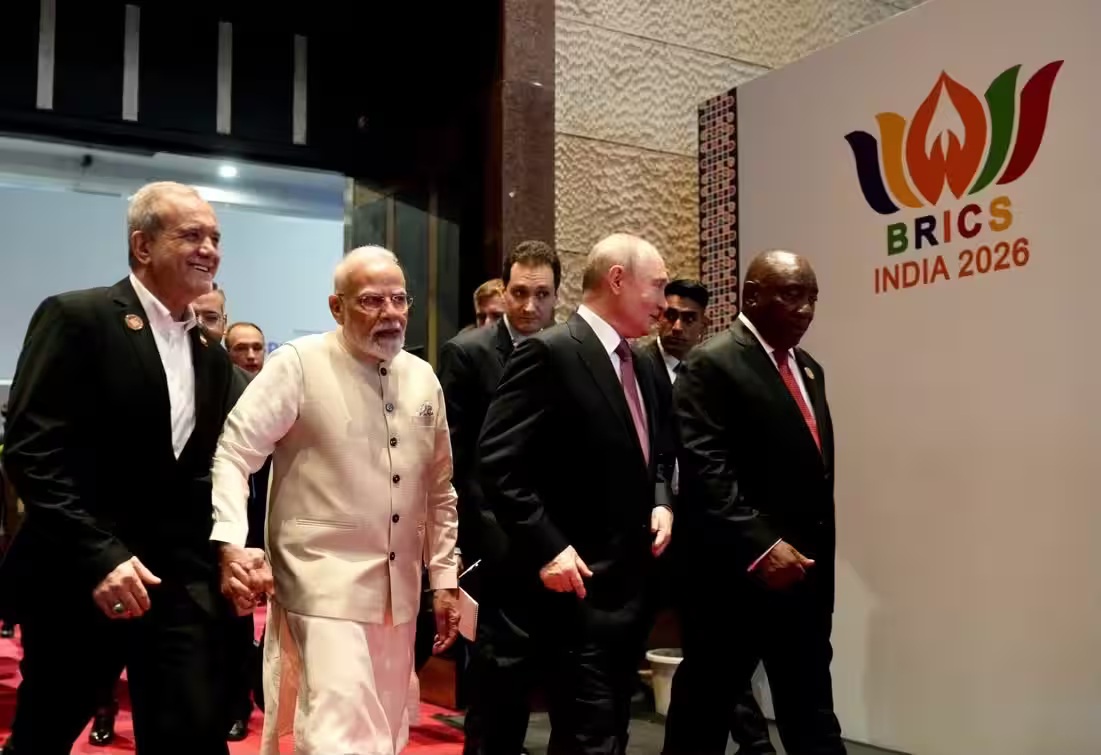
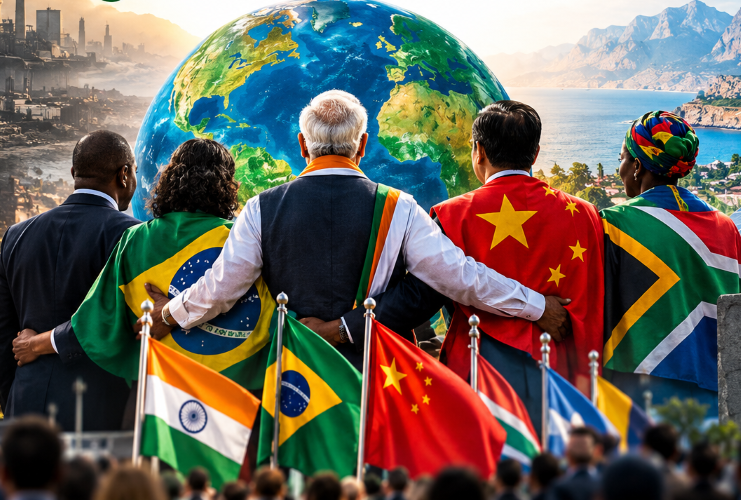
One topic has resurfaced during the BRICS Summit in New Delhi: Is BRICS progressively evolving into an anti-Western power bloc? Such concerns are undoubtedly heightened by the increasing hostility between China, Russia, and the West, but the reality of BRICS is much more nuanced. Although most of its members concur that the Global South needs a stronger voice and more equitable representation in international organisations, their approaches to the West are very different. Thus, both the task and the opportunity are exceptional for India. Its goal is to maintain BRICS as a forum for collaboration, communication, and common interests rather than to turn it into another geopolitical pole. This more comprehensive and nuanced diplomatic vision is reflected in India's "Non-West, Not Anti-West" policy.
The intricacy of today's world order is lost if international affairs are only seen through the binary lenses of "West" and "Anti-West". India's statement, "India is not anti-West; India is non-West," opposes this binary thinking in the context of the 18th BRICS Summit. Although the divergence may seem semantic, it indicates a fundamental shift in India's foreign policy philosophy.
To be "anti-West" means to view the West as an enemy and work to create a rival pole to offset its power. In contrast, "non-West" refers to India's lack of affiliation with or opposition to the Western bloc. In accordance with its own national interests, it is nevertheless free to interact, bargain, and collaborate with all centres of power. That is what strategic autonomy is all about.
India does not want BRICS to develop into another power bloc that is hostile to the United States or the West because of this. According to New Delhi, the true significance of BRICS is in enhancing the Global South's voice, ensuring more equitable representation in international organisations, and providing developing nations with a significant role in international decision-making. This viewpoint is reflected in Prime Minister Narendra Modi's demand for the Global South to become rule-shapers rather than just rule-followers.
The goal of India's foreign policy is not to swap out one main power centre for another. It is an attempt to create a truly multipolar order where no one force has unbridled authority. India's long-standing defence and energy cooperation with Russia, its involvement with BRICS, its participation in the Quad, and its growing connections with the US and Europe are all manifestations of the same strategic independence. This strategy is evident even in its choice to continue communication with China in spite of their intense strategic rivalry.
Thus, the idea is straightforward: disagreement without animosity, involvement without subordination, and alignment without reliance. In the context of India's strategic autonomy, that is what "non-West" actually implies.
The BRICS Summit in New Delhi is significant not only because India is hosting the group but also because of the direction it aims to provide this more varied and expansive forum. BRICS is no longer the little alliance of five nations that it was. As a result of its growth, countries with wildly disparate political systems, economic goals, regional issues, and ties to the West have come together. It would not be feasible or beneficial to turn such a heterogeneous group into an ideological or anti-Western alliance. Its ability to turn this diversity into areas of common interest is its true power.
Challenging Western dominance could be a strategic objective for China and Russia. Sanctions and regional security continue to be Iran's top priorities. The UAE and Saudi Arabia have close strategic and commercial ties to the West. South Africa and Brazil each have their own priorities for regional development. India is in a unique position. New Delhi wants to use BRICS as a platform for useful collaboration in trade, investment, energy, technology, development, payment systems, and the reform of international organisations rather than using it as a weapon against any specific country.
Prime Minister Modi's call for the Global South to become a "rule-shaper" rather than just a follower of the rules and to turn the current "pyramid" of privileges into a "platform" of cooperation encapsulates this broader Indian vision: a world where strategic autonomy, respect for one another, and common interests can coexist rather than a world split into opposing camps.
As non-alignment previously suggested, India's strategic autonomy no longer entails avoiding major nations. Rather, it implies not relying on any one power. In the same way that energy and security cooperation with Russia continue to be crucial, India depends on technology, funding, and markets from the United States and Europe. Even if China is a strategic rival, communication lines must stay open. This strategic canvas is further expanded by India's interactions with West Asia, Africa, and the Global South. Therefore, it is more appropriate to see Indian foreign policy through the lens of "multi-alignment"—forming alliances with many centres of power based on national objectives without being firmly associated with any one group.
This does not imply that India has to support Western policy. Without converting any of these stances into an anti-Western endeavour, India can condemn American trade policy, call for changes to international financial institutions, advocate for increased representation in the UN, and look into alternatives to an over-reliance on the dollar. Similarly, keeping ties with Russia does not imply supporting all of Moscow's initiatives.
The true essence of "Non-West, Not Anti-West" is this. India seeks to mould its relationships based on national interests and issues rather than the politics of enduring allies and enemies. Strategic autonomy's true power comes from keeping its choices open rather than from keeping a distance. BRICS provides India with a chance to put this independent diplomacy into action by creating a platform that supports common interests rather than opposing any one group.
Within BRICS, India’s real challenge is not the West but the growing influence of China. India wants BRICS to emerge as a strong and effective global platform, but it would hardly serve Indian interests if the grouping were allowed to become an extension of any single power centre, particularly China. If BRICS increasingly acquires the identity of an anti-Western bloc, its trajectory could naturally move closer to the geopolitical priorities of China and Russia. For India, that would be the most uncomfortable strategic outcome. Despite its border tensions and broader strategic rivalry with China, India does not want to close the door to dialogue. The Modi-Xi engagement and Xi Jinping's return to Delhi after a seven-year absence are clear indicators of this practical diplomacy. Speaking with a competitor is not a sign of surrender; rather, it is the capacity to maintain communication while pursuing one's own goals, which is the fundamental component of strategic autonomy.
Because of this, the real results that BRICS creates should be used to gauge its performance rather than its statements. The group's significance will last if it can foster useful collaboration in trade, local currency transactions, cross-border payments, energy, technology, artificial intelligence, healthcare, and development. BRICS runs the risk of becoming just another political platform if it only criticises the Western order. Alternative payment methods and financial institutions must develop in India, but they cannot be used as tools of new dominance. Chinese supremacy cannot be an alternative to Western dominance. India perceives the BRICS as a framework for multipolar collaboration based on common interests rather than a group defined by who it opposes.
It is challenging to comprehend the path of India's modern diplomacy without a grasp of the concept of "non-West". Its most significant implication is that, should the world split into rival power blocs once more, India should not join any one of them; rather, it should serve as a forum for communication and collaboration between them.
India has strong strategic and economic linkages to the West, a long history of collaboration and confidence with Russia, increasing acceptability throughout the Global South, relationships in West Asia that cut across rival factions, and open lines of communication with China despite significant disagreements. India has a unique diplomatic position thanks to this network of interconnected contacts, which allows it to interact with several centres of power at once without ceding its strategic independence to any of them.
Because of this, India's balancing act should not be interpreted as a sign of uncertainty; rather, it is an indication of strategic capacity. However, bearing the weight of both shores evenly does not equate to being a bridge. A bridge has its own direction and destination. That location is of national interest to India. It must choose which partnership, on what matter, and to what degree it supports its strategic, security, and economic interests.
Therefore, the Indian message behind "Non-West" is clear: India is neither anti-West nor subservient to the West; it is Russia's partner rather than its follower; it interacts with China but does not join its geopolitical objectives. It aims to elevate the Global South's voice without making it synonymous with anti-Western politics. India is in favour of a multipolar world, but it does not want it to lead to the emergence of new antagonistic blocs.
This is the key distinction between "Anti-West" and "Non-West". While non-Western politics identify itself by independent choices and a greater variety of possibilities, anti-Western politics make antagonism to a power its identity. For India, this entails issue-based alliances rather than long-term camps. In the twenty-first century, a nation's proximity to or distance from the United States cannot determine whether it is an ally or an enemy. The true standards of relationships must be practical cooperation, respect for one another, and national interest.
This is the exact point at which BRICS presents India with both a problem and an opportunity. It cannot become the political extension of any one power due to its increasing diversity. The countries of the Global South have different economic demands, West Asian states have their own security concerns, and China and Russia have their own objectives. It is India's responsibility to make sure that this diversity is turned into a strength rather than a problem. BRICS will be considerably more relevant than the rhetoric of anti-Western posturing if it develops into a platform for real collaboration in trade, energy, investment, development, technology, and payments.
Therefore, "Non-West, Not Anti-West" is a statement of India's independence rather than its distance from the West. India wants to contribute to the creation of a global order where no one country has unbridled supremacy, rather than to lead any particular group. Strategic autonomy will become more than just a foreign policy tenet and a useful tool for international diplomacy if it can maintain communication between rival centres of power while establishing common ground around mutual objectives. India's best chance in the BRICS is to carve out a separate space between the blocs rather than join one of them.





[[comment.comment_text]]