India–Indonesia: From Act East to a Deeper Indo-Pacific Strategic Partnership

 1 month, 4 weeks ago
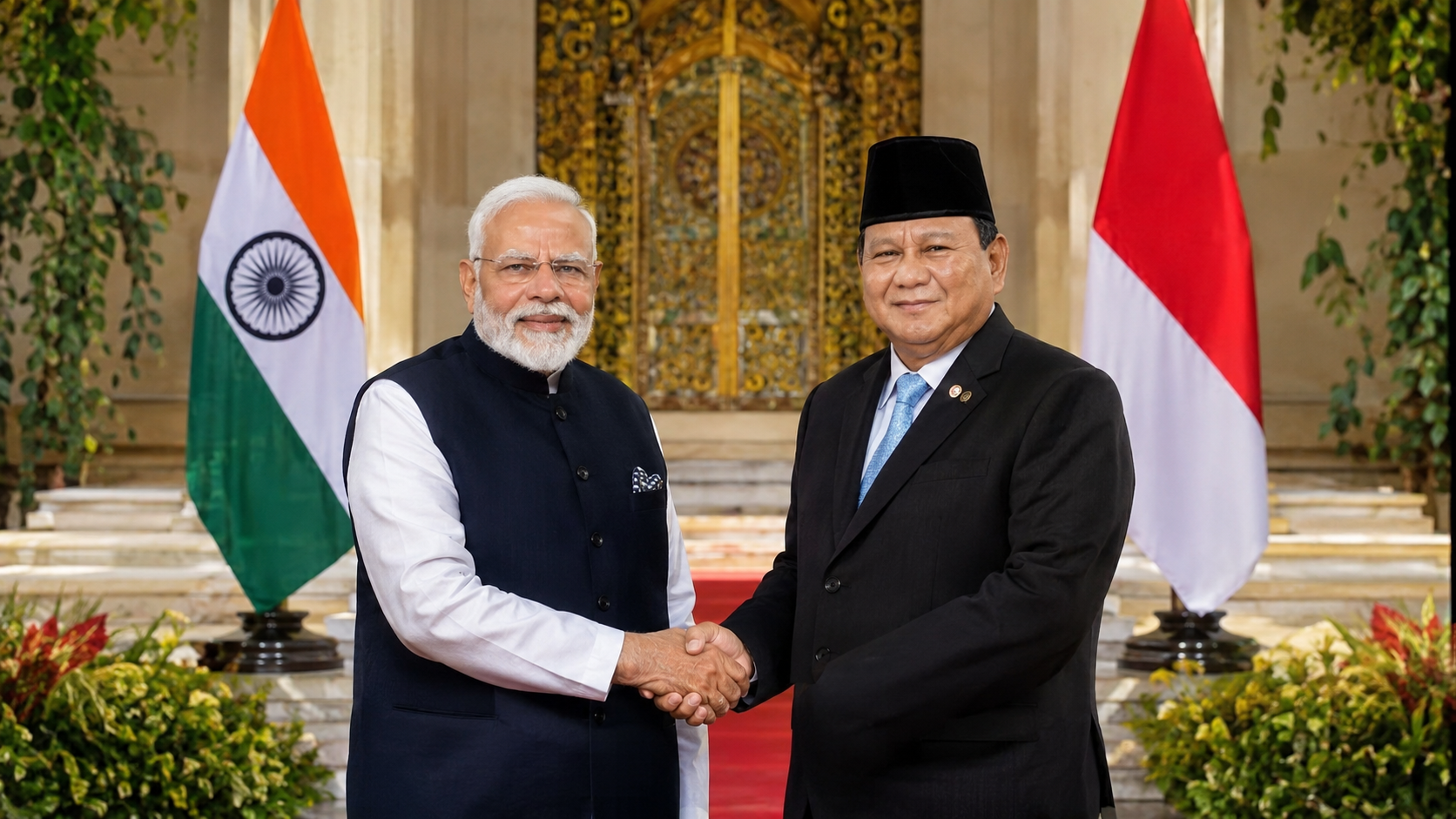
India’s relationship with Indonesia is entering a phase in which strategic interests are becoming as important as traditional diplomatic and economic ties. Prime Minister Narendra Modi’s recent visit to Indonesia has reinforced the direction of India’s Act East Policy and highlighted the growing importance of Jakarta in New Delhi’s Indo-Pacific calculations. What makes Indonesia particularly valuable to India is not simply its size or economic potential, but its geography. Located at the intersection of the Indian and Pacific Oceans and close to some of the world’s busiest maritime routes, Indonesia occupies a position that directly affects India’s security, trade and long-term strategic interests.
India’s engagement with Southeast Asia has evolved considerably since the Act East Policy was announced in 2014. The earlier Look East approach was largely focused on improving economic and diplomatic relations with ASEAN countries. The Act East Policy gave the relationship a stronger strategic and security dimension. Indonesia has emerged as one of the most important partners in that transformation because the two countries share interests in maritime security, freedom of navigation, counter-terrorism, defence cooperation and a stable Indo-Pacific.
For India, a stronger relationship with Indonesia provides an important strategic advantage in the eastern Indian Ocean. Indonesia controls access to several critical maritime passages, including the approaches to the Strait of Malacca, through which a substantial portion of global trade and energy supplies moves. India’s economy is heavily dependent on secure maritime trade routes. Any instability or disruption along these routes could have direct consequences for Indian trade, energy security and supply chains. Closer cooperation with Indonesia therefore gives India an additional partner in maintaining maritime stability.
The strategic value becomes even clearer when the Andaman and Nicobar Islands are considered. India’s position in the Andaman Sea places it close to the western approaches of the Malacca Strait. Indonesia’s Sabang area is similarly positioned at the western entrance to the strait. Greater cooperation between India and Indonesia around Sabang and the Great Nicobar region could eventually create a more integrated maritime security and connectivity framework. Although projects such as the development of Sabang have progressed slowly, their strategic potential remains considerable.
This cooperation is already moving beyond declarations. India and Indonesia conduct coordinated maritime patrols, while their navies and coast guards maintain regular exchanges and operational engagements. The 46th edition of the India-Indonesia Coordinated Patrol was conducted in May 2026. Cooperation in maritime domain awareness, coastal surveillance, hydrography and information sharing is also expanding. For India, such arrangements strengthen its ability to monitor developments across the eastern Indian Ocean without having to rely exclusively on its own assets.
The presence of an Indonesian liaison officer at India’s Information Fusion Centre–Indian Ocean Region is particularly useful in this context. Maritime security increasingly depends on the ability to combine information from different countries. Shipping movements, illegal fishing, smuggling, piracy and other forms of maritime activity cannot always be effectively monitored by one country alone. Better information sharing with Indonesia gives India a broader picture of activity across strategically important waters.
Defence cooperation offers another direct benefit to India. The relationship has developed over more than two decades through defence agreements, ministerial dialogues, joint committees, working groups and regular Army, Navy and Air Force exchanges. This institutional structure means that India and Indonesia now have established mechanisms through which they can discuss security concerns and develop practical cooperation.
The latest emphasis on defence production and technology is particularly important for India because it supports New Delhi’s ambition to become a major defence manufacturing and exporting country. The proposed cooperation involving the BrahMos missile system has the potential to strengthen India’s defence-export profile in Southeast Asia. If such cooperation develops into wider arrangements involving joint production, technology transfer, maintenance, repair and overhaul and supply-chain integration, Indian defence companies could gain a stronger presence in the Indonesian market.
That would benefit India in more than one way. Defence exports generate revenue, create manufacturing capacity and provide Indian companies with international experience. More importantly, defence equipment creates long-term relationships. Once countries acquire a weapons system, they require training, maintenance, spare parts, upgrades and technical support for many years. A successful defence-export relationship can therefore become a durable strategic relationship.
The Indonesian market is particularly relevant because India needs to diversify its defence-export destinations. Building a presence in Southeast Asia would strengthen India’s position as a supplier of military technology and reduce the perception that Indian defence manufacturing is primarily aimed at meeting domestic requirements.
There is also an industrial benefit. India has been attempting to develop an indigenous defence ecosystem under Make in India and Atmanirbhar Bharat. Cooperation with Indonesian companies can help Indian manufacturers establish international supply chains and production partnerships. The existing cooperation between Tata and Indonesia’s Pindad demonstrates that this is not merely a theoretical possibility. Expanding such industrial relationships could create opportunities for Indian private-sector companies in armoured vehicles, shipbuilding, electronics, aerospace components and other defence technologies.
Indonesia can also become important to India’s energy and resource security. The global competition for critical minerals has made access to reliable supplies an increasingly important economic and strategic issue. These minerals are required for electric vehicles, renewable-energy systems, electronics, telecommunications and modern defence equipment. Indonesia’s resource base makes it an important potential partner for India as it attempts to reduce vulnerabilities in strategic supply chains.
Cooperation in critical minerals, steel and industrial technology could therefore complement India’s broader manufacturing ambitions. Instead of simply importing finished products, India can seek longer-term arrangements involving processing, manufacturing and technology. Such partnerships can strengthen Indian industry while providing Indonesia with access to Indian capital, technology and markets.
The economic relationship also has potential in the digital sector. India’s experience with digital public infrastructure, digital payments and technology platforms provides opportunities for cooperation with Indonesia. Cross-border payment systems, artificial intelligence, telecommunications, cybersecurity and digital commerce can create new avenues for Indian technology companies.
For India, this is particularly valuable because Southeast Asia represents a rapidly expanding digital economy. Indian companies that can establish themselves in Indonesia could use the country as a base for wider regional expansion. The relationship could therefore support India’s ambition to become not merely a consumer of technology but an exporter of digital solutions.
Space cooperation provides another emerging area. India’s space programme has developed capabilities in satellite technology, remote sensing, launch services and applications that are increasingly relevant to developing countries. Cooperation with Indonesia can create opportunities for Indian space companies and institutions while strengthening India’s technological influence in Southeast Asia.
There is also a less visible but important diplomatic benefit. Indonesia is one of the most influential members of ASEAN. A stronger relationship with Jakarta can therefore help India deepen its engagement with the wider ASEAN community. India’s Indo-Pacific strategy cannot be successful without strong relationships with Southeast Asian countries, and Indonesia’s size and diplomatic influence make it an especially important partner.
This gives India a diplomatic advantage at a time when the strategic competition in the Indo-Pacific is intensifying. India does not need formal alliances with every regional country. Instead, it can strengthen a network of strategic partnerships based on shared interests. Indonesia fits particularly well into this approach because both countries value strategic autonomy and neither wants regional politics to be reduced to rigid military blocs.
The partnership also strengthens India’s ability to contribute to a rules-based maritime order. India has consistently supported freedom of navigation and a free, open and inclusive Indo-Pacific. Indonesia’s own geographical position gives it a direct stake in the security of regional sea lanes. Working together, the two countries can contribute to greater stability without transforming the relationship into a conventional military alliance.
Counter-terrorism and security cooperation offer additional advantages. India and Indonesia have both experienced the challenges associated with terrorism and radicalisation. Joint training, intelligence sharing and cooperation between security institutions can strengthen both countries’ ability to address transnational threats.
Military exercises such as Garuda Shakti, which focuses on special forces training, counter-terrorism and jungle warfare, also provide Indian forces with experience in operating alongside Indonesian troops. Such exercises improve interoperability and create professional relationships between the two militaries. For India, these relationships can become valuable during humanitarian emergencies, peacekeeping operations and regional security contingencies.
The relationship also has a strong cultural foundation. India and Indonesia have centuries-old civilisational links, visible in architecture, literature, art and religious traditions. These connections provide a level of public goodwill that can support political and economic engagement. In an increasingly competitive international environment, cultural diplomacy can reinforce strategic diplomacy by creating a broader base for bilateral relations.
However, India must be realistic about what this partnership can deliver. Agreements alone will not produce strategic gains. The experience of Sabang demonstrates that implementation can be considerably slower than diplomatic declarations. Defence production arrangements also require commercial viability, financing, technology-transfer mechanisms and reliable delivery systems. India will have to ensure that its companies can compete on quality, cost and after-sales service if it wants to establish itself as a serious defence supplier.
The same applies to trade and investment. India and Indonesia have considerable economic complementarities, but businesses still face regulatory and market-access barriers. If the political relationship is to produce larger economic benefits, both governments will have to work towards making trade easier and encouraging greater private-sector participation.
For India, the greatest value of the Indonesia relationship may ultimately lie in its ability to connect several strategic objectives at the same time. Maritime cooperation supports security. Defence exports support manufacturing. Critical-mineral partnerships support industrial policy. Digital cooperation supports technology exports. Space cooperation strengthens India's technological diplomacy. ASEAN engagement strengthens India’s regional influence.
This makes Indonesia more than another bilateral partner. It can become an important link between India’s domestic economic ambitions and its external strategic objectives.
The partnership is also useful because it strengthens India’s strategic presence without requiring a formal alliance. India can cooperate with Indonesia on maritime security while maintaining strategic autonomy, expand defence production without entering a military bloc, and work with ASEAN without compromising its independent foreign-policy choices.
The next challenge is therefore implementation. India and Indonesia have already created a substantial institutional framework. Defence dialogues are functioning, military exercises are taking place, maritime information is being shared and cooperation is expanding into technology and industrial sectors. The task now is to convert these mechanisms into concrete projects and measurable outcomes.
For India, the benefits are potentially significant: safer maritime trade routes, stronger defence exports, access to strategic resources, greater technological cooperation, deeper ASEAN engagement and a stronger position in the Indo-Pacific. But these benefits will materialise only if political commitments are followed by investment, institutional coordination and private-sector participation.
India’s relationship with Indonesia has therefore moved well beyond the traditional language of friendship and historical ties. It is increasingly becoming a partnership based on hard strategic interests. Geography has brought the two countries closer; maritime security, defence technology, trade, resources and the changing Indo-Pacific order are giving that proximity a new strategic meaning.
For New Delhi, Indonesia could become one of the most important pillars of the Act East Policy. The opportunity is not simply to strengthen relations with one country, but to use the partnership to advance India’s larger objectives: becoming a stronger manufacturing power, a credible defence exporter, a more influential Indo-Pacific actor and a more deeply integrated participant in the economic and security architecture of Southeast Asia.








[[comment.comment_text]]