Israel’s Election: Beyond the Netanyahu Question

 an hour ago
Why a change of leadership may not alter Israel’s security and regional priorities
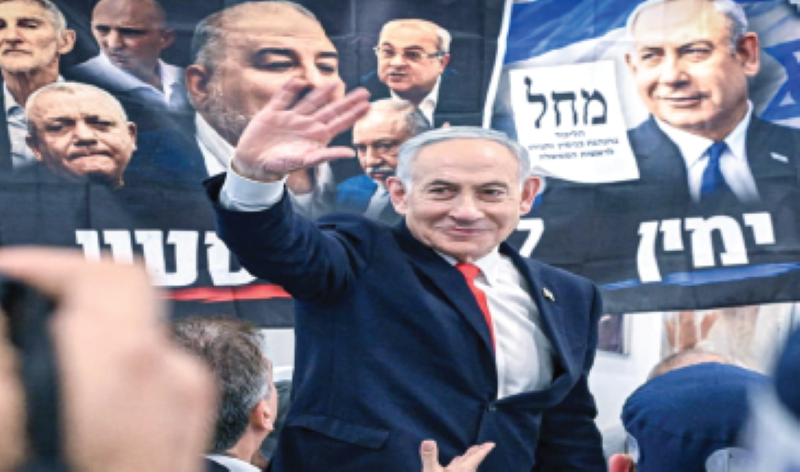
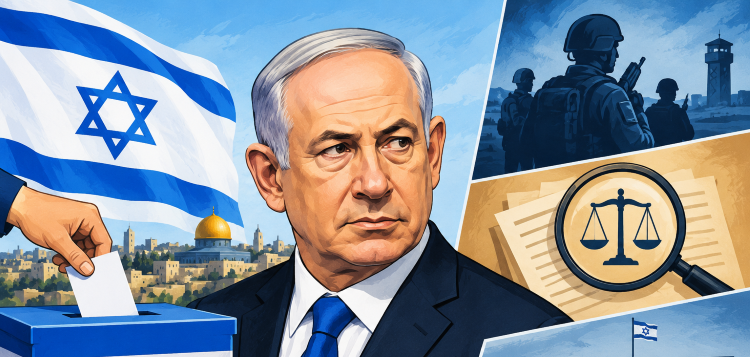
Israel went to the polls on October 27 in an election was framed as a referendum on Prime Minister Benjamin Netanyahu. Yet reducing the contest to the political fate of one leader overlooks a more consequential question: will Israel’s political centre of gravity shift in the aftermath of the Hamas-led attack of October 7, 2023? More specifically, would a change of government alter the country’s strategic priorities in an environment dominated by security concerns, military mobilisation and regional instability?
The answer requires looking beyond Netanyahu’s popularity to understand Israel’s electoral system, the competing political blocs and the broad consensus that continues to shape the country’s security outlook.
Understanding Israel’s Electoral System
Unlike India, Israel does not elect its prime minister directly through a popular vote. Citizens vote for political parties contesting the 120-member Knesset, Israel’s parliament. Under the proportional representation system, the country functions as a single nationwide constituency, with parties securing seats broadly in proportion to their share of the vote, provided they cross the 3.25 per cent electoral threshold.
The decisive factor is therefore not simply which party wins the most seats, but which combination of parties can assemble a parliamentary majority. A government generally requires the support of at least 61 lawmakers in the Knesset.
The contrast with India’s first-past-the-post system is significant. Indian voters elect individual representatives from constituencies, whereas Israeli voters select parties whose candidates are placed on predetermined lists. Consequently, a party can emerge as the largest political force yet fail to form a government, while a smaller party can become indispensable to coalition formation.
A vote for Likud, Netanyahu’s party, is not necessarily an endorsement of Netanyahu personally. Equally, an electoral setback for the prime minister does not automatically indicate a decisive ideological shift among Israeli voters. The composition of the governing coalition may matter as much as the overall electoral verdict.
A Political Spectrum Beyond Left and Right
Netanyahu’s political bloc brings together nationalist conservatives, far-right parties and religious constituencies whose interests overlap but are not identical.
Likud represents nationalist-conservative politics, emphasising security, Jewish national identity and strong executive authority. Ultra-Orthodox parties, including Shas and United Torah Judaism, prioritise religious education, welfare provisions and the preservation of the existing relationship between religion and state.
Far-right parties, including Itamar Ben-Gvir’s Otzma Yehudit, advocate hardline positions on territorial questions, Jewish settlements and Palestinian statehood.
These parties share important positions on national identity and security, but their differences can complicate coalition management. Disputes over military conscription, judicial reform, religious authority and economic policy have the potential to strain their alliances. Netanyahu’s political strength has often depended on balancing these competing interests.
The opposition, meanwhile, is not a unified left-wing alternative offering a fundamental departure from the existing security consensus. Its principal figures differ over governance, institutional accountability and the exercise of executive power, but several retain distinctly hawkish positions on defence and national security.
Former prime ministers Naftali Bennett and Yair Lapid represent centrist-to-centre-right approaches focused on governance and security. Avigdor Liberman combines a hardline defence outlook with secularist politics, while Yair Golan represents a more explicitly liberal-left constituency.
Gadi Eisenkot, a former Israel Defense Forces chief of staff and a prominent opposition figure, draws on his military credentials to argue that national security need not depend on Netanyahu’s leadership. His political appeal rests partly on accountability, institutional integrity and concerns about corruption.
The opposition’s central argument is thus less about abandoning Israel’s security-centred approach than about changing who exercises power and how that power is scrutinised.
October 7 and the Politics of Security
The Hamas-led attack of October 7, 2023, has profoundly shaped Israel’s political debate. It produced two competing questions that continue to influence voters: how could such a serious security failure occur under Netanyahu’s watch, and who can be trusted to prevent another such failure?
For Netanyahu’s critics, the attack exposed failures of leadership, intelligence and preparedness. For his supporters, the continuing regional threats reinforce the argument for experienced and decisive leadership. Both positions place security at the centre of the electoral contest, even as they reach different conclusions about the prime minister’s fitness to govern.
This dynamic has narrowed the space for alternative approaches to the Palestinian question. An anti-Netanyahu vote should not automatically be interpreted as a demand for a more conciliatory policy towards Palestinians. Nor does dissatisfaction with the government necessarily translate into opposition to Israel’s military operations or settlement policy.
Neither the principal opposition currents nor Netanyahu’s allies can be understood solely through conventional left-right labels. Security credentials, Jewish national identity, institutional trust and the perceived capacity to manage regional threats frequently cut across traditional ideological divisions.
Consequently, a change in leadership may alter the tone and conduct of government without fundamentally transforming its strategic priorities.
Military Conscription: A Domestic Fault Line
One issue that could have significant consequences for the next government is military service. Israel’s citizen-army model makes conscription central to the relationship between the state and society. Yet the longstanding exemption enjoyed by many Haredi, or ultra-Orthodox, men has become increasingly contentious.
Heavy reserve mobilisation and prolonged security demands have intensified questions about the equitable distribution of military obligations. Secular Israelis and other groups argue that the burden of national defence should be shared more fairly. Ultra-Orthodox parties, however, seek to preserve arrangements that allow members of their communities to pursue religious study and maintain their distinct way of life.
The dispute is both a question of social justice and a test of coalition stability. Religious parties can wield considerable influence when their support is necessary to secure a parliamentary majority. Any incoming government will have to reconcile competing demands over military manpower, religious autonomy and political representation.
This issue illustrates how a leadership change could produce meaningful domestic consequences even if Israel’s broader regional posture remains largely intact.
What Would a Change of Government Mean?
The election’s most consequential outcome may lie in the distinction between changing the government and changing the direction of the state.
A Netanyahu defeat could reshape political accountability, judicial and institutional debates, relations between secular and religious constituencies, and the balance of power within Israel’s governing establishment. It could also change the country’s diplomatic presentation and the way decisions are made.
However, a decisive shift on Palestine appears less certain. The principal political blocs have not made a fundamental reorientation towards a two-state solution the defining issue of their campaigns. Nor has the opposition established a broad electoral mandate against the use of force in Gaza or the expansion of settlements and associated violence in the West Bank.
That does not mean policy change is impossible. Different leadership could affect the timing, scope and implementation of military operations, diplomatic engagement and relations with regional partners. But such changes would be constrained by public opinion, coalition arithmetic, security institutions and continuing regional tensions.
Ultimately, Israel’s October 27 election is about more than Netanyahu’s political survival. It is a test of public confidence in the leadership responsible for confronting the consequences of October 7 and managing the country’s future. Yet an electoral verdict against one prime minister should not be mistaken for a wholesale rejection of the political and security assumptions that have shaped Israel in recent years.
The decisive question is therefore not simply whether Netanyahu remains in office, but whether a new government can change Israel’s domestic political arrangements without reproducing the same strategic choices. A different leader may change the way Israel governs itself. Whether that leader can change the direction in which the country is moving remains a far more difficult question.
(Author, a senior trilingual journalist, is an editorial adviser to TEW.)






[[comment.comment_text]]