The Great Hydrological Paradox: Why India Must Rethink Its Hydropower Ambition

 2 hours ago
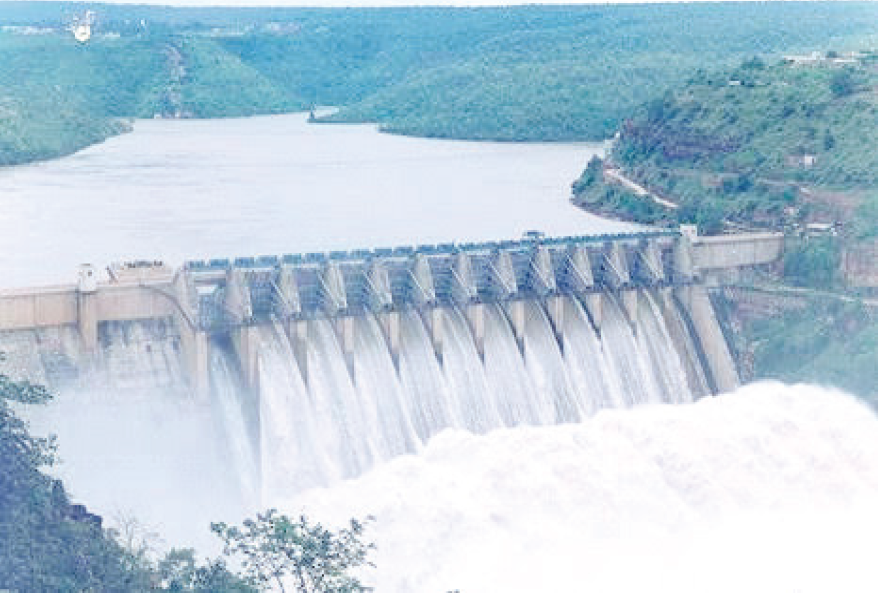
India’s energy transition is confronting a paradox that can no longer be ignored. At a time when the United States and parts of Western Europe are removing old dams to restore damaged rivers, recover fish habitats and reduce the growing costs of maintaining ageing infrastructure, India is moving in the opposite direction—planning and constructing a new generation of large hydropower and pumped-storage projects in some of its most fragile mountain ecosystems.
The contrast is striking. The removal of dams on the Klamath River along the California-Oregon border, completed in 2024, has been described as the largest river-restoration project in history. More than 400 miles of habitat have been reopened for migratory fish. The underlying message is clear: rivers are not merely channels for producing electricity; they are living ecological systems whose services have an economic and social value.
India, meanwhile, faces rapidly growing electricity demand and an urgent need to balance an expanding solar and wind capacity. Large hydropower and pumped-storage projects are therefore being promoted as essential components of the country’s non-fossil energy strategy. But the question is not whether India needs reliable electricity. It does. The question is whether sacrificing forests, watersheds and river systems to build increasingly large centralized projects is the most economical, resilient and genuinely sustainable way of meeting that need.
The watershed is the real foundation of a dam
The durability of a dam cannot be separated from the health of the landscape around it. A concrete structure may be engineered to last for generations, but the reservoir depends on the catchment remaining capable of resisting erosion and retaining soil.
The long survival of the 131-year-old Mullaperiyar Dam in Kerala illustrates this relationship. Constructed in a forested catchment that is now part of the protected Periyar Tiger Reserve, the reservoir benefits from dense vegetation and relatively limited human disturbance. Forest cover protects soil, reduces erosion and limits the quantity of sediment entering the reservoir.
The contrasting experience of the Tungabhadra reservoir is a warning about what happens when catchments are degraded. Agricultural expansion, deforestation and mining in the watershed have accelerated erosion and sedimentation. Large quantities of soil are carried into the reservoir during monsoon seasons, progressively reducing its effective storage capacity.
This is the central hydrological paradox: we continue to treat forests and watersheds as land available for economic exploitation while simultaneously depending on those same ecosystems to keep our dams functioning.
A dam without a healthy catchment is ultimately an expensive structure fighting against the landscape that sustains it.
The hidden economics of mega-hydropower
The financial case for large hydroelectric projects also deserves much closer scrutiny. Conventional cost-benefit assessments frequently place a monetary value on the electricity generated while treating forests, biodiversity, groundwater recharge, slope stability and local climatic regulation as if they were free. They are not.
Consider the ecological cost of large projects in the Himalayas and other forested regions. When thousands of hectares of forest are fragmented or cleared, compensatory afforestation elsewhere cannot simply replace the ecological functions of the original landscape. A plantation established hundreds or thousands of kilometres away may satisfy an administrative requirement, but it cannot recreate the same watershed, wildlife corridor, microclimate or slope stability.
The accounting problem extends beyond the dam itself. Large hydroelectric projects require roads, transmission corridors, tunnels, construction camps and other ancillary infrastructure. High-voltage transmission lines crossing remote mountain landscapes can themselves involve substantial forest diversion. If these costs are accounted for separately, the apparent economics of the principal project may look considerably more attractive than the real system-wide cost.
The true question should therefore not be: How much does the dam cost? It should be: How much does the entire energy system cost—including ecological restoration, transmission, catchment degradation, rehabilitation and long-term maintenance?
Pumped storage is not free energy
Pumped-storage hydropower has emerged as a major component of India’s strategy for balancing intermittent renewable energy. Its basic principle is sound: electricity is used to pump water to an elevated reservoir, and the stored water is released later to generate electricity when demand is high. But pumped storage is a storage technology, not an energy source.
Because pumping and generation involve unavoidable energy losses, round-trip efficiency is typically around 75–80 percent. In simple terms, approximately 2,500 MW of electricity may have to be used to return roughly 2,000 MW during the discharge cycle, depending on the project’s design and operating conditions.
This does not make pumped storage useless. Storage is indispensable for a renewable-heavy grid. But it does challenge the notion that building ever-larger reservoirs and tunnels automatically constitutes a clean-energy solution.
The source of the electricity used for pumping also matters. If surplus renewable electricity is genuinely available, pumped storage can provide valuable grid flexibility. But if the system repeatedly relies on coal-based or expensive market electricity to pump water, some of the environmental and economic advantages are weakened.
The issue, therefore, is not whether pumped storage should exist. It is where it should be built, how it should be operated and whether its ecological and transmission costs justify the storage service it provides.
Mountains are not inert engineering sites
India’s Himalayan and Western Ghats landscapes demand another level of caution because they are geologically and ecologically dynamic.
The Western Ghats, for example, contain steep slopes, intense monsoon rainfall, complex rock formations and highly fractured geological zones. Historical engineering experience in these landscapes contains valuable lessons about the limits of conventional construction methods.
Yet modern projects increasingly depend on long underground tunnels, deep excavations and extensive subsurface engineering. Tunnels passing through fractured rock can encounter unexpected shear zones, groundwater inflows and structural instability. They can also alter underground drainage systems, with consequences for springs and mountain streams.
The Himalayas present an even greater challenge. They are young, tectonically active mountains exposed to earthquakes, landslides, cloudbursts and glacial hazards.
The destruction associated with the 2021 Chamoli disaster and the failure of the Teesta-III project following the 2023 South Lhonak Lake glacial outburst flood should reinforce a basic principle: infrastructure designed for yesterday’s hydrological and geological assumptions may not remain safe in a rapidly changing climate.
Climate change is increasing the uncertainty surrounding extreme rainfall, glacier behaviour and glacial lake formation. Hydropower planning must therefore incorporate not merely historical averages but the possibility of increasingly severe extremes.
India’s alternative lies closer to the consumer
India does not have to choose between energy security and ecological destruction. A more resilient strategy would combine renewable generation, storage and localized electricity systems.
One option is to accelerate distributed solar generation on degraded, non-arable land, particularly around district and taluk headquarters, and combine it with appropriately scaled Battery Energy Storage Systems. Instead of generating electricity hundreds of kilometres away and transmitting it across difficult terrain, power can increasingly be produced close to where it is consumed.
This approach also addresses one of India’s persistent problems: transmission and distribution losses. Electricity generated close to the point of consumption does not have to travel through long transmission networks before reaching homes, businesses and public institutions.
Distributed generation would not eliminate the need for large power stations or national transmission networks. Nor would batteries replace every form of long-duration storage. But a diversified system—combining solar, batteries, existing reservoirs, nuclear generation, carefully selected hydro projects and other storage technologies—would reduce the pressure to build massive new dams in environmentally sensitive regions.
Green hydrogen, meanwhile, should be concentrated where it has the greatest industrial value, particularly in coastal industrial clusters with access to renewable electricity and existing infrastructure.
A different definition of green
India’s energy transition needs ambition, but ambition should not be measured by the number of gigawatts of concrete and steel added to the landscape. The real measure of a green transition is whether it delivers reliable energy while preserving the ecological systems on which the economy ultimately depends.
A river provides much more than electricity. A forested catchment stores water, stabilises slopes, moderates local climate, supports biodiversity and sustains agriculture and communities downstream. Destroying those functions and then attempting to assign them a token monetary value in a project report is not sound environmental economics.
Western countries are increasingly recognising that some dams have reached the point where their ecological and financial costs exceed their benefits. India should study that experience carefully rather than simply repeating the infrastructure trajectory from which others are now retreating.
The country certainly needs more electricity, more storage and a stronger grid. But it also needs healthier rivers, intact watersheds and climate-resilient landscapes.
The choice before India is therefore not between development and conservation. It is between an old model of centralized infrastructure that treats nature as an obstacle, and a new model that treats ecological resilience as part of national infrastructure.
India’s clean-energy future should not be built by defeating its rivers. It should be built by learning how to live with them.
(The author, a former Deputy Conservator of Forests in Shivamogga Karnataka, is a well-recognised commentator on environment, education, and governance issues.)







[[comment.comment_text]]