Actor Mohanlal: The Touchstone of the Phalke Award

 1 month, 1 week ago
The question of the Dadasaheb Phalke Award is not merely about an artist's popularity or box-office success, but about who has enriched the art, acting, language, and social consciousness of Indian cinema over a long period. Mohanlal's significance lies not just as a Malayalam superstar, but as a multidimensional actor spanning serious social roles, comedy, psychological dramas, and mass cinema. Therefore, evaluating him for the Phalke Award requires a balanced and critical assessment of his entire cinematic contribution.
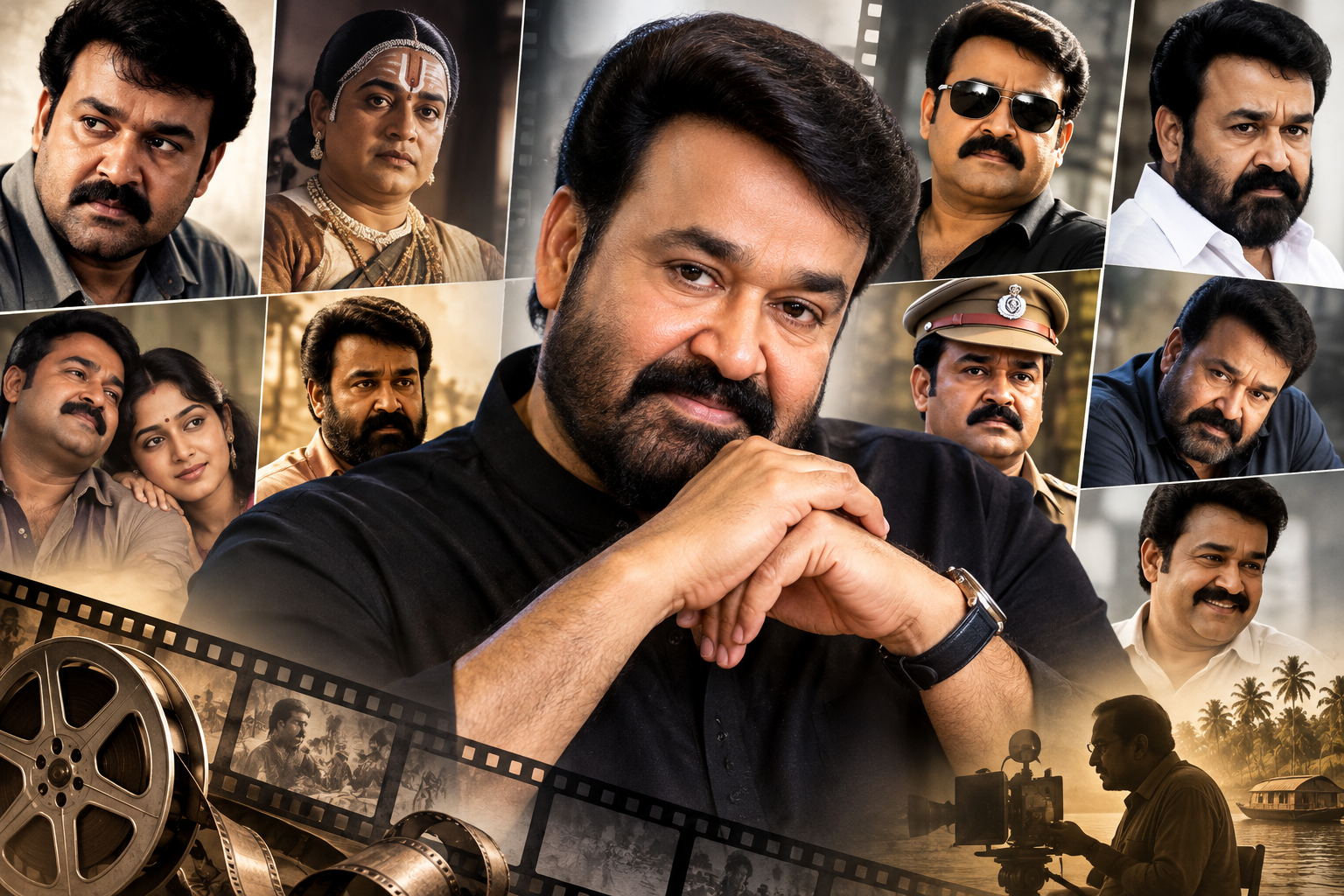
While rooted in Malayalam cinema, Mohanlal's work in Hindi, Tamil, and Telugu films proves that performance transcends linguistic boundaries. His greatest strength is living his characters rather than merely acting them. In Kireedam, he portrays an ordinary youth transformed by circumstance and societal pressure into violence, compelling viewers to question whether crime stems solely from individual fault or broader social conditions.
In Vanaprastham, he plays a gifted Kathakali artist whose life is constrained by caste structures, conveying deep anguish through subtle facial expressions and silence rather than dramatic speeches. Yet his filmography is equally rich in lighthearted and emotional roles; films like Chithram and Thenmavin Kombath demonstrate his range in comedy, romance, and human relationships, showing an ability to move audiences from laughter to contemplation.
In Bharatham, he explores the tension between artistic ego, personal weakness, and family responsibility. Thanmathra addresses memory loss not just as a medical condition, but as a poignant study of family support and human dignity. Meanwhile, Drishyam presents a father reaching the limits of the law to protect his family, using a restrained performance that leaves the audience in a moral dilemma.
His blockbuster roles in films like Narasimham, Aaram Thampuran, and Lucifer established him as a powerful 'mass hero'. However, a critical view notes that reliance on a dominant hero can overshadow democratic institutions and collective action. Understanding this paradox—between the vulnerable, broken individual and the extraordinary hero—is essential to evaluating his overall artistic arc.
Mohanlal's career is also defined by strong on-screen partnerships. Collaborations with actresses like Shobana, Urvashi, Revathi, Manju Warrier, and Meena produced memorable character dynamics, such as the psychological depth in Manichitrathazhu or the realistic parental unity in Drishyam.
His work alongside veteran co-actors including Thilakan, Nedumudi Venu, Sreenivasan, Jagathy Sreekumar, Suresh Gopi, and Mammootty enriched Malayalam cinema's ensemble acting tradition. The nuanced father-son dynamic with Thilakan in Kireedam, where quiet moments often carry more weight than spoken dialogue, remains a prime example.
His multilingual projects such as Company in Hindi, Unnaipol Oruvan and Jilla in Tamil, and Manamantha in Telugu—broadened his reach across diverse audiences. This cross-regional presence reflects an ongoing dialogue between the different language industries of Indian cinema.
Determining whether Mohanlal meets the standards of the Phalke Award requires looking beyond fame to the versatility of his roles, his influence across generations, and his role in elevating regional cinema nationally. While not every film carries a message of social change, an artist must be judged by the sum of their work rather than individual titles.
The true dignity of the Phalke Award lies in honoring artists who leave a lasting imprint on Indian cinema's collective memory. Mohanlal's memorable characters and cross-linguistic impact have solidified his place within that broader landscape.
Calling him simply a 'superstar' misses the depth of his contribution. Through varied roles, he has brought human vulnerability, familial concern, artistic conflict, illness, and moral dilemmas vividly to the screen.
Ultimately, the Phalke Award serves as recognition of an enduring legacy. While not every film in his long career is a masterpiece, Mohanlal's collective body of work merits evaluation with seriousness, balance, and an open mind.








[[comment.comment_text]]