Riyadh Under Fire: Yemen War Needs a Political Solution

 2 hours ago
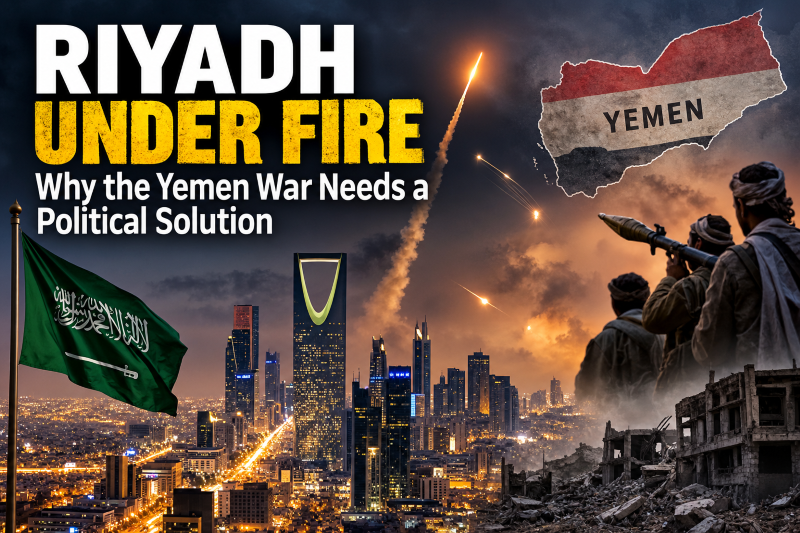
The latest Houthi missile attacks on Riyadh highlight the continuing insecurity created by the Yemen conflict. Saudi Arabia says it intercepted ballistic missiles aimed at the capital, while debris reportedly fell on civilian facilities. Recent strikes on airports in Riyadh and Abha have already caused deaths and injuries. The attacks show that, despite years of military operations, the Houthi movement remains capable of threatening Saudi territory and disrupting normal civilian life.
Saudi Arabia’s renewed bombing campaign in Yemen has intensified the cycle of violence. The Houthis have responded by targeting Saudi airports and threatening energy infrastructure, while fighting has also intensified inside Yemen. Their control of parts of the Red Sea coast is particularly important because the nearby Bab al-Mandab Strait is a major route for global trade. Continued instability in the area could therefore have consequences far beyond Yemen and Saudi Arabia, including higher energy and shipping costs.
For Crown Prince Mohammed bin Salman, the attacks also create an economic and political problem. Saudi Arabia is trying to establish itself as a major destination for tourism, investment and international events, but insecurity around its capital and airports damages that image. Rising oil prices demonstrate how quickly the conflict can affect the wider global economy. The involvement of countries such as Pakistan, Turkey and the United States further demonstrates the international significance of Saudi Arabia’s security concerns.
Yet the history of the Yemen war suggests that military action alone cannot provide a lasting solution. Saudi Arabia’s intervention, which began in 2015, failed to eliminate the Houthi movement and contributed to one of the world’s worst humanitarian crises. The renewed fighting has already displaced large numbers of Yemenis and worsened shortages of food and fuel. Another prolonged military campaign would place an even greater burden on a population that has suffered for years.
The priority should therefore be a political settlement rather than an open-ended reliance on military force. Saudi Arabia has legitimate security concerns, but protecting its territory requires more than intercepting missiles or conducting airstrikes. The United States and other partners should encourage negotiations alongside necessary defensive measures. A sustainable peace in Yemen would serve not only the interests of Yemenis but also the security, economic ambitions and regional stability that Saudi Arabia seeks to protect.








[[comment.comment_text]]