Fractured Mandates and the Gridlock: Key Takeaways from Israel’s National Election

 2 weeks, 6 days ago
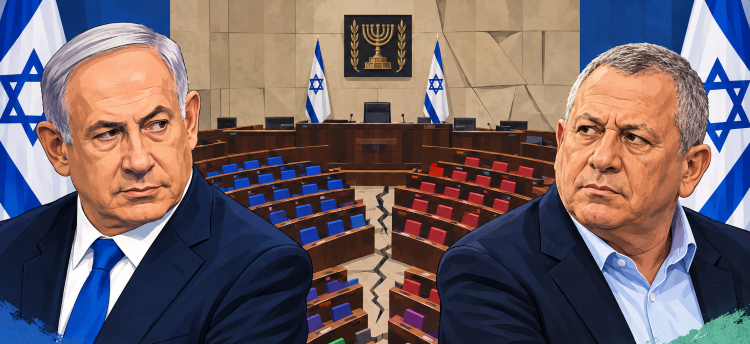
The immediate aftermath of Israel’s general election presents a classic parliamentary paradox: a deeply divided electorate rendering a mandate that offers simultaneously everything and nothing to both major political blocs. While Prime Minister Benjamin Netanyahu’s Likud-led coalition contracted to roughly 54 seats—well short of the 61 needed for a Knesset majority—his chief centrist challenger, former military chief Gadi Eisenkot and his Yashar party, similarly failed to secure an explicit majority or dominate the opposition field. This mathematical stalemate underscores the modern dilemma of proportional representation systems, where public dissatisfaction with an incumbent rarely translates into a unified endorsement for an alternative, leaving the state suspended in institutional paralysis.
At the heart of the current deadlock lies the structural fragility of opposition alliances in multi-party systems. As political analyst Reuven Hazan noted, the anti-Netanyahu camp entered the election with extraordinary tailwinds—public outrage over security failures, ongoing hostage negotiations, controversy over ultra-Orthodox conscription, and contentious judicial reforms. Yet despite these systemic vulnerabilities, Eisenkot’s opposition bloc could not convert widespread public discontent into a cohesive parliamentary takeover. In complex coalition dynamics, shared opposition to a single ruler rarely serves as a durable substitute for a unified policy platform, ultimately producing fragmented voter preferences that leave the door open for an experienced incumbent to maneuver.
Confronted with a diminished base, Netanyahu’s survival strategy highlights the pragmatism—and opportunistic flexibility—demanded by coalition arithmetic. To reach a functioning majority, Likud may attempt to poach right-wing elements from the opposition, negotiate an uneasy national unity structure alongside Eisenkot, or even contemplate tacit relying on Arab parliamentary factions. The fact that an incumbent who campaigned on divisive rhetoric against Arab political participation might consider utilizing those very lawmakers for parliamentary leverage illustrates a fundamental truth of parliamentary politics: institutional self-preservation frequently supersedes ideological orthodoxy when the math demands it.
The election’s most significant demographic development—record turnout among Arab citizens—exposes the uncomfortable divide between democratic participation and actual political influence. Although Arab voters engaged in the democratic process in unprecedented numbers, seeking meaningful societal inclusion and policy influence, their ultimate impact remains constrained by the unwillingness of major Jewish factions to integrate them fully into a governing alliance. When democratic systems invite minority participation but structurally exclude those representatives from the halls of cabinet power, the resulting cynicism risks damaging public faith in democratic institutions altogether.
Finally, the results reflect a broader global trend of voters expressing acute dissatisfaction with incumbent regimes without committing to a single, alternative vision for governance. By delivering a majority of seats (roughly 66) to a disparate array of anti-Netanyahu factions—spanning left-leaning Zionists, centrist security figures, and Arab lists—the electorate created a Knesset capable of legislative disruption but ill-equipped to govern cohesively. As opposition strategist Gayil Talshir observed, controlling parliamentary machinery while struggling to form a stable cabinet is a political tightrope; it guarantees that regardless of who eventually takes the oath as prime minister, Israel faces a period marked by delicate compromise, persistent volatility, and structural instability.









[[comment.comment_text]]