Israel’s Election: A Defining Choice Between Security-Linked War and Democracy & Regional Peace

 2 hours ago
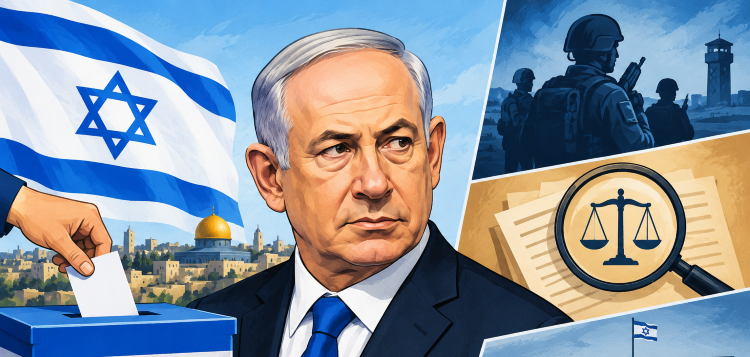
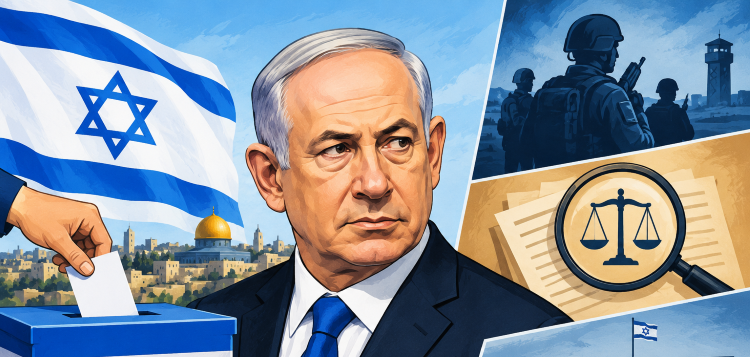
Israel’s high-stakes election represents far more than a contest for political power; it is a referendum on the country’s future direction after the trauma of the Hamas-led attacks of October 7, 2023, and the devastating wars that followed. Record voter participation, with 55.7 per cent of eligible voters casting ballots by 4 p.m., reflects the intensity of public concern. The contest pits Prime Minister Benjamin Netanyahu, a dominant figure in Israeli politics for decades, against a fragmented opposition determined to end his rule. The unusually strong turnout among Arab citizens is particularly significant, signalling that sections of the electorate traditionally marginalised in national politics are increasingly conscious of their stake in the country’s future.
At the heart of the election lies a fundamental choice between competing visions of Israel. Netanyahu’s right-wing coalition, supported by nationalist and ultra-Orthodox parties, promises a more religious state and tighter Israeli control over the occupied West Bank and Gaza. His opponents, led by former military chief Gadi Eisenkot and other opposition figures, argue that continued hard-line policies risk deepening Israel’s democratic crisis and international isolation. The opposition’s challenge, however, extends beyond defeating Netanyahu: it must reconcile ideological differences and offer a credible alternative on security, governance and relations with the Palestinians. A coalition united principally by its opposition to one leader may struggle to sustain a coherent government unless it develops a shared programme for the country’s future.
The shadow of October 7 hangs over the election. Netanyahu’s critics accuse his government of failing to prevent the attacks and resisting an independent investigation into the security and intelligence failures that made the catastrophe possible. Accountability is indispensable in a democracy, particularly when the state’s most basic responsibility—the protection of its citizens—has been so gravely compromised. Netanyahu’s repeated warnings that Israel faces annihilation without his leadership may strengthen the anxieties of some voters, but fear cannot substitute for transparent governance. Nor can national security be treated as a justification for indefinitely postponing scrutiny of political decisions. Israel needs an honest reckoning with the failures of October 7, alongside a credible strategy to protect its people and prevent another such tragedy.
The future of the Palestinians is equally central to the outcome. While Palestinians in the West Bank and Gaza have no vote in Israel’s parliamentary election, the decisions made by the incoming government will profoundly affect their lives. Continued settlement expansion, extremist violence against Palestinians and the prospect of permanently entrenching Israeli control over occupied territory would further undermine the possibility of a negotiated settlement. The opposition’s promise to curb extremist violence and repair Israel’s international standing must therefore translate into concrete policies rather than diplomatic assurances. At the same time, the reported military lockdown in the West Bank during the election underscores the stark asymmetry between Israeli citizens exercising democratic rights and Palestinians living under occupation. A durable regional peace cannot emerge from policies that deny the political aspirations and basic rights of another people.
The election’s significance will ultimately be determined not merely by who wins the largest number of seats, but by the government Israel is able to form and the choices it makes thereafter. With the two blocs appearing closely matched, coalition negotiations could prolong political uncertainty. President Donald Trump’s endorsement of Netanyahu may reinforce the incumbent’s international standing among supporters, but Israel’s future cannot depend on the approval of an American president. The country must decide whether security will remain inseparable from perpetual confrontation or become the foundation for accountable government, regional stability and a realistic political horizon for Palestinians. High turnout, including among Arab citizens, demonstrates the importance voters attach to this moment. If the election is to mark a turning point, its outcome must strengthen democratic institutions, establish accountability for past failures and open a path away from endless war. Anything less would risk perpetuating the very crisis that has brought Israel to this decisive electoral crossroads.






[[comment.comment_text]]