INDIA Bloc Regroups, But Its Vulnerabilities Remain

 2 hours ago
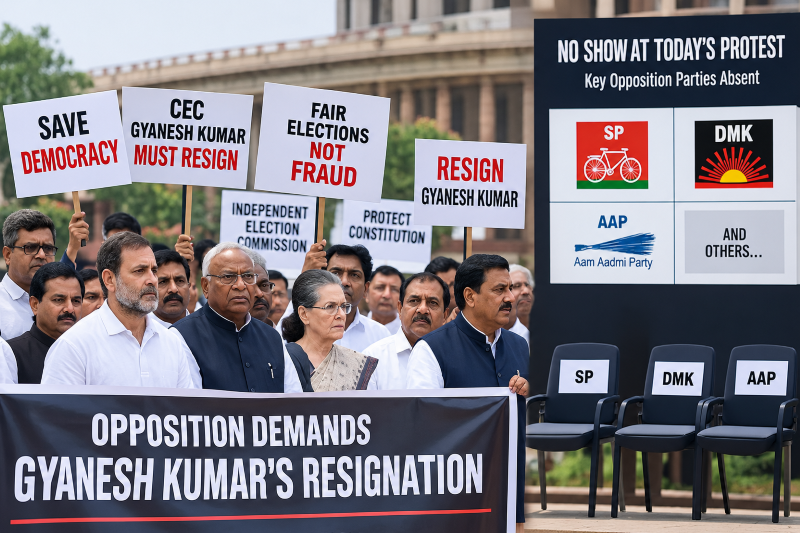
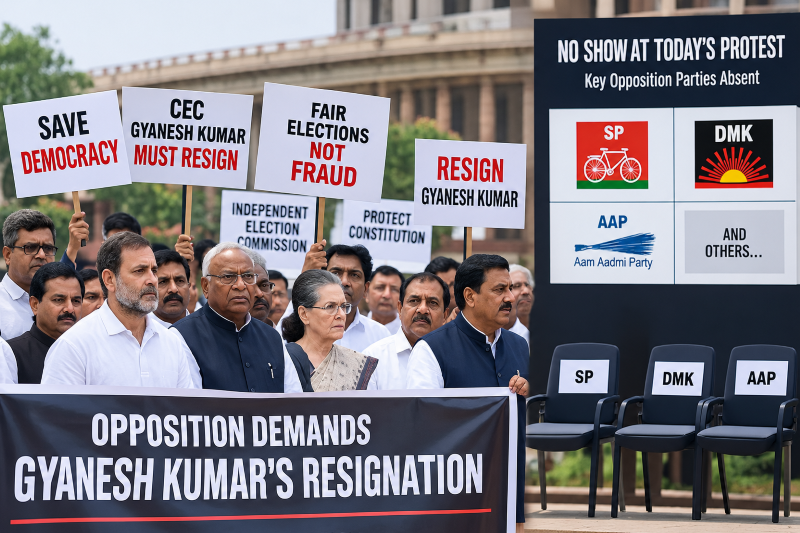
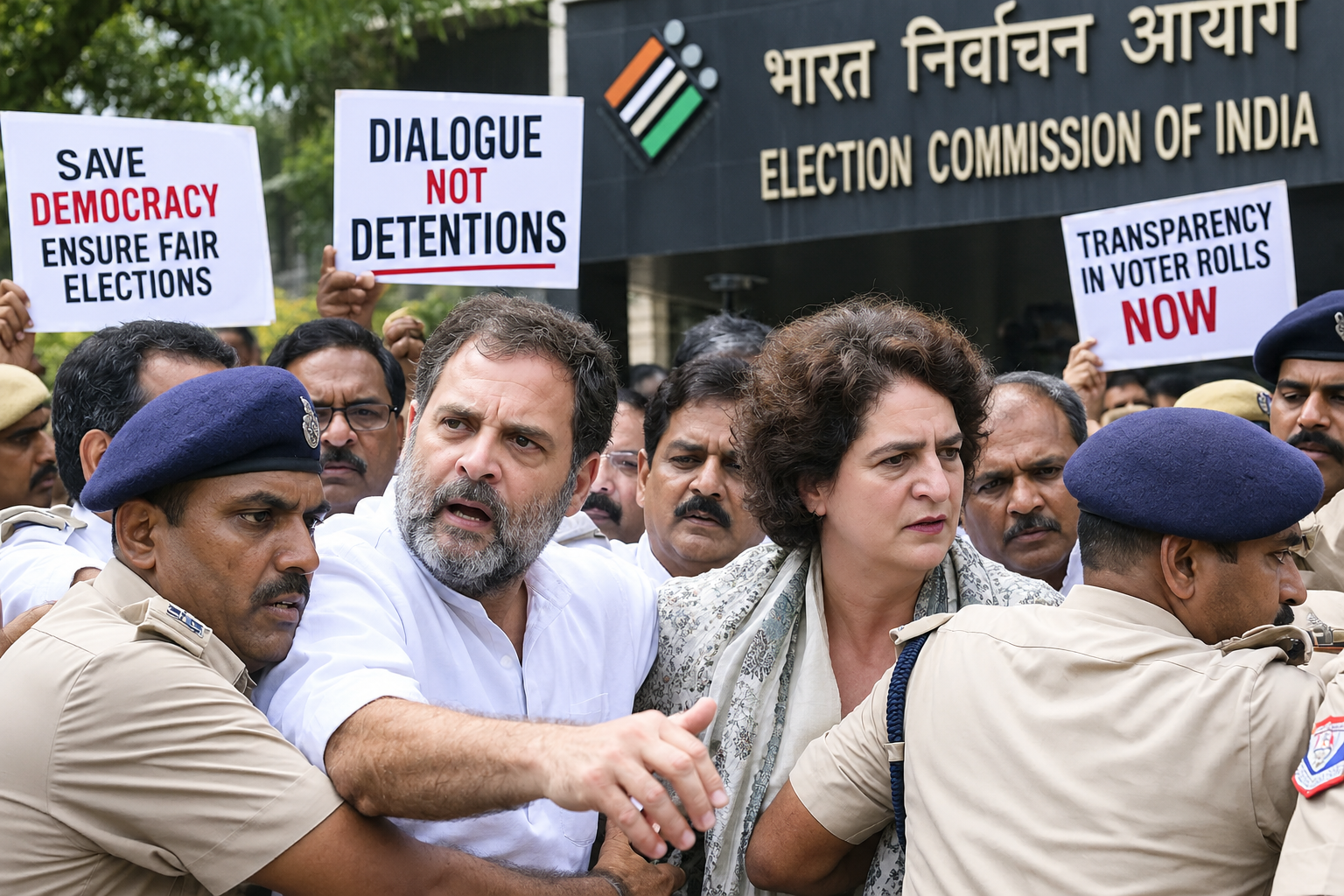
The INDIA bloc has regrouped around a common target—the Chief Election Commissioner, Gyanesh Kumar, and the controversial Special Intensive Revision (SIR) of electoral rolls. After two years of internal rivalries and strategic disagreements, the Opposition has launched a nearly two-month-long campaign leading up to the winter session of Parliament, demanding the CEC’s removal. Yet this renewed unity remains fragile. The alliance has already lost the DMK following Rahul Gandhi’s political realignment in Tamil Nadu with actor Vijay’s TVK, while the AAP is being kept at arm’s length because of the approaching Punjab elections. The recent mobilisation outside the Election Commission therefore demonstrates tactical coordination, but not necessarily the durable political cohesion that eluded the bloc during the 2024 Lok Sabha elections.
At the centre of this renewed mobilisation is Rahul Gandhi, whose political standing among Opposition leaders appears to have strengthened. His early campaign against alleged irregularities in the electoral process has acquired greater resonance amid reports of differences within the Election Commission over the implementation of SIR. Mamata Banerjee’s public expression of support for Gandhi’s leadership, following her party’s setback in West Bengal, was particularly significant. Congress president Mallikarjun Kharge, however, moved quickly to prevent the episode from being interpreted as a discussion on prime-ministerial leadership. The episode exposed both the Congress’s growing centrality to the anti-SIR campaign and the INDIA bloc’s unresolved leadership question. Opposition unity is easier around an issue than around a leader.
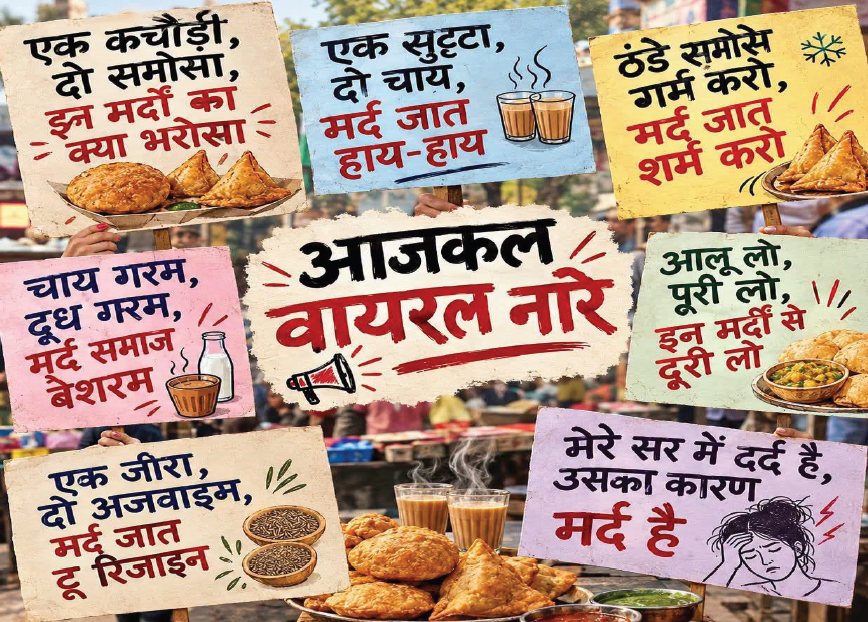
The campaign is also drawing strength from a multi-layered organisational strategy in which Left parties, particularly the CPI(ML), are playing a bridging role. Student organisations such as AISA are working alongside newer political formations and youth-oriented groups, including the Cockroach Janta Party (CJP), to take the campaign beyond conventional political rallies. Their more agile, street-level methods have helped inject energy into the agitation. But this too carries a vulnerability: a coalition built around disparate parties, student groups and emerging political formations can generate visibility without necessarily producing a transferable vote. Street mobilisation and social-media traction are not substitutes for booth-level organisation, electoral alliances and a coherent message to voters.
The Opposition also confronts formidable institutional limitations. The Chief Election Commissioner is protected by constitutional and statutory safeguards, while the INDIA bloc does not possess the parliamentary numbers required to remove him through the prescribed process. A motion in the winter session may therefore serve as a political weapon, but it cannot by itself deliver the desired outcome. More importantly, prolonged confrontation with the Election Commission carries a risk for the Opposition: unless its allegations are supported by persuasive evidence and translated into a broader public issue, the campaign could increasingly be perceived as an attempt to delegitimise an institution after electoral setbacks. The bloc must therefore demonstrate that its campaign is about electoral integrity rather than merely political advantage.
The real test, ultimately, will not be the size of a march or the intensity of a parliamentary protest but the INDIA bloc’s ability to win elections. Uttar Pradesh, where the next major electoral battle awaits, will be particularly decisive. Even with the Congress and Samajwadi Party coordinating more closely, the Opposition faces the BJP’s formidable organisational network, the RSS’s extensive grassroots presence and the combined political appeal of Narendra Modi and Yogi Adityanath. The INDIA bloc has regained some tactical momentum, but its fundamental weaknesses—leadership ambiguity, uneven organisation, conflicting regional interests and dependence on fragile alliances—remain unresolved. Unless it can convert its anti-SIR campaign into a broader, credible electoral alternative, the present revival may prove to be a temporary convergence rather than the beginning of a durable Opposition resurgence.

[[comment.comment_text]]