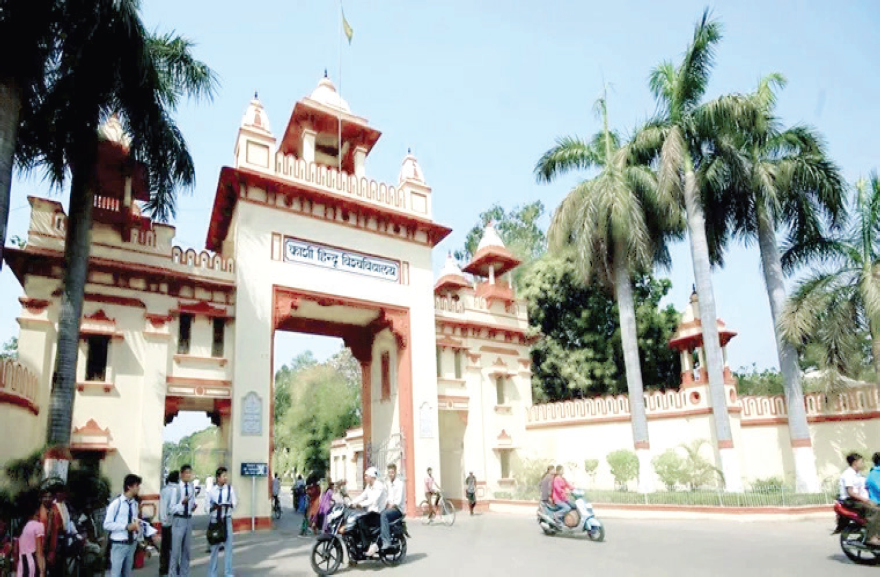
Profit Over Heritage & Legacy: BHU Sets the Stage for Outrage

 an hour ago
When a nation begins to narrow its vision of education, when the highest chairs of its institutions are handed not to scholars but to ideological cadre or aspirant workers, it signals something deeper: the ruler has nothing substantial to express. He hides behind appointments, disguising himself from the radical questions of the public, even while seated on the constitutional throne.
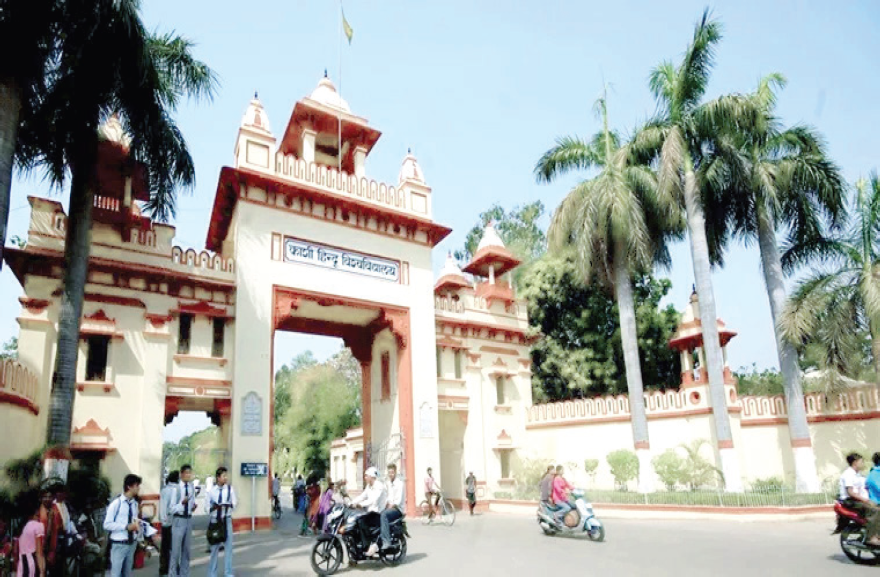
The Banaras Hindu University administration has yet to clarify the donation of land at Godowalia to civic authorities. Whispers in Kashi grow louder: land near Hindu schools, once under university possession, has been leased or sold to civic bodies, perhaps even to private parties. Only two months ago, similar concerns were raised about Ramnagar land, handed over to a big builder as BHU began copying the PPP model. This model, already a flop across the country, has become a weapon against the common man — toll roads, rejected by law, now choke daily life.
The picture is stark. A university once responsible for producing some of the rarest minds in the nation is now busy finding ways to sell itself piece by piece, to pack its bags and retreat to an island of irrelevance.
Education philosophers of the 19th century — Mario Marssino and Paulo Freire — must be remembered here. Marssino said: “Education does not change the world. Education changes people. People change the world.” Freire insisted: “The teacher is no longer merely the one who teaches, but one who is himself taught in dialogue with the students.” These doctrines shaped generations, yet in modern India they are being erased. Academia is dismantled by spies and administrators who reserve themselves from responding, leaving students unable to learn or articulate as free thinkers. The promise of dialogue has been replaced by silence, the promise of enlightenment by control.
Indian universities were built on donations from kingdoms and contributions of common people. Aligarh, BHU, Mysore, Annamalai — each carries stories of sacrifice and vision. But today, those stories are being buried under new doctrines of privatization and corporate takeover.
The decay is not abstract. Just days ago, an ex-serviceman alleged that posts meant for veterans and widows were being filled by other categories. Students paying 100–120 rupees for food were denied hygienic meals and clean water. When they protested, the chief proctor slapped them openly. Institutions now resemble detention centres more than campuses.
The Prime Minister’s Office has ordered inquiries into illegal nursing staff vacancies, but six months have passed without visible action. Journalists wait for a press conference, for accountability. If agencies fail to detect who entered the campus illegally, what does that say about the machinery responsible for national security?
The most troubling question remains: why are academic chairs involved in selling universities to corporate interests? The Prime Minister never declared from the Red Fort that his dream was to privatize universities. He spokes of business in his blood, but does that mean universities must be sold? Retired professors at BHU argue this is happening only because Kashi is a Prime Minister’s constituency. Had it not been so, perhaps the situation would have been different.
Are the people of Kashi regretting their vote, or is it a handful of individuals exploiting the dream of the highest chair for personal business? No discourse can certify the truth yet. The debate remains open, unresolved, and heavy with consequence.
The Shrinking Domain of Knowledge
Banaras Hindu University, once a citadel of learning, today stands as a monument of shame. Its administration, paid to safeguard integrity, has abdicated responsibility. Funds are misused, roads remain broken, and the campus is reduced to a parking lot for political rallies. Hospitals, laboratories, and classrooms are silenced, while reports of fake medicines and manipulated investigations circulate unchecked. The administration’s silence is complicity.
When teachers and scientists begin to behave like jesters, knowledge itself collapses. The intellectual temperament that took centuries to build is being dismantled in decades. Every act of corruption, every lapse of responsibility, is a betrayal of the stalwarts who dreamed of an educated nation. No visionary ever wished for an illiterate India.
The choice before the youth is stark: accept a society where every officeholder indulges in indiscipline and organized loot, or carve a difficult but honest path toward a future of integrity. The fact that 800 candidates vie for a vice chancellor’s chair shows it is coveted not for excellence but for patronage.
The danger is clear: educational institutions are being converted into ideological addas and sites of mockery. Like Abhimanyu trapped in the chakravyuh, Indian students face a battle against entrenched forces. Whether they emerge as saviors or victims will decide the fate of the nation’s knowledge.
Silence as Treason
In our country, debates take new formats, but the real danger lies in silence. A person chosen to lead an institution, sworn to uphold excellence, accepts salary and privileges yet watches passively as research collapses and administration decays. This abdication of duty is not neutrality; it is betrayal. In monarchy, Acharya Drona refused to call a soldier traitor for revealing the chakravyuh. But democracy demands accountability. If leaders excuse themselves by saying “this is someone else’s will,” then either they share that will or they are complicit in enforcing it.
The image is of the living dead. In 1968, a film showed zombies rising from radiation, consuming the city. The actors fought but failed. They were not the cause, yet they suffered the consequence. Our institutions resemble that city. Corruption and negligence are the radiation. Administrators may not have created it, but their silence ensures the decay spreads.
Sandra Hayes’ A Tale of Phoenix carries the same metaphor. A boy cursed by tragedy finds strength through his sister Maya, connecting two worlds — the real and the imagined. Indian students today stand in that duality. One world is dismantled by corrupt administrators and complicit ministers. The other is the imagined world of integrity, where youth can rebuild.
The conclusion is clear: The most basic stage of education is to learn similarity and difference, said Aristotle. Higher education does not limit to memorization. rather adds critical thinking, conversion of information to knowledge and skill and training leading to opening venues for progress. True education, in fact, helps person to realise inner potential and challenges traditional learning which only supports conformity and obedience to capitalism, said Eric Fromm, a noted German Social Psychologist.
Education, which forces to pick up only predefined and desirable traits, is inimical to knowledge. Any attempt to convert academic institutions into profit making enterprise, bereft of critical thinking, would be a retrograde and next generation of country to whom everything is to be handed over, suffer. The future rests not with silent officials but with youth and students who refuse to be the living dead. The youth of India must decide whether to accept dismantling as destiny or rise to create unprecedented futures.
(The author is a senior journalist writing on pedagogy, campus diversity, and pluralism in Indian higher education.)






[[comment.comment_text]]