Why Voting Has Become Essential for Arab Citizens in Israel
 2 hours ago
From political marginalisation to democratic representation: the ballot, equality and the future of citizenship
A Ballot Cast at a Defining Moment
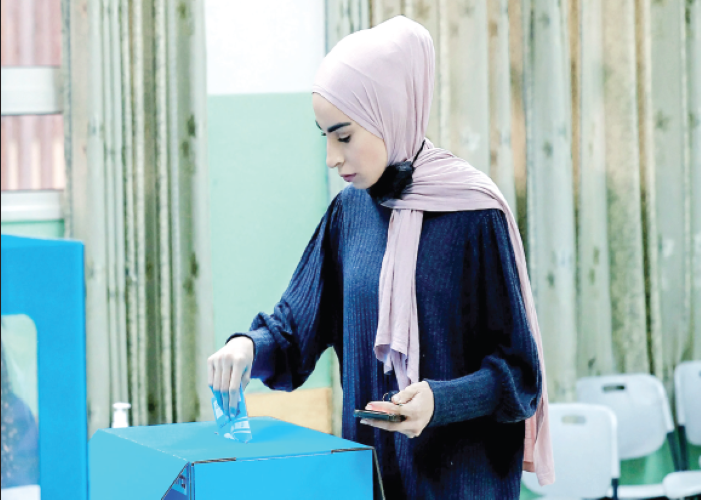
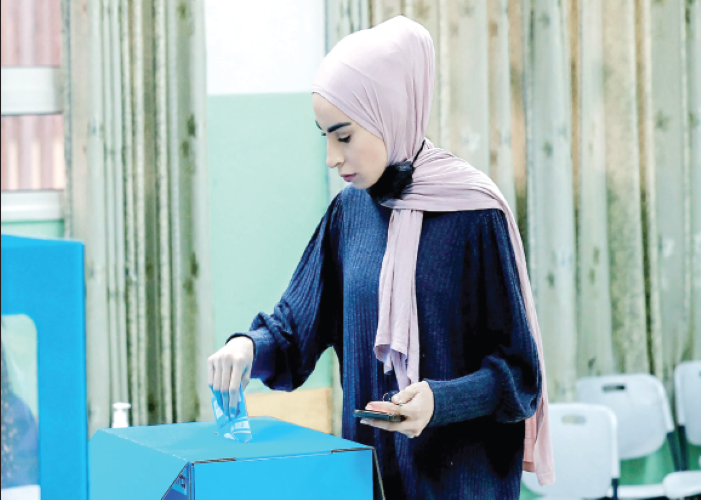
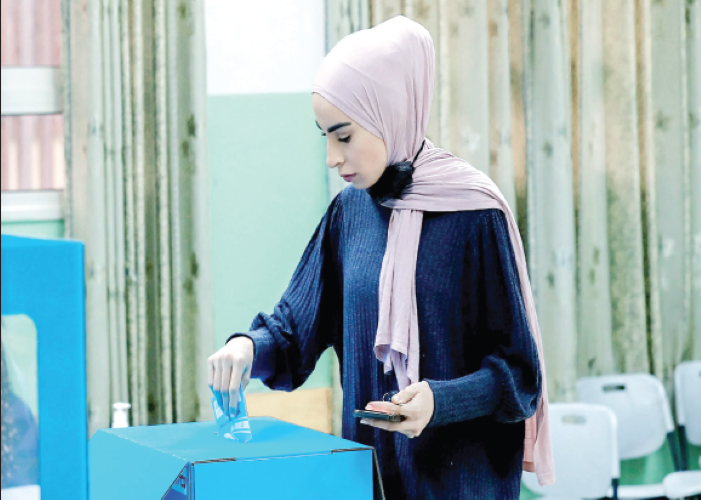
Democracy is measured not merely by the existence of elections, but by whether every citizen has a meaningful chance to shape the decisions that govern their life. On 27 October 2026, Israelis went to the polls in an election that many described as among the most consequential in the country's history. Within hours, a striking detail had emerged from the early projections: Israeli media reported unusually strong Arab participation, and exit polls suggested Arab-led parties could win more seats than ever before. Official results were still being counted on 28 October, when this article was finalised, and the shape of the next government remains uncertain.
Early projections pointed to no clear winner, with Prime Minister Benjamin Netanyahu's bloc and the opposition both short of a settled majority. The figures may shift. But the question behind them is already clear. For Arab citizens of Israel, voting is no longer simply a matter of preference or protest. It has become an essential instrument for security, dignity and equal citizenship. A ballot is not a guarantee of justice, but it is an opportunity to demand it.
A Community Between Identity and Citizenship
Arab citizens make up roughly one-fifth of Israel's population. Many identify as Palestinian by national or cultural heritage while holding Israeli citizenship. Their relationship with Israeli politics is therefore shaped by overlapping identities, inherited memories and competing expectations. For decades, many Arab voters have approached parliamentary elections with deep scepticism. Some doubted that the Knesset could deliver substantial change. Others expressed disillusionment through abstention or by supporting calls for an electoral boycott.
Research by the Israel Democracy Institute has documented how political alienation, strained relations between Arab citizens and state institutions, and disagreement over the usefulness of parliamentary participation have all shaped voting behaviour. That scepticism is understandable, and it deserves to be taken seriously rather than dismissed. Yet abstention carries its own consequences. When citizens withdraw from electoral politics, the decisions affecting their communities do not pause. Budgets are allocated, laws are passed, priorities are set and governments are formed, whether or not every community feels represented in the room. This is the central democratic dilemma facing Arab citizens: how to challenge a system they may regard as unequal while keeping the ability to influence its decisions.
The Urgent Question of Everyday Security
For many Arab communities, politics is inseparable from daily life. Public safety, organised crime, schooling, employment, housing and municipal infrastructure are not abstract policy questions. They decide whether families feel safe, whether young people can imagine a future at home, and whether towns and villages receive the services they need. The scale of the challenge is visible in published data. According to the Israel Democracy Institute's 2024 statistical report on Arab society, the poverty rate among Arab families reached 38.4 percent in 2023, compared with 15.4 percent among Jewish families. The same report recorded 239 victims of violence-related killings in Arab society in 2024, and noted serious shortcomings in the resolution of such cases. A survey by the Konrad Adenauer Program, conducted in 2026, found that roughly three in four Arab respondents reported a weak sense of personal security.
These numbers explain why safety and economic equality now sit at the centre of the debate over representation. Residents want effective policing, working public institutions, investment in schools and roads, and real economic opportunity. They also want accountability when authorities fall short of their duties. Voting cannot solve these problems overnight, and parliamentary seats do not guarantee that promises will be kept. Nevertheless, elections give citizens a rare and peaceful opportunity to judge political records, question candidates, demand commitments and hold representatives to account. The ballot is therefore more than a symbol of belonging. It is one practical means of compelling institutions to answer to the people they serve.
The Power of the Arab Vote
Israel's electoral system makes participation unusually consequential. Seats in the 120-member Knesset are allocated by proportional representation, so every vote for a party that crosses the threshold counts towards the final composition of parliament. In closely fought elections, a few additional seats can decide which side is able to form a government. Recent history shows how much Arab participation can vary, and how much that variation matters. In the November 2022 election, turnout among Arab and Druze voters was 53.2 percent, up from 44.6 percent in 2021, though still below the national rate. In 2020, when Arab parties ran together on a single list, turnout approached 65 percent and the Joint List won 15 seats, becoming the third-largest faction in the Knesset. A year later the alliance fractured, and its representation fell sharply.
The lesson was not lost on voters. Opinion surveys in the months before this election found that a large majority of Arab citizens, around 82 percent in one poll, wanted the parties to unite. The Konrad Adenauer Program estimated that Arab turnout would hover near 53 percent if the parties ran divided, but could rise to around 67 percent under a reunited list. The Joint List was revived in January, though in the end Ra'am chose to run separately from it. Both lists faced attempts to disqualify them, and both were allowed to compete only after Israel's Supreme Court overturned the decisions on 2 October.
The early picture appears to support the view that participation pays. Exit polls on election night projected between 17 and 19 combined seats for the Joint List and Ra'am, surpassing the 15 won in 2020. Overall national turnout reached 77.7 percent, according to the Central Elections Committee, the highest since 1999. That is a national figure; no official Arab turnout rate had been published at the time of writing, though Israeli press analysts described Arab participation as unprecedented. If the exit polls hold, the result suggests that a community often described as politically disengaged can mobilise decisively when it sees a reason to.
These figures must be treated with caution until the count is final. And they should not be read as evidence of a single Arab political mind. Some voters back Arab-led parties; others choose Jewish-led parties or stay home. The parties themselves differ over national identity, social policy and whether to take part in governing coalitions. Understanding the Arab electorate means recognising a diverse community rather than a monolithic bloc.
Representation Must Lead to Accountability
Voting should never be treated as an unconditional endorsement of any party or leader. Democracy requires citizens to ask hard questions of those who seek their support. What concrete steps will candidates take against organised crime? How will they confront poverty and unequal access to public services? Which neglected municipalities will receive investment? How will they defend civil rights and make sure public institutions treat everyone fairly? These questions matter because representation without accountability can become a promise without substance. The experience of Ra'am is instructive. The party joined Israel's governing coalition after the 2021 election, proving participation in government possible. Yet it also demonstrated the limits of that path, because coalition membership did not automatically dismantle structural inequality or guarantee lasting policy change.
Arab voters therefore face a genuine strategic dilemma. Some fear that entering coalitions weakens their representatives' ability to challenge policies they see as discriminatory or harmful to Palestinian rights. Others regard engagement as the most practical way to secure resources and improve daily life. Neither view should be waved away. The task is to judge political strategies by their commitments, results and consequences, rather than assuming that either participation or abstention will deliver justice by itself. With the new Knesset appearing closely divided, that debate is about to become immediate. Both Arab-led lists have signalled openness to supporting the opposition, though neither belongs to it, and whether larger parties will accept that support is far from certain. A mature democratic culture needs room for disagreement, transparent debate, and the freedom to pursue equality by different routes.
Beyond Domestic Politics: The Palestinian Question
The meaning of the Arab vote cannot be fully grasped without acknowledging the wider Israeli-Palestinian conflict. For many Palestinian citizens of Israel, questions of identity, equality and representation sit alongside profound concern for the rights and future of Palestinians in the occupied territories and in Gaza. This produces a difficult reality. A citizen can seek better services, safer neighbourhoods and equal treatment inside Israel while also expressing solidarity with Palestinians beyond its internationally recognised borders.
Political choices often reflect both immediate civic priorities and deeper national or moral convictions. Voting does not require anyone to abandon heritage, historical memory or political belief. It is a way of exercising a right within an existing system; it does not remove the duty to scrutinise that system and press for reform. For international observers, this distinction is vital. Taking part in an election and criticising state policy are not contradictory acts. The ability to do both at once is, in fact, a meaningful test of democratic life.
A Lesson for Democracies Everywhere
The experience of Arab citizens in Israel speaks to a challenge familiar to minorities around the world: how to turn formal citizenship into substantive equality. In societies divided by ethnicity, religion, nationality or historical conflict, elections offer a peaceful way for competing interests to be heard. But a ballot box alone does not prove that every citizen has equal influence. That requires institutions that respond fairly, protect individual rights, distribute public resources transparently and allow elected representatives to do their work without discrimination.
Responsibility is therefore shared. Citizens must be able to participate meaningfully, while parties and state institutions must show that participation can produce accountable governance. Where communities face persistent insecurity or unequal services, the answer cannot be simply to demand more voting. Governments must also address the conditions that erode public trust in the first place. The attempt to disqualify two Arab-led lists before this election, reversed only by the Supreme Court, is a reminder that the right to stand and the right to vote cannot be taken for granted. The international community should likewise distinguish between the formal right to vote and the practical ability to shape policy. Both matter, and neither should be assumed.
The Ballot and the Future of Citizenship
For Arab citizens of Israel, voting has become more consequential because the stakes extend far beyond election day. It touches the safety of families, the opportunities open to younger generations, the allocation of public resources, the protection of civil rights and the ability to influence a political future that affects them directly. Yet the power of the ballot should neither be romanticised nor underestimated. Elections cannot by themselves resolve the Israeli-Palestinian conflict, end discrimination or overcome every institutional barrier. Their value depends on what follows: public accountability, effective representation, vigorous legislative scrutiny and a sustained commitment to equal citizenship.
The underlying principle is universal. No community should have to choose between preserving its identity and exercising its democratic rights. Nor should any citizen be asked to accept inequality merely because the opportunity to vote exists. This week, Arab voters appear to have decided in strong numbers that the ballot is worth using. Whether the new Knesset rewards that decision will be the real test. For Arab citizens, the challenge is to ensure that participation is matched by genuine accountability, and that citizenship becomes more than a legal status: a lived reality defined by security, dignity, equality and the freedom to shape the future. The true measure of democracy lies not only in how many citizens vote, but in whether their voices are heard, their rights are protected and their concerns receive a fair response.
References
1. Israel Democracy Institute, Arab Society in Israel: Statistical Report 2024 (poverty and violence data) - https://en.idi.org.il/arab-society/2024/?chapter=65054
2. Israel Democracy Institute, analysis of Arab and Druze turnout in the November 2022 election - https://en.idi.org.il/articles/47986
3. Konrad Adenauer Program for Arab-Jewish Relations, Dayan Center, Integration and Influence: Survey of Arab Citizens in Israel (2026) - https://dayan.org/content/integration-and-influence-survey-arab-citizens-israel
4. The Times of Israel, liveblog of the 27 October 2026 election - https://www.timesofisrael.com/liveblog-october-27-2026/
5. CNN, Israel elections live results, 27 October 2026 (preliminary figures, accessed 28 October 2026 and subject to change) - https://www.cnn.com/2026/10/27/world/live-news/israel-elections-live-results-latest-votes-intl
(Author, a Kashmiri sociologist, is a writer, -researcher, and columnist. His research Interests Include Kashmir Affairs, South Asian Politics, Human Rights, and Public Policy issues.)




[[comment.comment_text]]