A Titan Who Lived for the People: Remembering Nana Patekar: The curtain falls on a legend

 2 hours ago
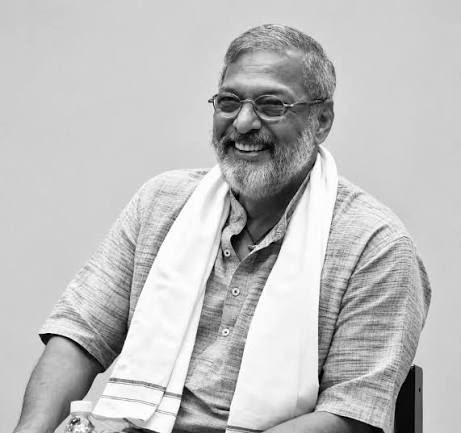
Indian cinema has lost one of its most formidable and uncompromising voices. Nana Patekar, the actor whose very presence could electrify a scene and whose convictions often stirred the nation, passed away on the morning of October 8, 2026, at his home in Goa. He was 75. The cause was a sudden cardiac arrest, and despite urgent efforts to revive him, he could not be saved.
His death marks the end of an era—not merely because of the sheer range and intensity he brought to the screen, but because he embodied a rare fusion of artistic brilliance and social conscience. In a time when stardom is often measured by followers and brand endorsements, Patekar measured it by the lives he touched off-camera.
From Murud-Janjira to the big screen
Born Vishwanath Patekar on January 1, 1951, in the coastal town of Murud-Janjira in Maharashtra, he grew up in modest circumstances that would later inform his earthy authenticity. Trained at Mumbai’s Sir J.J. Institute of Applied Art, he first found his footing in theatre before making his film debut with *Gaman* in 1978.
It was, however, *Parinda* (1989) that announced him as a force to be reckoned with. As Anna, the chillingly calm underworld don, he crafted a villain who was terrifying not for his volume but for his stillness—a performance that won him the National Film Award for Best Supporting Actor and redefined screen antagonists.
The actor who refused to be typecast
To call Nana Patekar a “character actor” would be to undersell a career that defied easy categorisation. He could be the fiery crusader in *Krantiveer* (1994), for which he won the National Film Award for Best Actor; the vulnerable, ageing patriarch in *Natsamrat* (2016); the menacing cop in *Ab Tak Chhappan*; or the lovable, bumbling gangster in *Welcome*.
He remains the only actor to have won Filmfare Awards in the categories of Best Actor, Best Supporting Actor, and Best Villain—a testament to his chameleon-like versatility. In Marathi cinema, too, he left an indelible mark, with *Natsamrat* standing as a masterclass in emotional depth and theatrical gravitas.
What set him apart was not just his technical mastery—his dialogue delivery, his piercing gaze, his ability to modulate from a whisper to a roar—but his refusal to soften his characters for mass appeal. He played flawed, complicated men, often at odds with the world, and in doing so, held up a mirror to society’s contradictions.
A life beyond the spotlight
If his on-screen persona was intense, his off-screen life was defined by quiet, sustained action. In 2015, alongside fellow actor Makarand Anaspure, he co-founded the *Naam* Foundation to support farmers in drought-hit regions of Maharashtra, particularly Marathwada.
The foundation did not limit itself to relief work. It focused on long-term solutions: restoring canals, rejuvenating rivers, desilting water bodies, and improving groundwater availability. Between 2015 and 2025, Naam helped restore over 2,200 water sources and rejuvenate 178 rivers, transforming the agricultural landscape for countless families.
Patekar often directed his film earnings toward these efforts, living simply while channeling resources to those in distress. He stood with farmers during protests, visited suicide-affected families, and used his platform to demand policy changes. In an industry prone to performative philanthropy, his work was substantive and uncelebrated—a reflection of his belief that action mattered more than applause.
The man behind the myth
Colleagues and contemporaries have long spoken of Patekar’s principled stubbornness. He was known to walk away from projects that compromised his values, to speak bluntly to power, and to reject the trappings of celebrity. He rarely attended award functions, shunned social media, and maintained a life of Spartan simplicity even at the height of his fame.
Yet, those who knew him closely describe a man of deep warmth, dry wit, and unwavering loyalty. He was a mentor to younger actors, a fierce protector of his loved ones, and a patriot in the truest sense—one who believed in India’s potential but refused to overlook its failures.
A legacy that endures
Nana Patekar’s career spanned nearly five decades, during which he received three National Film Awards, multiple Filmfare Awards, the Padma Shri in 2013, and the love of millions. But his true legacy lies not in trophies or box-office numbers, but in the countless lives he improved through his foundation and the moral courage he displayed in both art and life.
As tributes pour in from across the political and cultural spectrum, one sentiment unites them all: that Nana Patekar was more than an actor. He was a conscience-keeper, a voice for the voiceless, and a reminder that greatness is measured not by how loudly one speaks, but by how meaningfully one lives.
In losing him, India loses a titan. But in remembering him—in watching his films, supporting the causes he championed, and emulating his integrity—we ensure that his light continues to guide.
(The author is a former member of the history faculty at St. Xavier’s College, Mumbai.)








[[comment.comment_text]]