₹119-crore ICAR-IIAB facilities inaugurated in Ranchi, 1,500 farmers join pre-Rabi meet

 an hour ago
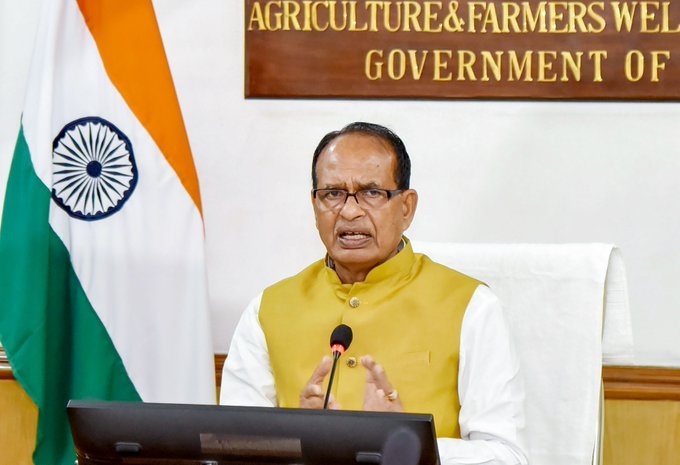
Ranchi, October 8: Union Agriculture and Farmers’ Welfare Minister Shivraj Singh Chouhan on Thursday inaugurated a series of new facilities at the ICAR-Indian Institute of Agricultural Biotechnology (ICAR-IIAB), Garhkhatanga, Ranchi, with an investment of ₹119 crore, and called for greater adoption of scientific and location-specific farming practices in Jharkhand.
The facilities inaugurated through video conferencing included the Admin-cum-School Building, Birsa Munda Multipurpose Hall, Jaipal Singh Munda Sports Complex and the NEXTGEN Breeding Facility. The foundation stone for a new guest house was also laid.
The inauguration coincided with a Pre-Rabi Kisan Goshti-cum-Agricultural Input Distribution Programme organised under the Scheduled Caste Sub-Plan and Tribal Sub-Plan. Around 1,500 farmers from Ranchi, Khunti, Gumla and Ramgarh participated in the programme, which was aimed at strengthening direct interaction between farmers, agricultural scientists and policymakers ahead of the Rabi season.
Chouhan said Jharkhand’s agricultural future would depend on combining its traditional farming knowledge with modern scientific technologies. He stressed the need for improved seeds, integrated farming, balanced nutrient management and technologies tailored to the state’s agro-climatic conditions.
He also directed greater attention towards protecting farmers from fake seeds, counterfeit fertilisers and substandard pesticides. The minister said agricultural research institutions must ensure that technologies developed in laboratories reach farmers’ fields and called for sustained field-level extension activities. He urged scientists to undertake a nationwide “Khet Bachao Abhiyan” in the coming days.
Union Minister of State for Agriculture and Farmers’ Welfare Bhagirath Choudhary emphasised the role of farmers in food security and called for wider adoption of modern technologies, value addition and stronger Farmer Producer Organisations. He also stressed soil testing, balanced fertilizer use and strengthening Krishi Vigyan Kendras. Farmers were encouraged to experiment with natural farming on a portion of their cultivated land.
DARE Secretary and ICAR Director General M.L. Jat said eastern India has significant potential for a new agricultural transformation. He emphasised Rice-Fallow Intensification, location-specific crop and variety selection, improved livestock productivity and research to address challenges such as acidic soils and phosphorus deficiency in Jharkhand.
The program also focused on crop diversification, integrated farming systems, organic and natural farming, dairy management, lac cultivation, Integrated Pest Management and fruit production. Farmers were provided agricultural and livestock inputs including Nano Urea, Nano DAP, mineral mixtures, improved seeds, wheat, pea, mustard and vegetable seed kits, as well as high-yielding tomato and brinjal varieties.
Earlier, Choudhary and senior ICAR officials visited the institute’s dairy farm, Crop Research and Training Centre, NEXTGEN Breeding Facility and Integrated Farming System Unit. Officials demonstrated embryo-transfer technology for livestock genetic improvement, while farmers were briefed on integrated farming, agricultural waste recycling and resource-efficient practices.
The event also featured an exhibition showcasing crop varieties, livestock and dairy technologies, research achievements and farmer-oriented innovations. Senior former officials associated with ICAR-IIAB were honoured for their contributions to the institute.
The program concluded with ICAR-IIAB Director Sujay Rakshit reiterating the institute’s commitment to strengthening farmer-scientist linkages and translating agricultural research into practical technologies for farmers across Jharkhand.








[[comment.comment_text]]