Three Leaders, One Table, and the Nations Outside the Room
 49 minutes ago
The Shenzhen summit of Trump, Putin and Xi shows how power is being redistributed in a multipolar age, and why Iran, Palestine and Ukraine will judge its worth by what it delivers, not by the photographs.
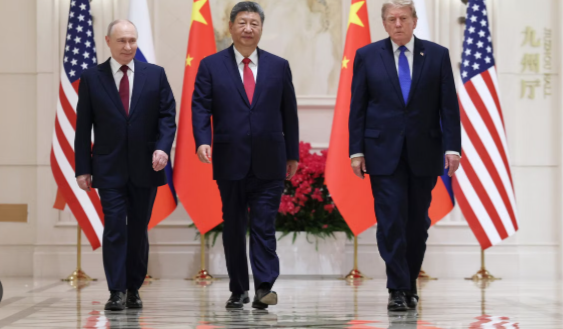
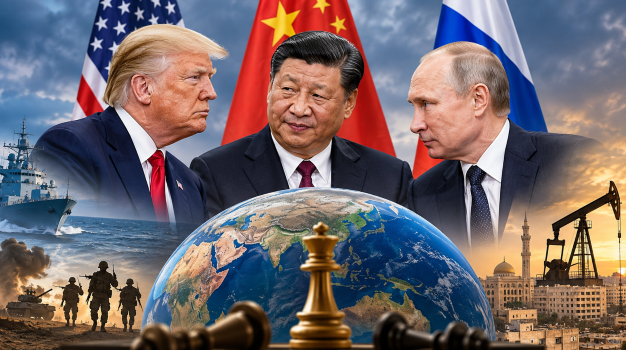
On the sidelines of the Asia-Pacific Economic Cooperation summit, the leaders of the United States, Russia and China sat down in Shenzhen for the first closed-door trilateral meeting of its kind. For a world used to these capitals trading accusations, the image alone was striking.
Yet an image is not an outcome. The three leaders have since issued a joint Declaration on Peace, reaffirming that nuclear war must never be fought and addressing issues including United Nations reform and energy supplies. The declaration is politically significant, but it is not a comprehensive arms-control agreement or a peace settlement for the conflicts in Iran and Ukraine, nor does it resolve the question of Palestinian statehood. The differences among Washington, Moscow and Beijing remain substantial. The real test is whether this declaration can be translated into verifiable commitments that reduce the risk of war and protect the interests of nations that were not represented at the table.
There is, however, another dimension of the declaration that deserves scrutiny. Its emphasis on the immunity of state officials and its criticism of the International Criminal Court raise difficult questions about the relationship between national sovereignty and international accountability. Respect for state sovereignty is an important principle, but it must not become a shield against accountability for serious international crimes. If the world's most powerful governments seek to reshape international institutions, they must also demonstrate that international law applies consistently, regardless of a country's military strength or political influence. Peace without accountability risks becoming an agreement among governments rather than justice for victims.
Those questions of power and accountability will be felt most in the Gulf, Palestine and Ukraine, and they now fall to a President who arrived in China weeks after losing control of Congress. This article examines both threads.
Three Leaders, Three Calculations
The three men share an interest in preventing uncontrolled escalation, but their motives differ sharply. For Mr Xi, the role of host is the prize. China chaired the wider APEC gathering and presented itself as the indispensable middle: a power that trades with everyone and is willing to broker among rivals.
Yet China's ambitions extend beyond hosting a historic meeting. Beijing wants to shape the rules of the emerging international order, strengthen its influence across the Global South and present itself as a defender of multilateral cooperation. At the same time, its strategic competition with Washington over advanced technology, artificial intelligence, trade and regional security remains unresolved. The Shenzhen meeting therefore reflects two parallel realities: cooperation between rivals is possible, but strategic competition has not disappeared. A handshake between leaders should not be mistaken for a reconciliation between their national interests.
For Mr Putin, the meeting itself is the victory. Shunned by Western capitals since the invasion of Ukraine in 2022, he can now tell his domestic audience, and much of the Global South, that isolation has failed.
For Mr Trump, personal diplomacy with rival leaders is a long-standing article of faith. The expiry of the New START treaty in February 2026 has created an urgent gap in nuclear arms control, leaving the United States and Russia without legally binding limits on their strategic arsenals. Bringing China into a wider framework would be a major diplomatic achievement, but Beijing has resisted joining numerical arms-control negotiations while its nuclear arsenal remains considerably smaller than those of Washington and Moscow. Shenzhen offered him a chance to begin addressing this dangerous gap, although a declaration alone cannot replace a verifiable arms-control agreement.
These are not equal partners with identical aims, and an agreement that satisfies all three may be one that quietly disappoints everyone else.
A Wounded President on a Global Stage
The November elections handed Democrats control of both chambers of Congress, an outcome widely attributed to voter anger over the cost of living, tariffs and an Iran conflict that has now continued for nearly nine months, disrupting energy markets and adding to the economic pressures facing American households. Can a president so recently rebuked at home still set the global agenda?
The most honest answer is: yes, partly, and with an asterisk. American foreign policy is overwhelmingly an executive domain. The president decides whom to meet, what to offer and which forces to deploy. Analysts at the Council on Foreign Relations argue that expectations of a Democratic Congress forcing dramatic change are likely to be disappointed, noting how rarely Congress has overridden a presidential veto on foreign policy. The Lowy Institute makes a similar point: Mr Trump lost the midterms, not his grip on foreign affairs. Presidents facing gridlock at home also have a long record of pivoting toward diplomacy.
The asterisk is durability. A Democratic Congress will hold the power of the purse, the authority to investigate and the ability to scrutinise arms transfers, and some Republicans may join Democrats in curbing an unpopular Iran war. Treaties need Senate approval, and new security guarantees often need legislative cooperation. A promise made in Shenzhen is only as strong as the coalition at home able to sustain it.
This is how Mr Putin and Mr Xi will read the situation. Both can see that an American president with a shrinking political runway has reasons to hurry. That can be exploited in negotiation. It can also make a deal more likely, since a leader eager for achievements may accept compromises a stronger one would refuse.
Mr Trump can still open doors and set the tone. What he cannot take for granted is that Washington will honour every word once the cameras leave. The real test of his authority is whether he can build a bipartisan constituency for what the talks produce.
Iran and the Arab World: Security Above Regional Heads?
For Arab states, no issue at Shenzhen is more urgent than Iran. The war between Iran and the United States, together with Israel, has disrupted energy markets, strained Gulf economies and left capitals from Riyadh to Muscat anxious about what comes next. Reports indicate that Mr Trump and Mr Xi share an interest in keeping shipping through the Strait of Hormuz open and preventing Iran from acquiring nuclear weapons, while Mr Putin has stressed energy and food security. No settlement with Iran has emerged from the summit, and the risk of renewed escalation remains.
Those converging concerns could create real diplomatic space. China is the largest buyer of Gulf energy and maintains significant economic and diplomatic ties with Tehran; Russia has its own strategic relationship with Iran and a stake in international energy markets, while Washington remains the dominant military actor in the region. If these three agreed on a shared de-escalation framework, the pressure on all sides to stop fighting would be considerable.
But there is a danger, and Arab governments know it well. Regional orders have too often been drafted in distant capitals and imposed on the people who live inside them. Gulf states do not want their security traded between great powers as part of a wider bargain on tariffs, technology or Ukraine.
The same applies to Iran itself. A durable settlement cannot treat Tehran merely as an object of policy. It has to address international concerns about nuclear weapons and maritime security while acknowledging Iran's own security anxieties.
The most sensible outcome would be layered: a great-power understanding on nuclear limits and shipping, nested within a regional dialogue that includes Gulf states and Iran on equal footing. Without the second layer, the first is likely to fray.
Palestine: The Absence That Speaks Loudest
If Shenzhen is to be remembered as a serious attempt to stabilise the world, it cannot treat Palestine as an afterthought. Yet the summit's focus on nuclear weapons, energy and the balance among giants makes exactly that outcome likely.
The human situation is grave. Gaza remains devastated, the occupied West Bank is tense, and reports of shootings by settlers in Jericho have deepened anger across the Arab and wider Muslim worlds, where the credibility of any international order is measured against its treatment of Palestinians. Rhetoric about justice and law rings hollow when it stops short of Palestine.
The three powers hold different forms of leverage. Washington has unmatched influence over Israeli decision-making through military, financial and diplomatic ties. Beijing has consistently called for a political settlement leading to Palestinian statehood, and has tried to position itself as a mediator. Moscow wants to preserve its influence across the region and maintains channels with many actors.
The principle at stake is simple. Decisions about Palestinian futures cannot be made without Palestinians. A settlement imposed from above may reduce diplomatic friction for a season, but legitimacy cannot be outsourced. If the great powers will discuss the fate of the planet, they should discuss the fate of a people who have waited generations for a state, security and dignity.
Ukraine: Can Peace Be Negotiated Without Kyiv?
Few capitals watched Shenzhen with more apprehension than Kyiv. Accounts differ on whether Ukraine was formally on the agenda, but the presence of Beijing, Moscow and Washington at one table revives an old fear: that Ukraine's future will be decided in rooms where Ukrainians are not seated.
The concern is not hypothetical. A settlement negotiated mainly between Washington and Moscow could favour speed over principle, trading territory or neutrality for a ceasefire that satisfies the powerful. China, which has substantial economic influence over Russia, has so far declined to use it to press Moscow, to the frustration of European governments.
Europe, too, cannot be treated as a secondary stakeholder in this process. Any agreement affecting Ukraine's territorial integrity and long-term security will directly shape Europe's own security environment. European governments, particularly those most exposed to Russian pressure, will expect meaningful participation in negotiations and credible guarantees that a ceasefire does not simply give Moscow time to prepare for another offensive. A settlement that excludes Kyiv or sidelines Europe may achieve a temporary diplomatic announcement, but it will struggle to establish lasting security.
Even then, a ceasefire can be a necessary first step, but it is not a peace. A durable settlement must address sovereignty, security arrangements, the return of displaced families, reconstruction and the independence of Ukraine's political institutions, without setting a precedent that borders can be redrawn by force.
The opportunity should not be dismissed. Mr Trump is willing to speak directly to Mr Putin, and Mr Xi holds leverage Western governments lack. If those channels brought Moscow to a genuine negotiation with Kyiv and its European partners as full participants, Shenzhen could prove consequential. Ukraine must be at the table, not on the menu.
Multipolarity: Opportunity or Oligarchy of Giants?
Beneath the individual conflicts lies a larger story: the assumption that one power can arrange world affairs is fading. The United States retains formidable strength, China is expanding its economic reach, and Russia holds nuclear weapons, energy resources and diplomatic experience.
Multipolarity is often celebrated as more democratic, but the label guarantees nothing. Several centres of power can encourage cooperation and give middle powers room to manoeuvre. They can equally produce spheres of influence, in which smaller states are pressed to choose sides and regional wars become bargaining chips. The difference lies in whether rules still matter.
That is why the United Nations, regional organisations and international law remain relevant even to the powerful. What protects smaller nations is the principle that sovereignty cannot be overridden by size. A genuinely multipolar order would strengthen it; an oligarchy of giants would erode it.
India and the Global South: The Demand for a Voice
For India and much of the Global South, the emergence of a multipolar order presents both an opportunity and a challenge. New centres of power can widen diplomatic choices and reduce dependence on any single capital, but they must not create a system in which smaller and middle powers become spectators to decisions affecting their security and prosperity. India's foreign policy has traditionally sought strategic autonomy, maintaining important relationships with Washington, Moscow and other international partners while defending its independent decision-making. Its interests in energy security, trade, technological development and regional stability make it an important stakeholder in this changing landscape. The future of multipolarity will therefore depend not only on what the largest powers agree among themselves, but also on whether countries such as India and other developing nations have a genuine voice in shaping the rules.
What Comes After the Handshakes
It is worth restating what Shenzhen is and is not. The joint Declaration on Peace is an important political signal and may open channels that were previously difficult to sustain. Yet its four-point framework does not establish a comprehensive nuclear arms-control regime, resolve the war involving Iran, address the future of Ukraine or provide a political settlement for Palestine. Nor does it settle the deeper disagreements over international accountability and the rules governing the use of power. Diplomatic history is full of summits that produced historic photographs and carefully worded declarations but failed to deliver lasting peace. Shenzhen must be judged by what follows, not simply by what was announced.
For each leader, what follows is a test. Mr Trump must prove his diplomacy can outlast an unfriendly Congress; Mr Putin, that Russia can contribute to stability rather than confrontation; Mr Xi, that China's rise can serve cooperation rather than rivalry. For the rest of the world, the task is to insist on inclusion: powerful states will always meet, but the question is whether they listen. Peace cannot be the privilege of the powerful. It must be the right of every nation.
References
Al Jazeera, "Trump meets Putin and Xi for trilateral US, Russia, China talks at APEC", 19 November 2026. https://www.aljazeera.com/news/2026/11/19/trump-meets-putin-and-xi-ahead-of-us-russia-china-trilateral-talks
Hürriyet Daily News, "Xi, Trump, Putin hold 1st-ever closed-door trilateral meeting in China's Shenzhen", 19 November 2026. https://www.hurriyetdailynews.com/trump-putin-begin-talks-in-china-amid-33rd-meeting-of-apec-leaders-229590
Council on Foreign Relations, "After the Midterms, Trump Still Holds the Reins on Foreign Policy", November 2026. https://www.cfr.org/articles/after-the-midterms-trump-still-holds-the-reins-on-foreign-policy
Lowy Institute, "Trump lost the midterms – not his grip on foreign policy", The Interpreter, November 2026. https://www.lowyinstitute.org/the-interpreter/trump-lost-the-midterms-not-his-grip-on-foreign-policy
Foreign Policy, "Where Democrats Can Thwart Trump's Foreign Policy", November 2026. https://foreignpolicy.com/?p=1245264
Reuters analysis via Al-Monitor, "Midterms upended Congress but Trump still commands foreign policy", 5 November 2026. https://www.al-monitor.com/originals/2026/11/analysis-midterms-upended-congress-trump-still-commands-foreign-policy
Xinhua, "Full text: China-Russia-U.S. Heads of State Declaration toward Peace", 19 November 2026. https://english.news.cn/20261119/f54674416ffb46a68734353f2b1bc0ea/c.html
Open The Magazine, "Trump, Putin and Xi Control 11,000 Nuclear Warheads. Can They Build New Guardrails?", November 2026. https://openthemagazine.com/world/trump-putin-and-xi-control-11000-nuclear-warheads-can-they-build-new-guardrails
(Mr Rasool, a Kashmiri sociologist, is a writer, re searcher, and columnist. His research Interests In clude Kashmir Affairs, South Asian Politics, Human Rights, and Public Policy issues.)




[[comment.comment_text]]