A New Yalta or a Fractured Order?

 47 minutes ago
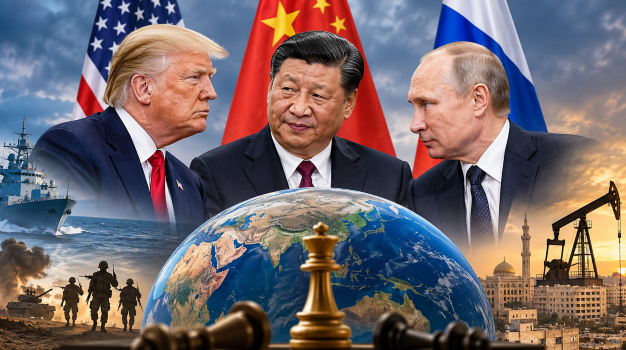
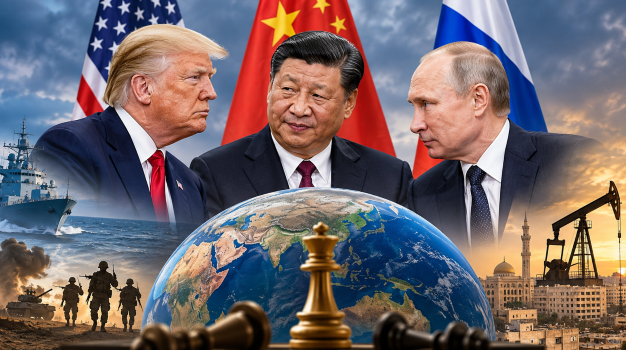
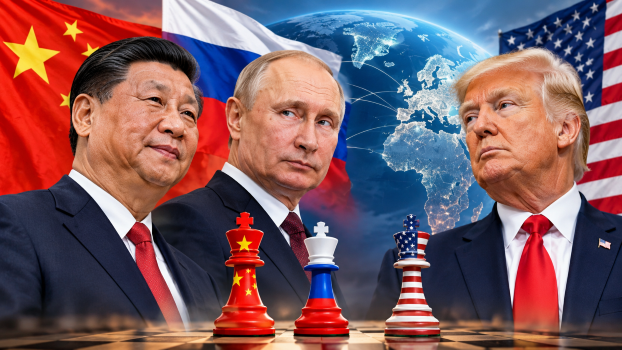
The exclusive trilateral summit between Donald Trump, Xi Jinping, and Vladimir Putin on the sidelines of the APEC meeting in Shenzhen marks a watershed moment in contemporary geopolitics. Inevitably drawing comparisons to the 1945 Yalta Conference, the gathering underscores a stark reality: the era of unchallenged American hegemony is fading into a multipolar contest defined by a rising China, a resilient Russia, and a sidelined Europe. Yet, unlike the post-World War II settlement that birthed the United Nations and structured global stability for decades, today's "G3" convenes amid deep mutual distrust, active wars in Ukraine and Iran, and weaponised trade and maritime chokepoints. Expecting a grand bargain from three powers holding fundamentally contradictory worldviews—especially on resolving the conflict in Iran or reopening the Strait of Hormuz—risks mistaking diplomatic optics for substantive peace.
Nowhere are the limits of great-power management more visible than in West Asia, where the traditional security bargain has visibly unravelled. For decades, Gulf states invested billions of dollars in American security guarantees, assuming Washington’s military umbrella would insulate them from regional turmoil. The ongoing war in Iran, persistent maritime blockades, and the resurgence of regional proxies have shattered that assumption. Facing a militarily resilient Iran and the indefinite shelving of Palestinian statehood—which has effectively frozen the expansion of the Abraham Accords—Gulf capitals have confronted a sobering truth: outsourced security no longer delivers when crises turn existential.
Consequently, the region has embarked on a frantic search for indigenous and diversified collective security frameworks. Over the past year, a web of new defence arrangements—ranging from the Saudi-Pakistan Strategic Mutual Defence Agreement and the trilateral Mecca Pact with Turkiye to the broader Badr Pact and bilateral accords involving Kuwait and Qatar—signals a decisive pivot away from sole dependence on Washington. However, as the hesitation of treaty partners to intervene militarily during the August Houthi strikes on Saudi Arabia demonstrated, paper guarantees modelled on NATO’s Article 5 remain fragile when tested by complex local conflicts.
More telling than these nascent alliances is the quiet pragmatism emerging between Gulf states and Tehran itself. Even as global powers debate West Asia's fate from afar, regional heavyweights—including high-level security emissaries from Saudi Arabia, Pakistan, and Turkiye—have engaged directly with Iranian leadership, while nations like the UAE have pursued discreet non-aggression understandings. These overtures reflect a growing recognition that lasting stability cannot be imposed by external superpowers, nor achieved solely through deterrence pacts that exclude key regional actors.
The lessons of Shenzhen and the Persian Gulf extend far beyond West Asia to the broader question of world peace. True global stability cannot be engineered solely in exclusive great-power conclaves while regional stakeholders bear the brunt of protracted wars. In an increasingly fragmented international system, durable peace requires moving away from zero-sum bloc politics and unreliable external umbrellas toward inclusive, region-led security architectures. Only by pairing sovereign defence capabilities with verifiable non-aggression frameworks and sustained diplomatic engagement across fault lines can nations hope to prevent local flashpoints from spiralling into global catastrophe.









[[comment.comment_text]]