Islamophobia & the Changing Face of Democratic Politics
 37 minutes ago
There is an important lesson here for those who believe that Islamophobia can permanently restrict Muslim participation in public life. Prejudice certainly exists, and it would be unrealistic to suggest that electoral victories have eliminated it. Muslim candidates continue to face scrutiny, stereotyping and, at times, deeply personal attacks. However, the willingness of ordinary voters to look beyond such attempts at characterisation deserves recognition. In a diverse democracy, the decision of a non-Muslim voter to support a Muslim candidate is not merely an electoral calculation.
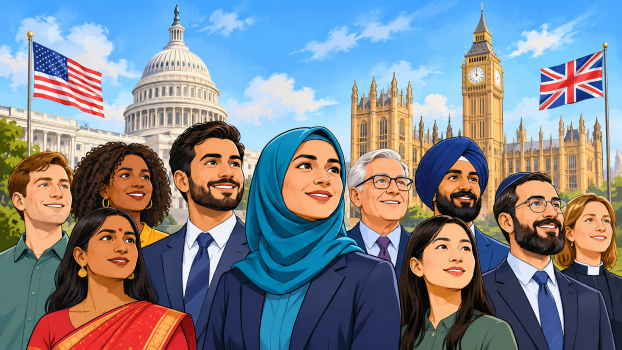
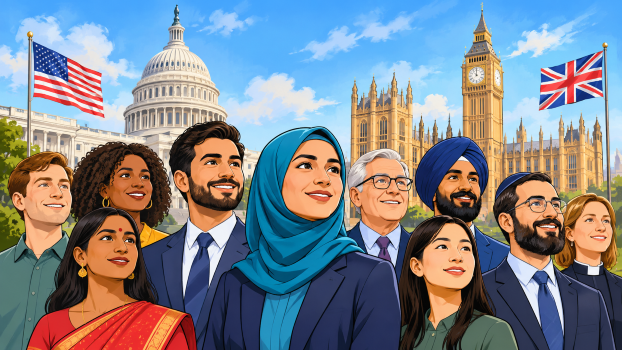
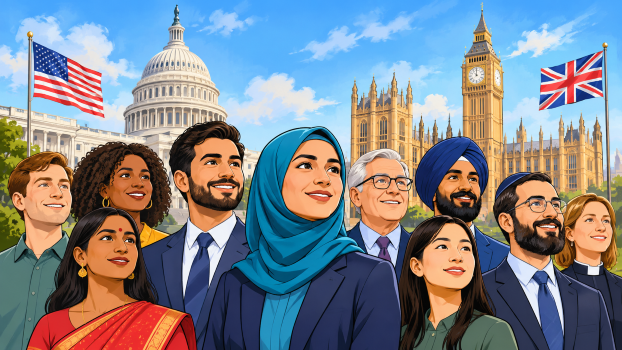
The growing electoral success of Muslim candidates in the United States and the United Kingdom offers an important reminder that religious identity need not be a barrier to democratic participation, and that inclusive societies are built through the choices of people across communities. Islamophobia has remained one of the persistent challenges confronting contemporary democratic societies.
In the years following the September 11 attacks, the global political environment witnessed the growing association of Islam and Muslims with extremism, terrorism and questions of national security. This association, often reinforced by political rhetoric, selective media narratives and isolated incidents of violence, contributed to an atmosphere in which ordinary Muslims increasingly found themselves having to explain their identity, loyalty and place in society. Yet the political landscape of recent years also offers reasons for cautious optimism.
Developments in the United States and the United Kingdom demonstrate that democratic institutions, despite their imperfections, can provide space for people from different religious and cultural backgrounds to participate, compete and lead without concealing their identities. The most encouraging aspect of this development is not simply that Muslim candidates are winning elections. It is that many are doing so openly as Muslims, without treating their faith as something that must be hidden or apologised for.
Equally important is the willingness of voters from other religious communities to support candidates on the basis of their competence, political positions, public service and commitment to shared civic concerns.The 2026 US midterm elections brought this reality into sharper focus. A record seven Muslim Americans were elected to the US Congress, including six members of the House of Representatives and one senator.
Among the most significant outcomes was the election of Abdul El-Sayed from Michigan, who became the first Muslim elected to the US Senate. His victory was particularly noteworthy because his campaign faced attempts to associate his religious identity with extremism. Yet voters ultimately made their choice at the ballot box. His campaign had focused on issues such as the cost of living, healthcare, economic inequality and corporate influence, concerns that extend well beyond religious boundaries.
The re-election of Ilhan Omar and Rashida Tlaib, alongside the victories of other Muslim candidates, further demonstrates that Muslim political participation in America is no longer an isolated phenomenon. These politicians have not needed to dilute their religious identity to become part of the country's political mainstream. Some have spoken openly about their faith, their communities and their understanding of public responsibility. Their electoral success suggests that a candidate's religious background does not necessarily determine how voters assess their ability to represent them.
There is an important lesson here for those who believe that Islamophobia can permanently restrict Muslim participation in public life. Prejudice certainly exists, and it would be unrealistic to suggest that electoral victories have eliminated it. Muslim candidates continue to face scrutiny, stereotyping and, at times, deeply personal attacks. However, the willingness of ordinary voters to look beyond such attempts at characterisation deserves recognition. In a diverse democracy, the decision of a non-Muslim voter to support a Muslim candidate is not merely an electoral calculation; it is also an expression of confidence in the principle of equal citizenship.The United Kingdom offers another significant example.
The July 2024 general election returned a record 25 Muslim members of Parliament to the House of Commons. They represented different political parties, including Labour, the Conservatives, the Liberal Democrats and independent candidates. This diversity itself is important because it challenges the assumption that Muslim political participation is organised around a single political ideology or party.
The victories of candidates such as Shabana Mahmood, Rushanara Ali, Nus Ghani and Shockat Adam illustrate different dimensions of this political journey. Shockat Adam's victory in Leicester South, where he defeated senior Labour politician Jonathan Ashworth, attracted particular attention. His campaign was strongly shaped by concerns over Gaza and the position taken by mainstream political parties. It demonstrated that Muslim voters, like other sections of society, can use democratic participation to express dissatisfaction with political leadership. At the same time, it would be inaccurate to interpret every Muslim candidate's victory as a product of religious solidarity. Local issues, political performance, candidate credibility and wider public opinion all influence electoral outcomes.
What deserves particular appreciation is the role of voters beyond the Muslim community. In constituencies where candidates from Muslim backgrounds secure electoral victories, their support cannot automatically be attributed to Muslim voters alone. Britain's political constituencies are diverse, and successful candidates must appeal to a wider electorate. Similarly, American elections are decided through broad electoral coalitions. It is therefore important to acknowledge the non-Muslim citizens who have supported these candidates, sometimes despite political campaigns attempting to turn religious identity into an electoral disadvantage. Their choices represent a valuable democratic statement: a person's religion should not become a test of their eligibility to serve the public. A Christian, Hindu, Jewish, Sikh or Muslim candidate should be judged by the same standards of integrity, competence, constitutional commitment and accountability.
This is the foundation upon which genuinely inclusive democracies are built.However, the electoral achievements of Muslim politicians should not be romanticised either. Representation is meaningful only when it translates into effective public service. Muslim representatives must demonstrate that their responsibilities extend to every citizen, irrespective of religion, ethnicity or political affiliation. Their faith may shape their personal values, but their constitutional obligations must remain inclusive. Equally, they should be free to raise legitimate concerns affecting Muslim communities without being automatically accused of pursuing sectarian interests.
The larger challenge is to separate legitimate political criticism from religious prejudice. Disagreement with a Muslim politician's policies does not constitute Islamophobia. Equally, criticism should not be dismissed as Islamophobic simply because the politician concerned is Muslim. A mature democracy must protect both the right to participate and the right to disagree. There is also a wider social dimension to this discussion. Muslim communities must recognise that meaningful integration is not achieved by withdrawing from their religious identity or by seeking political acceptance through silence. It is achieved through education, professional excellence, civic participation, respect for constitutional values and constructive engagement with other communities. At the same time, majority communities have an equally important responsibility to resist prejudice and ensure that equal citizenship is reflected in everyday public life.
The American and British electoral experiences offer an encouraging reminder that democratic societies possess the capacity to challenge inherited prejudices. They show that political confidence can grow when citizens are willing to evaluate individuals on merit rather than stereotypes. The victories of Muslim candidates are therefore not simply milestones for Muslim communities; they are also achievements for the democratic values of the societies in which they have been elected. Ultimately, the answer to Islamophobia cannot be the creation of competing religious identities or a politics of mutual suspicion. It must be a stronger commitment to equality, mutual respect and democratic participation. When a Muslim candidate can openly acknowledge his or her faith, contest an election and earn the confidence of citizens from different backgrounds, democracy itself emerges stronger. That is a development worth recognising, appreciating and protecting.
(The author is the President of the Inter Faith Harmony Foundation of India, New Delhi. He can be reached at iakhwaja@gmail.com)




[[comment.comment_text]]