The Moscow–Beijing Axis and the Changing World Order

 27 minutes ago
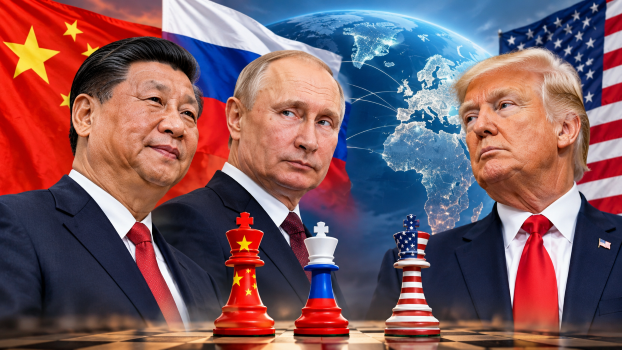
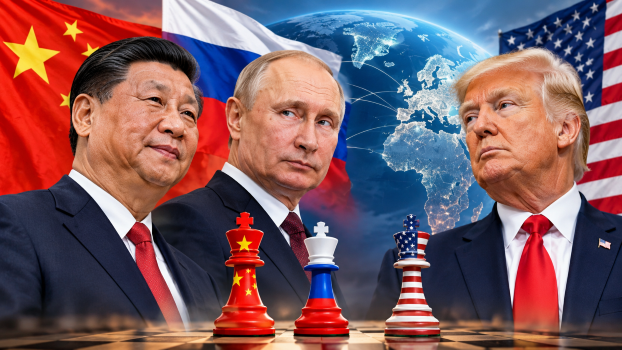
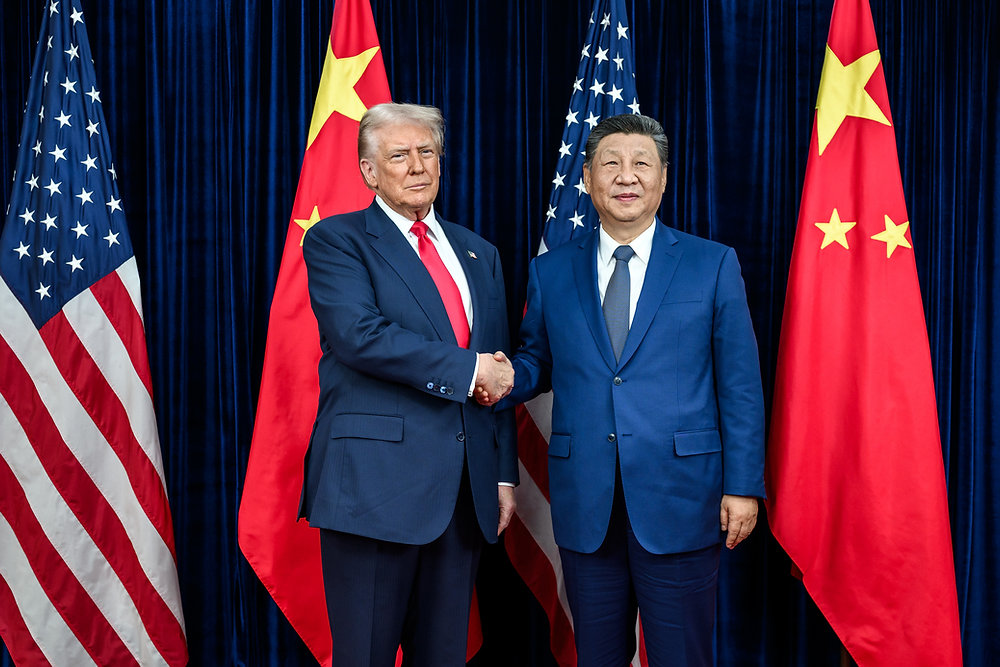
The emerging partnership between Chinese President Xi Jinping and Russian President Vladimir Putin represents one of the most consequential geopolitical developments of the 21st century. Xi’s observation during his Moscow visit more than three years ago that the world was witnessing changes unseen in a century, driven jointly by China and Russia, was not merely diplomatic rhetoric. It reflected a shared ambition to reshape the international order and challenge the dominance that the United States has exercised since the collapse of the Soviet Union. Their recent trilateral engagement with US President Donald Trump in Shenzhen has brought this evolving geopolitical equation into sharper focus.
For Xi and Putin, the post-Cold War international order represents an arrangement in which American power has enjoyed disproportionate influence over global institutions, security frameworks and economic relationships. Both leaders have repeatedly expressed dissatisfaction with this arrangement, viewing the dissolution of the Soviet Union and the subsequent expansion of Western influence as defining setbacks. Xi’s assertion in 2012 that the Soviet Union collapsed because nobody had the courage to resist captures his understanding of political power and national sovereignty. Putin, meanwhile, has sought to restore Russia’s strategic influence, most dramatically through the continuing war in Ukraine. Their shared historical perceptions have provided an ideological foundation for a partnership that extends beyond conventional diplomatic cooperation.
The relationship has acquired particular significance because of China’s economic and technological support for Russia amid the Ukraine conflict. Beijing has maintained substantial purchases of Russian energy and allowed Chinese companies to supply goods, including critical electronic components, that have helped sustain Russia’s defence-industrial capabilities. Although China has publicly projected an image of neutrality, Western officials have questioned the credibility of that position. The United States and its European allies have argued that Chinese economic engagement has eased the pressure of international sanctions on Moscow. Beijing, however, maintains that its relationship with Russia is legitimate and that it favours dialogue rather than confrontation. This divergence between diplomatic declarations and strategic realities remains central to understanding the partnership.
The Shenzhen summit involving Xi, Putin and Trump was historically significant, bringing together the leaders of three major powers in a formal trilateral setting for the first time. Trump’s warm public remarks and his description of the gathering as an opportunity to make history suggested his willingness to engage both leaders through personal diplomacy. Yet cordial exchanges cannot erase the fundamental differences in their strategic objectives. Trump operates within a constitutional system marked by electoral cycles and institutional constraints, whereas Xi and Putin have consolidated political arrangements that allow them considerably greater continuity in leadership. Moreover, the two have cultivated a relationship through more than four decades of diplomatic engagement and over 40 meetings at the highest levels. Their partnership is therefore rooted in institutional, economic and historical considerations that cannot easily be replicated through personal rapport with Washington. The Ukraine conflict, in particular, remains a major test of whether American diplomacy can reconcile competing interests.
The larger question is whether the world is moving towards a genuinely multipolar order or merely witnessing the emergence of competing centres of power. China’s growing economic and technological capabilities, Russia’s military ambitions and America’s continuing global influence will shape this transition. Yet a world order defined primarily by strategic rivalry, military competition and the weakening of international institutions would carry serious consequences for global stability. Neither the United States nor the China-Russia partnership can afford to treat international relations as an exclusive contest for supremacy. The pressing need is to establish a framework in which sovereignty, territorial integrity, peaceful coexistence and multilateral cooperation remain indispensable principles. History may indeed be undergoing a transformation unseen in a century, but the measure of its success should not be which power displaces another. It should be whether the emerging international order becomes more equitable, stable and capable of addressing the shared challenges of humanity.



[[comment.comment_text]]