Architects of a Healthy Bloom: Re-engineering India’s Human Capital Infrastructure
 13 minutes ago
Why India must integrate early childhood development, nutritional security, teacher reform and decentralised education to build a skilled and self-reliant generation
The Structural Stagnation of the Macaulay Legacy
The ongoing national discourse on the structural limitations of India’s education system reveals an uncomfortable truth: much of our modern schooling framework continues to carry the institutional legacy of colonial education. Nearly two centuries after Thomas Babington Macaulay advocated an education system designed primarily to serve the administrative requirements of British rule, India continues to struggle with an educational model that places disproportionate emphasis on examinations, rote memorisation and academic certification.
The result is a paradox. India possesses one of the world’s largest education systems and produces millions of graduates every year, yet a substantial section of its educated population remains inadequately equipped with practical skills, critical thinking abilities and the competencies demanded by a changing economy.
A national renaissance requires a fundamental transformation of this educational pipeline. A self-reliant India cannot be built merely by expanding school infrastructure, increasing enrolment or multiplying university degrees. It must integrate early biological development with decentralised, student-centred learning ecosystems. The objective should be to move from an education system that rewards memorisation and compliance to one that develops creativity, independent thinking, technical proficiency and productive human capabilities.
The Biological Blueprint: Protecting Cognitive Development from the Womb
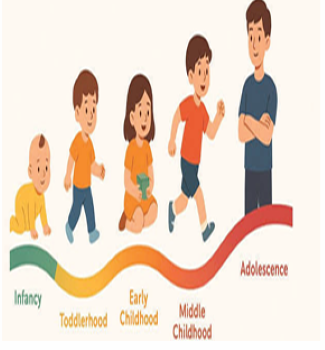
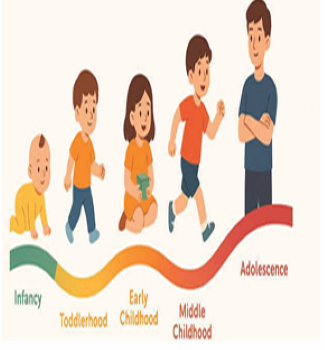
A child’s cognitive potential does not suddenly emerge upon entering school at the age of six. The foundations of brain development are established much earlier, particularly during pregnancy and the first two years after birth—a critical period commonly described as the first 1,000 days.
Neuroscientific research demonstrates that the developing brain undergoes extraordinarily rapid growth during this period. Nutritional deficiencies, maternal anaemia, prolonged stress and inadequate healthcare can adversely affect neurological development and the formation of essential neural connections. Maternal health, therefore, must be understood not merely as a healthcare concern but as a foundational investment in national human capital.
When an expecting mother suffers from chronic undernutrition or anaemia, the consequences can extend beyond her own health to influence the developmental prospects of her child. Similarly, inadequate nutrition during infancy can impair physical growth, cognitive development and subsequent learning capacity. This makes early intervention indispensable. If governments begin investing seriously in a child’s development only when the child enters Class I, they may already have missed several important developmental opportunities.
School infrastructure, modern textbooks and sophisticated teaching methods cannot fully compensate for developmental disadvantages accumulated during early childhood. Physical growth, nutritional security and cognitive development must therefore be treated as interconnected priorities.
Institutional Contrasts: Maternal Care, Parenting and Early Childhood Development
A comparison between the United States and India offers useful insights into the institutional arrangements required to protect early childhood development.
In the United States, maternal and child healthcare is supported through a combination of public programmes, private insurance, hospital-based services and community interventions. Prenatal consultations, newborn screening, parental guidance and periodic well-child visits constitute important elements of the healthcare framework.
Programmes such as home-visiting initiatives also provide assistance to vulnerable families, particularly first-time parents and households facing socioeconomic disadvantages. These interventions can help parents understand infant nutrition, developmental milestones and the importance of creating a safe and stimulating home environment.
India, by contrast, has developed an extensive network of maternal and child welfare programmes, including the Integrated Child Development Services (ICDS), Anganwadi centres and the broader public healthcare infrastructure. However, the principal challenge remains effective last-mile delivery.
The existence of schemes and budgetary allocations does not necessarily translate into nutritional security or improved developmental outcomes. Implementation gaps, uneven institutional capacity, inadequate monitoring and variations in local infrastructure continue to affect the effectiveness of these interventions. The persistence of child malnutrition, stunting, wasting and underweight conditions demonstrates the scale of the challenge.
India must therefore reconsider the distribution and utilisation of its child-centric public expenditure. Investments in conventional school infrastructure are important, but they must be balanced with adequate resources for maternal nutrition, infant healthcare, early childhood stimulation and parental education. The first priority should be to ensure that every child enters the formal education system with the strongest possible foundation for physical, emotional and cognitive development.
Reforming the Gateway: The Crisis in Teacher Recruitment
Even the most carefully designed educational infrastructure can fail if the quality and motivation of its teachers remain inadequate. Teaching must be recognised as a specialised professional calling rather than merely a secure source of employment. The classroom requires individuals who possess not only subject knowledge but also an understanding of child psychology, communication, mentorship and the ability to stimulate curiosity. India’s teacher recruitment system therefore requires comprehensive reform.
Recruitment should combine academic qualifications with assessments of psychological aptitude, communication skills, practical teaching ability and an understanding of child development. Candidates must demonstrate their capacity to engage students, encourage independent thinking and manage diverse learning environments.
Periodic recruitment and professional assessments can help maintain institutional vitality, provided they are transparent, fair and supported by opportunities for continuous professional development. The traditional authoritarian lecture model must gradually give way to a facilitative approach in which teachers guide students through exploration, discussion, experimentation and collaborative problem-solving.
A teacher’s role should not be confined to delivering prescribed lessons. It should involve identifying individual strengths, addressing learning difficulties and helping children discover their intellectual and practical capabilities. India needs a teaching workforce that is professionally competent, psychologically equipped and committed to the long-term development of its students.
Evolving an Indigenous Educational Infrastructure: Beyond Western Templates
India must learn from successful international educational practices without mechanically transplanting institutional models that may be incompatible with its demographic and financial realities. For example, the frequently discussed student-teacher ratio of 1:20 may represent an attractive benchmark. However, achieving such a ratio uniformly across a country of more than 1.4 billion people would require enormous financial and administrative resources.
India must therefore develop complementary educational models that can function effectively even in high-density classrooms. A classroom with 40 students need not automatically become an environment of passive learning. With appropriate planning, it can be organised into smaller peer-learning groups, project teams and collaborative activities.
Students can participate in supervised assignments involving agriculture, environmental science, mathematics, local history, basic engineering and community problem-solving. Under this arrangement, the teacher becomes a facilitator who coordinates multiple learning activities rather than the sole source of information.
Peer-assisted learning can also help children develop leadership, communication, cooperation and analytical abilities. Such an approach would transform classroom density from an unavoidable administrative constraint into an opportunity for collaborative learning.
However, this transformation would require carefully designed curricula, appropriate teacher training, learning materials and continuous assessment. Self-directed learning must complement, not replace, professional teaching. The objective should be to develop an indigenous educational infrastructure that is financially sustainable, socially inclusive and academically credible.
The Multi-Faith Delivery Blueprint: Linking Nutrition and Education
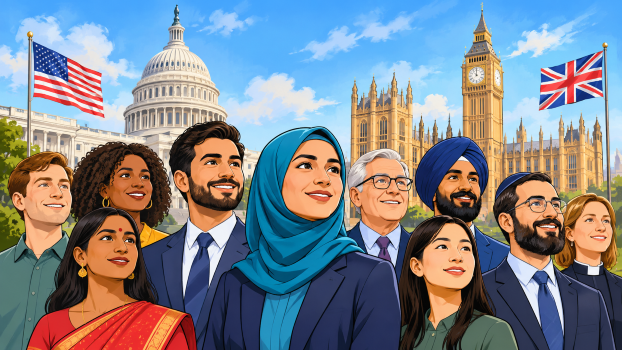
One of the most promising approaches to strengthening India’s early childhood and educational infrastructure lies in mobilising its extensive network of community institutions. ndia possesses a remarkable range of religious, charitable and philanthropic organisations with established infrastructure, community outreach and organisational capabilities. These include Hindu religious trusts, Muslim charitable institutions, Christian missions, Sikh Gurudwaras and Jain organisations.
Their collective institutional reach could be harnessed to support maternal healthcare, nutritional security and early childhood education through a carefully designed public partnership framework. The proposed model would involve establishing a Public Secular Charter under which participating institutions could undertake clearly defined social responsibilities with government supervision and support from Corporate Social Responsibility (CSR) contributions.
The objective would not be to transfer public responsibilities to religious organisations. Rather, it would be to mobilise existing community infrastructure as supplementary delivery mechanisms within a transparent, accountable and constitutionally secular framework.
For instance, the large-scale community kitchen model associated with ISKCON could provide useful organisational lessons for decentralised nutritional distribution. Its experience in supporting school meal programmes demonstrates the potential of institutional food-preparation and distribution networks.
Similar initiatives could be developed through established regional institutions such as the Sringeri Sharada Peetham, the Mookambika Temple administration at Kollur and the Savadatti Yellamma Temple Trust.
These institutions could potentially support maternal nutrition centres, early childhood facilities and community-based learning programmes in their respective areas. The framework could extend equally to Muslim charitable trusts, Christian educational missions, Sikh Gurudwaras and Jain institutions.
Gurudwaras, with their established traditions of community kitchens and collective service, could contribute to nutritional distribution. Christian missions and Islamic educational trusts could support healthcare outreach and educational facilities, while Jain institutions could participate in academic and community development initiatives.The guiding principle must be equal participation without religious discrimination.
A Secular, Mother-Tongue-Based Learning Ecosystem
The most important safeguard in this proposed framework would be the complete separation of educational delivery from religious instruction. Regardless of whether a learning centre operates within the premises of a temple, mosque, church, Gurudwara or charitable trust, its educational curriculum must remain secular, scientifically grounded and uniform in academic standards.
The emphasis should be on foundational literacy, numeracy, scientific reasoning, environmental awareness, logical thinking and practical knowledge. Mother-tongue-based early education should receive particular attention. Children learn more effectively when foundational concepts are introduced in languages they understand and use in their everyday lives.
As students progress, additional languages and specialised subjects can be introduced according to their abilities and interests. For secondary education, participating institutions could establish recognised learning centres affiliated with appropriate educational boards, including the National Institute of Open Schooling (NIOS), subject to applicable accreditation and regulatory requirements.
This would ensure that children studying in decentralised community institutions retain access to recognised educational qualifications and opportunities for higher learning. At the secondary and senior-secondary levels, students should receive structured guidance to identify their individual strengths and career interests.
Those demonstrating an aptitude for abstract reasoning may be encouraged towards mathematics, physical sciences, philosophy and advanced research. Others may pursue applied fields such as scientific agriculture, forestry, sports, industrial engineering, environmental management and vocational technologies.
Such pathways must remain flexible, allowing students to change direction as their interests and capabilities evolve. The ultimate objective is to move beyond a degree-oriented system towards one that produces skilled, productive and socially responsible individuals.
Conclusion: Harvesting the Potential of Human Capital
India’s demographic advantage will become a genuine national asset only when it is translated into a healthy, educated and skilled population. The transformation must begin much earlier than the conventional school-going age. Maternal health, early childhood nutrition and neurological development must form the foundation of a comprehensive human capital strategy.
This foundation must then be strengthened through transparent teacher recruitment, continuous professional development and classroom practices that encourage independent learning. Equally important is the need to develop decentralised educational delivery mechanisms that reflect India’s demographic diversity, financial constraints and institutional strengths.
The proposed multi-faith partnership framework offers one possible avenue for mobilising community resources, provided that public accountability, constitutional secularism, equal access and uniform educational standards remain non-negotiable principles. India does not need to reproduce another country’s educational architecture. It needs to build a system rooted in its own social realities while drawing intelligently from international experience.
The real measure of educational success should not be the number of certificates issued or graduates produced. It should be the ability of every young citizen to think independently, work competently, innovate responsibly and contribute meaningfully to society. Only when India begins nurturing human potential from the womb, strengthens the institutions that guide childhood and connects education with productive capabilities can it hope to cultivate a generation worthy of its aspirations. The harvest of a prosperous nation begins with the healthy bloom of its children.
(The author, a former Deputy Conservator of Forests Karnataka, is a known expert on envi ronment and forestry.)





[[comment.comment_text]]