The Roar of the Tiger and the Well-being of Society

 23 minutes ago
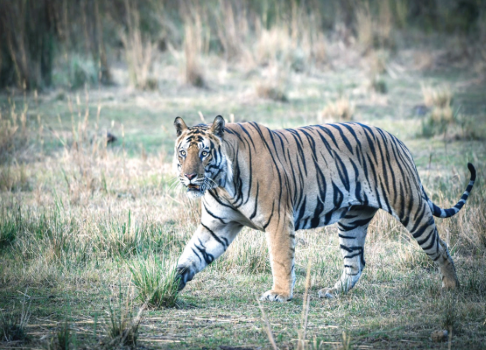
Tigers, lions, leopards and snow leopards are not merely predators at the top of the food chain. They are indicators of the health of their natural habitats. As umbrella species, their protection requires conserving extensive landscapes, benefiting countless other species.
Is saving the tiger merely about protecting an endangered animal? Is the survival of lions, leopards and snow leopards only a concern for wildlife enthusiasts? The relationship between nature and human society tells a much larger story. Conserving big cats means protecting forests, water resources, biodiversity and carbon-rich ecosystems. Ultimately, it is about safeguarding human survival. At a time when climate change threatens ecological stability, wildlife conservation must become an integral part of global climate action.
This connection came into focus during the ministerial discussion on ‘Big Cats: Drivers of Climate Change Mitigation’ at the United Nations Climate Change Conference (COP31) in Antalya, Türkiye. Organised jointly by India's Ministry of Environment, Forest and Climate Change and the International Big Cat Alliance (IBCA), the discussion brought together representatives from Nepal, Venezuela, Cambodia and Sri Lanka, along with international institutions such as the Ramsar Convention and the United Nations Convention to Combat Desertification.
Union Environment Minister Bhupender Yadav emphasised the importance of linking big cat conservation with climate action and ecosystem resilience. The participation of several countries underlined that wildlife protection is a shared global responsibility.
Tigers, lions, leopards and snow leopards are not merely predators at the top of the food chain. They are indicators of the health of their natural habitats. As umbrella species, their protection requires conserving extensive landscapes, benefiting countless other species.
Saving a tiger, therefore, means preserving the ecological relationships that sustain forests, grasslands, wetlands and mountain ecosystems.
Several important books have deepened our understanding of tiger conservation. K. Ullas Karanth's The Way of the Tiger: Natural History and Conservation of the Endangered Big Cat explores the animal's behaviour and conservation challenges. Valmik Thapar and Fateh Singh Rathore's The Secret Life of Tigers offers insights into tiger behaviour, while Kailash Sankhala's Tiger! The Story of the Indian Tiger documents India's conservation journey. These works underline an essential truth: a tiger's survival depends on an environment that provides food, water, shelter and breeding grounds.
A scientific distinction is important. Big cats do not directly absorb carbon. Carbon is stored in forests, grasslands, wetlands and soils. However, protecting big cats helps safeguard these carbon-rich habitats. Healthy forests absorb carbon dioxide, retain organic carbon in the soil, regulate water cycles and prevent emissions associated with deforestation. Big cat conservation is thus an important component of nature-based climate action.
India's tiger reserves demonstrate this relationship. According to figures cited by Bhupender Yadav, the country's 58 tiger reserves cover approximately 85,000 square kilometres, with more than 600 rivers originating in or flowing through these landscapes. These forests are important watersheds, contributing to groundwater recharge, soil conservation and the maintenance of river systems. Their significance extends far beyond wildlife tourism: they sustain water security and the livelihoods of millions.
India's conservation journey reflects sustained institutional commitment. Project Tiger, launched in 1973, marked a major effort to reverse the decline of the national animal. The Wildlife (Protection) Act, 1972, and the establishment of the National Tiger Conservation Authority strengthened the institutional framework. According to the 2022 All India Tiger Estimation, India's tiger population reached an estimated average of 3,682, accounting for more than 70 per cent of the world's wild tigers. This achievement is significant, but the real question is whether their habitats and wildlife corridors are becoming stronger.
Conservation cannot be measured merely by counting animals. Forest health, water availability, vegetation diversity and ecological connectivity are equally important. Fragmented forests, highways, railway lines, mining and industrial expansion can obstruct wildlife movement and isolate populations. Conservation policies must therefore protect not only reserves but also the corridors connecting them.
The experience of Palamau Tiger Reserve in Jharkhand offers a sobering perspective. Established in 1974, Palamau was among India's original nine tiger reserves under Project Tiger. Spread across Latehar and Garhwa districts, it is an important forest landscape of the Chotanagpur Plateau. The reserve was once known for its rich biodiversity and tiger population. Between 2000 and 2005, estimates placed its tiger numbers between 34 and 46.
However, the 2022 tiger estimation recorded only one tiger in Jharkhand. This decline raises serious questions about habitat degradation, poaching, prey availability and pressures on the forest ecosystem.
The challenge before Jharkhand is not simply to increase tiger numbers through relocation or intensive monitoring. It is to restore the ecological conditions necessary for a viable population. Forest corridors, water sources, prey species and effective protection against poaching must receive priority. Mining and infrastructure expansion also require careful ecological assessment. Palamau's forests are not merely a wildlife sanctuary; they support biodiversity, water resources and local communities.
This also raises questions about the relationship between conservation and indigenous communities. Tribal and other forest-dependent people have longstanding relationships with forests. They depend on them for livelihoods, food, medicinal resources and cultural identity. The Forest Rights Act, 2006, provides a framework for recognising the rights of Scheduled Tribes and other traditional forest dwellers. Conservation must respect these rights and involve communities in decision-making. Treating indigenous people as partners rather than obstacles can strengthen ecological protection.
The relationship between forests, water and wildlife is also evident in Sariska, Rajasthan. During the 1980s, Tarun Bharat Sangh, under the leadership of water conservationist Rajendra Singh, worked with local communities to revive traditional water structures and restore degraded landscapes in the Aravalli hills. Sariska once had a tiger population, but habitat destruction, poaching and ecological pressure devastated it. Tigers had disappeared by 2004, a crisis confirmed in 2005.
Inspired by traditional johads, communities in areas such as Mandalwas began restoring water bodies and retaining rainwater. These efforts improved soil moisture, helped recharge groundwater and encouraged vegetation to return. An important distinction must be made: the return of tigers to Sariska began in 2008 through a formal reintroduction programme involving animals translocated from Ranthambore. Their return cannot be attributed solely to water conservation. Nevertheless, the restoration of water systems and vegetation helped improve the landscape's ecological conditions. The experience shows that conservation cannot succeed through government orders and forest department surveillance alone. Community participation is indispensable.
The economic benefits of conservation must also reach local communities. According to the Environment Minister, tiger conservation generates approximately six million person-days of employment annually. Forest management, wildlife monitoring, scientific research and responsible tourism can create green jobs. However, tribal families, women and young people living near protected areas must share these benefits. If local residents bear the burden of restrictions while revenue flows elsewhere, public trust in conservation will weaken. Environmental justice requires a fair distribution of the benefits of natural resources.
The International Big Cat Alliance represents an effort to extend conservation beyond national boundaries. Envisioned by Prime Minister Narendra Modi, it seeks cooperation among countries to protect seven major big cat species: tiger, lion, leopard, snow leopard, cheetah, jaguar and puma. India can share its experience in tiger conservation while learning from other countries. Wildlife does not recognise political boundaries, making international cooperation essential for protecting habitats, sharing scientific knowledge and combating illegal wildlife trade. The alliance must translate declarations into practical support for researchers, forest officials and local communities.
India's cheetah reintroduction programme also highlights the need for scientific planning. Bringing an animal from one continent to another is not, by itself, a conservation success. Suitable habitats, adequate prey, disease management, scientific monitoring and community participation are essential. Long-term ecological outcomes, rather than publicity, must determine the programme's success.
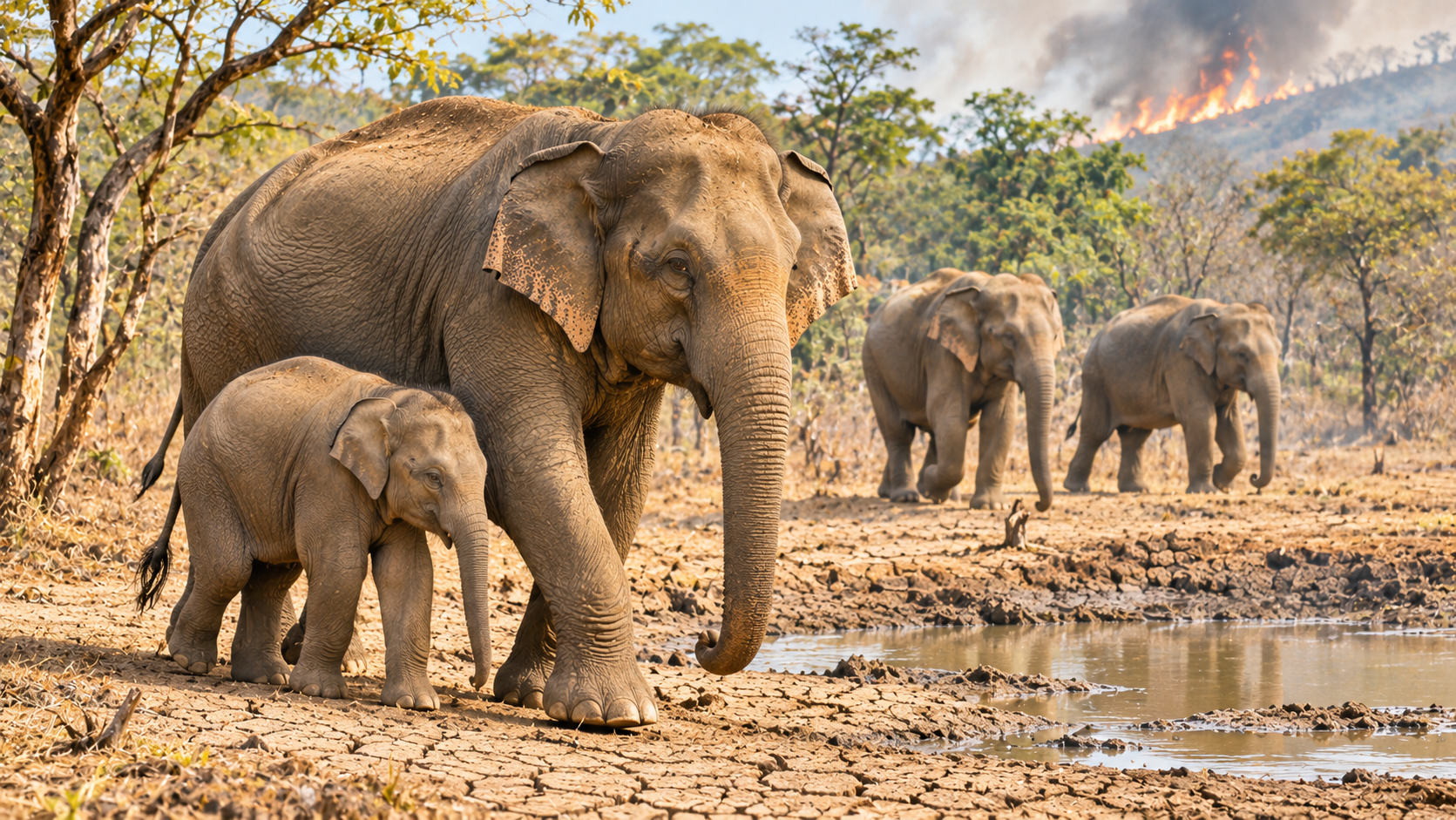
Climate change has made these challenges more serious. Rising temperatures, changing rainfall patterns, droughts, forest fires and pressure on water resources are transforming wildlife habitats. Protecting big cats must therefore become part of a broader strategy addressing biodiversity loss, land degradation and water insecurity. At the same time, climate action must not disregard the rights of forest-dependent communities.
National Water Award recipient Kishore Jaiswal offers an important perspective on this interconnected relationship.
According to him, tiger conservation is not merely about protecting an endangered animal; it is equally about safeguarding forests, water, soil, biodiversity and human life. Healthy forests protect watersheds, sustain rivers and contribute to groundwater recharge. His observation reinforces a fundamental ecological principle: forests are indispensable to water security, and water security is essential for the survival of all living beings.
In my understanding and conviction, if forests survive, water survives; if water survives, life survives. This is the broader message of conserving big cats. It is not simply about preserving a species but protecting the interconnected natural systems on which human society depends.
Ultimately, saving the tiger means protecting the forests from which rivers emerge, preserving the soil that sustains agriculture, safeguarding countless species and securing the livelihoods of communities whose lives are intertwined with nature. The real test of conservation will not be merely how many tigers are counted or reserves established, but how many forests remain intact, how many rivers continue to flow and how responsibly society learns to coexist with nature.
Sariska reminds us that community action can help restore ecological balance, while Palamau warns us of the consequences of losing it. The tiger will continue to roar only when its forest remains alive. And the forest will remain alive only when the people sharing its landscape can live with dignity, security and hope.
(The author, a senior journalist of Bihar, is a known commentator on governance, develop ment, and diver sity issues.)









[[comment.comment_text]]