India's Rivers: Lifelines in Peril

 2 years, 7 months ago
Jiva kant Jha
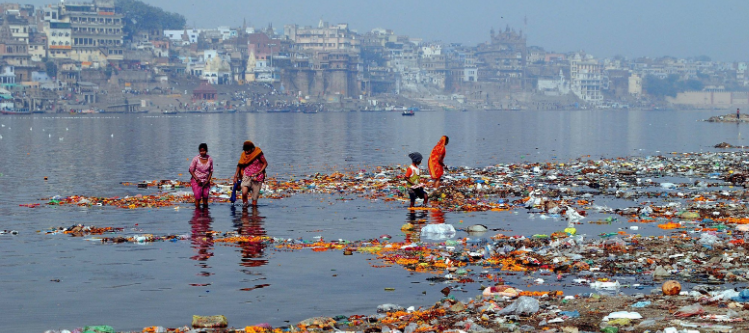
India, often hailed as the land of rivers, has its very essence intertwined with the myriad streams that cradle the subcontinent. These rivers, originating from the Himalayan embrace, have nurtured civilizations since time immemorial, transforming arid landscapes into verdant fields, sustaining both cattle and human life alike. Yet, the reverence once bestowed upon these waters has waned in recent decades, giving way to exploitation and neglect.
The unchecked proliferation of industries, water plants, and illegal mining activities has marred the purity of these rivers, contaminating them to the extent that the populace is compelled to seek refuge in bottled water. The irony is stark – the very sources that once offered abundance are now symbols of scarcity and desecration.
Amidst this ecological turmoil stands Devbhumi Uttarakhand, a region sanctified by its association with the divine, now bearing the brunt of developmental aggression. Here, the grandeur of the Himalayas meets the aspirations of a nation seeking progress, but at what cost? The constitutional projects envisioned to harness the power of nature, have inadvertently stifled the flow of life, leading to rivers drying up and ecosystems collapsing.
The crisis is palpable in the sacred sites of Gangotri and Yamunotri, revered not just for their spiritual significance but also as the genesis of the Ganges and the Yamuna. These sites, once the epitome of natural beauty and tranquillity, now echo with the clamour of dissent as development projects encroach upon their sanctity.
Joshimath, a town founded by Adi Shankaracharya, stands as a testament to the conflict between nature's offerings and human ambition. The town, once a haven for meditation and the appreciation of nature's splendour, now grapples with the consequences of unchecked development. The NTPC projects, with their colossal concrete structures, have burdened the land beyond its bearing capacity, obstructing the natural flow of rivers and leading to widespread land subsidence.
The situation in Joshimath has prompted an extensive inquiry, with nine central government organizations delving into the causes of this environmental debacle. Despite reports from ISRO, NBT, and IIT Roorkee's building department suggesting that central projects are not the culprits, the residents, who face the threat of displacement, remain unconvinced. Their protests resonate with the pain of exile and the loss of a homeland, a sentiment that no scientific report can assuage.
As the inquiry continues, the people of Joshimath stand at a crossroads, their faith in the institutions tasked with safeguarding their heritage shaken. The mountains of Joshimath, burdened with the weight of development, serve as a stark reminder of the delicate balance between progress and preservation.
India's rivers, once the lifelines of its civilization, now face an existential threat. The question that looms large is whether the nation will heed the call of its rivers, rallying to restore their honour or continue down the path of ecological compromise. The answer lies not in the corridors of power but in the collective conscience of its people, who must decide the fate of their most sacred and vital resources.
The Himalayas, a majestic canvas of nature, do not yearn for the relentless development that cities like Delhi and Bengaluru have witnessed. Their allure lies in the towering peaks, the rare herbs, and the ancient Deodar and Banj trees, each a repository of medicinal wealth crucial for human well-being. Left untouched, these mountains could captivate the world, serving as a sanctuary for both biodiversity and the human spirit.
However, the push for modern infrastructure—six-lane highways, pervasive mobile connectivity, and sprawling hotel complexes—threatens to transform this natural wonder into a concrete jungle. Such development not only undermines the ecological integrity of the Himalayas but also the cultural and spiritual heritage that these landscapes embody.
We stand at a crossroads, where the choice is ours to make: do we allow the Himalayas to become a mere shadow of their former glory, or do we safeguard their pristine beauty for generations to come? The answer should echo through the valleys and peaks—let the Himalayas remain a testament to nature's grandeur, not a monument to human excess. By preserving these mountains, we preserve the essence of our planet and ourselves.










[[comment.comment_text]]