Delhi’s Diwali: A Festival of Lights, a Failure of Civic Sense
 56 minutes ago
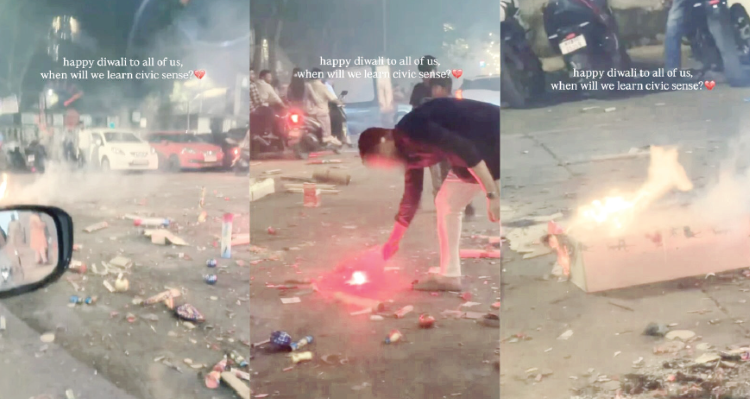
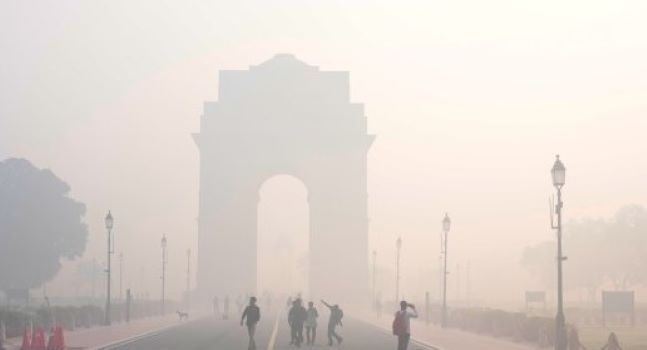
Toxic Air, Defiant Citizens, Silent Authorities: Instead of being a celebration of light, Diwali in Delhi has evolved into an annual test of civic conscience and governmental determination. The government watches helplessly as people break the law by setting off firecrackers, and the government wakes up the next morning to voice concerns about pollution
The capital of a country is supposed to serve as a model for public engagement, education, legal compliance, and administrative discipline. However, Delhi's Diwali appears to dispel all of these hopes. The state of its residents' civic judgement indicates that education has improved their standard of living without necessarily improving their civic character, despite their impressive degrees, pricey automobiles, and opulent residences. It is not cultural knowledge but rather blatant, privilege-driven irresponsibility when damaging someone else's lungs for one's personal enjoyment is welcomed as a celebration and breaking the law is defended as tradition.
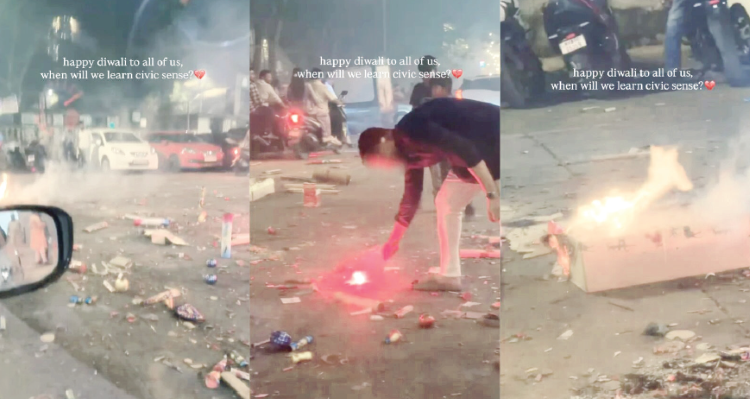
Instead of being a celebration of light, Diwali in Delhi has evolved into an annual test of civic conscience and governmental determination. The government watches helplessly as people break the law by setting off firecrackers, and the government wakes up the next morning to voice concerns about pollution. Nighttime fireworks, poisonous air by daybreak, and then the well-known official lament! As if pollution were an unexpected natural disaster instead of the inevitable result of persistent public disobedience and poor management. In addition to firecrackers, disdain for the law and a lack of responsibility also contribute to the smoke rising in the nation's capital.
Delhi’s Toxic Air, Toxic Mindset
Automobile emissions, industrial pollutants, construction dust, garbage burning, and stubble smoke are already choking the air in Delhi-NCR. These pollutants are merely trapped by unfavourable winter weather, making the atmosphere even more dangerous. In light of this, Diwali fireworks exacerbate an already serious pollution problem. Although firecrackers may not have been the only factor in this disaster, the obstinate insistence on setting them off shows a civic mindset that is prepared to make others suffer for its transient pleasures. In addition to firecrackers, disdain for the law and a lack of responsibility also contribute to the smoke rising in the nation's capital.
The question goes beyond whether or not firecrackers should be set off. It is about a complete lack of judgement that views celebrating as an inalienable right while disregarding other people's health. What kind of religion, custom, or civic engagement is it that fills a city's lungs with smoke, illuminating one's courtyard?
When Firecrackers Silenced the Supreme Court!
Once more, the Supreme Court was forced to impose precise time and place limitations on the usage of firecrackers throughout Delhi-NCR. Only certified green crackers were allowed between 6 and 7 a.m. and 8 and 10 p.m. on November 7 and 8. It was forbidden to let off fireworks near hospitals, assisted living facilities, schools, and other areas that were classified as quiet zones. On November 9, a total prohibition was to take effect. Additionally, instructions were given to stop the selling of illicit firecrackers and provide efficient compliance monitoring.
However, Diwali night once again showed that Delhi's firecrackers not only contaminate the air but also muffle the voice of the law. Fireworks proceeded unabated, prescribed time limitations were blatantly disregarded, and the administration's efficacy was seriously questioned. When the Supreme Court's orders cannot be successfully implemented in the nation's capital, which is home to the nation's highest court, what does that say about the state of governance?
Were the limitations unknown to the populace? Did the administration fail to foresee the fireworks that would precede Diwali night? Or had the administrative and political determination to uphold the law become less strong than the crackers' noise?
The law is not a buffet of candies that people can select from to suit their own tastes. Anyone who wilfully disobeys a court order for their own enjoyment is not just breaking the law; they are undermining the entire basis of the legal system. Furthermore, an administration cannot avoid its fair share of accountability if it continues to be a silent observer. In the end, who can be expected to respect the dignity and authority of the law if even a Supreme Court directive may be made ineffectual by the joyous loudness of citizens in the nation's capital?
Air Purifiers, Absent Civic Sense!
Delhi had an odd digital spectacle following Diwali. People shared their air purifier readings on social media—1,000, 1,500, and even 3,000! It was as if the fear of inhaling toxic air had become a point of pride on the internet. Although official AQI measures cannot be replaced by readings from household equipment, they do show the startling degree to which pollution has permeated into our homes.
Think about the irony. While setting off firecrackers, some people who are concerned about the toxic air in their homes appear shockingly careless about the lungs of their own children, elderly parents, and neighbours. Does pollution only become an issue when its figures show up on a screen in one's house? Is it now a civic right to put other people's lungs in peril for one's own celebration?
It's simple to share images of poisonous air, but it's difficult to stop the behaviours that contribute to its toxicity. Purchasing an air purifier is simple; removing pollutants from our bodies is far more challenging. We refuse to utilise the civic conscience required to safeguard the air outside, even while we want technology to protect the air inside our homes. What kind of modernity is this, where there are devices to safeguard our lungs but no discernible sense of civic duty?
Degrees Without Conscience!
The real assessment of education occurs in public life rather than in a testing room. Delhi's wealthy and educated populations in particular ought to be held to a higher standard. They are fully aware of the threats to their children's health, the hazards posed by pollution, and court orders. However, when individuals deliberately break the law and contaminate the air of an entire city for a few hours of personal enjoyment, their civic character—rather than their academic credentials—becomes the question.
Degrees can lead to social standing, lucrative jobs, and distinguished positions, but they cannot ensure civic engagement, wisdom, or compassion. Education is about having the integrity to act morally, not only about understanding what is correct.
There's no denying the irony. While contaminating the air they breathe, we educate kids to protect the environment. We publicly disobey court orders while lecturing people about upholding the law. We purchase air filters for our own kids, but we don't give other people's lungs much thought. A society may see a constant increase in the number of educated individuals, but it will create more degree holders rather than more civilised citizens if its awareness of other people's lives continues to deteriorate.
When Governance Adds to the Smog
Although the administration cannot avoid its own responsibility, the carelessness of citizens is quite alarming. Firecrackers are not the only source of pollution in Delhi-NCR. All year long, the problem is exacerbated by waste burning, construction dust, industrial pollution, and vehicle emissions. Governments and municipal authorities are in charge of regulating these sources.Every year, Diwali falls on a set date.
Judicial directives were already in the public domain, and firecrackers are hardly an unexpected event. So how did rules get blatantly broken all night long? Where was the equipment for monitoring? The police were where? And where did the administration's enforcement responsibilities lie? Announcements of limits, ceremonial cautions, and toxic air the next morning are all things we see every year. Has administrative accountability been reduced to this yearly formality exercise?
Celebrate, Don’t Suffocate!
Diwali is a religious and customary holiday, but no custom is so important that it warrants damaging someone else's lungs. Freedom of religion does not equate to freedom from civic duty. Pollution is never personal, but faith is. Before entering someone's lungs, firecracker smoke does not discriminate based on caste, religion, class, or economic background.
Ironically, in the same city where people spend a lot of money on air purifiers to protect themselves from harmful air, other people believe that setting off firecrackers at the expense of the health of their neighbours is an inalienable right. What level of civic consciousness, modernity, or education enables people to see the suffering of the elderly and children and yet refuse to alter their behaviour?
Delhi's issue is not just pollution but also a way of thinking that prioritises personal enjoyment over public health. The government must take action against enduring sources of pollution all year long and make sure that court orders are carried out successfully. People must also realise that festivities should never pose a risk to public health.
Although firecrackers burn out in a matter of minutes, their toxin can remain in human lungs for a much longer period of time. Instead of engulfing someone else's life with oppressive gloom, Diwali is a celebration of driving out evil. Delhi must find civic consciousness before purchasing another air purifier, and the government must be determined to uphold the current regulations before issuing new ones.
A Shining Capital, A Failing Conscience
By only placing the blame on Delhi, other cities have no reason to feel at ease. However, there are inherently greater expectations from the national capital. The issue is no longer limited to air pollution if, in a city considered to be among the most advanced and educated in the nation, following the law becomes a matter of personal preference, the government seems powerless to enforce its own orders, and even the ostensibly conscious citizens prioritise their celebrations over the right of others to breathe. It is a civic awareness crisis.
The administration must make sure that the legislation is followed, the government must take action against the year-round causes of pollution, and citizens must acknowledge their own obligations. It is not only a right to demand clean air from the government; it is also an obligation to avoid contaminating it.
What sort of modernity, education, or faith prioritises the enjoyment of a select few over a child's lungs or an elderly person's breath? Instead of celebrating the victory of gunpowder over someone's freedom to breathe, Diwali honours the victory of light over darkness. Delhi needs more intelligent citizens than any other smart city initiative. Because the dream for clean air suffocates along with civic conscience in the nation's capital.
(The author, a Doctorate in Laws, is a senior lawyer and civil society activist.)




[[comment.comment_text]]