Nvidia CEO Entangled in Chinese Espionage Allegations Ahead of Trump-Xi Summit

 an hour ago
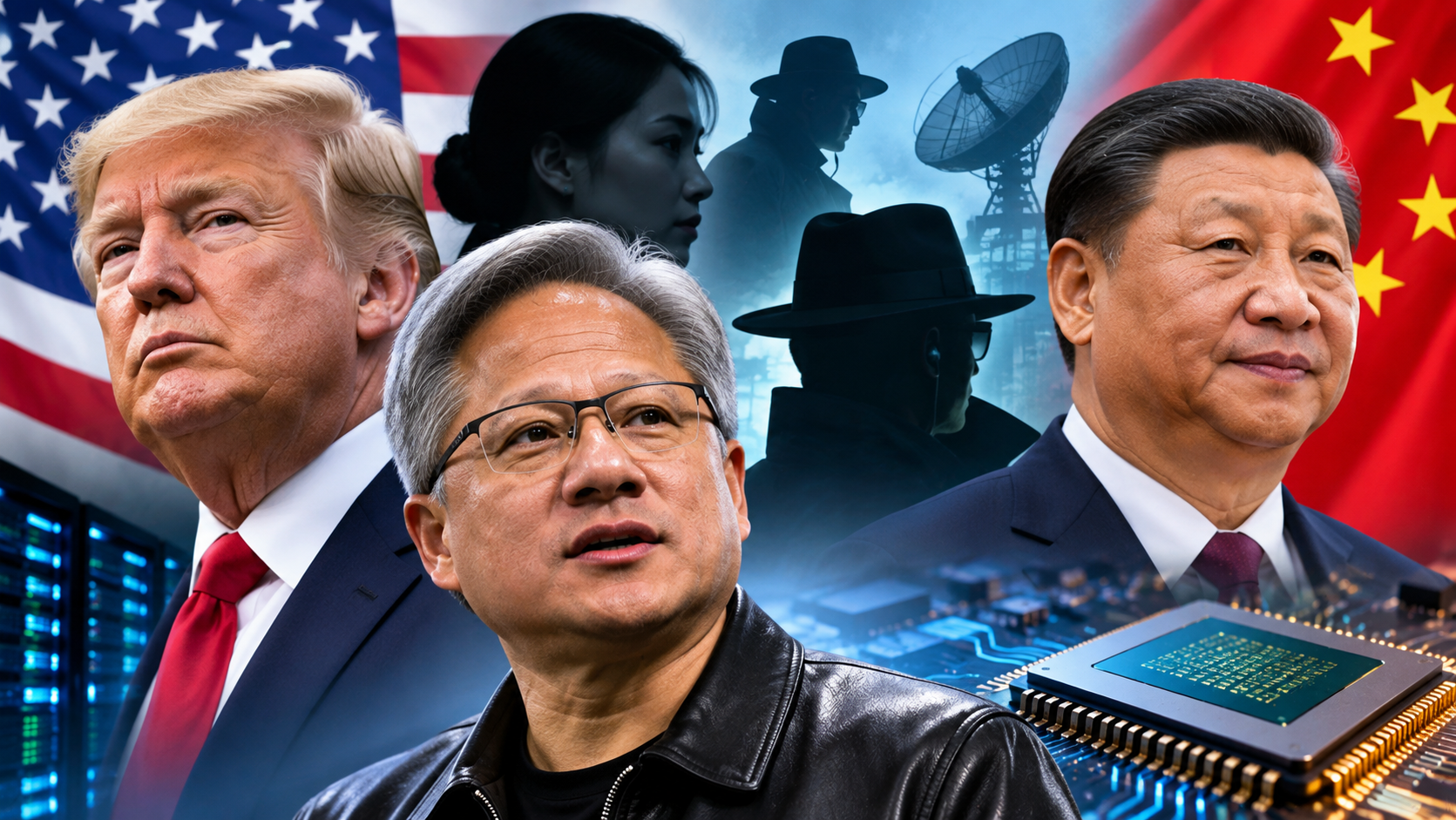
As U.S. President Donald Trump and Chinese leader Xi Jinping prepare for a summit in Shenzhen to negotiate a fragile trade truce, an espionage scandal involving Nvidia CEO Jensen Huang highlights the intense intelligence rivalry underlying their diplomatic relations. U.S. intelligence agencies have identified Alice Huang, an executive at Singapore-based semiconductor purchaser Megaspeed with whom Mr. Huang acknowledged having an affair, as an asset of China’s Ministry of State Security. Given Nvidia's central position in powering global artificial intelligence and Washington’s efforts to restrict advanced chip exports to Beijing, analysts note that targeting top technology executives has become a primary objective for Chinese intelligence operations.
Under President Xi Jinping, China has elevated the strategic standing and resources of its Ministry of State Security, transforming it into a modern intelligence agency focused on securing critical technologies. In response, the Central Intelligence Agency has broadened its espionage scope to target Chinese commercial firms operating in strategic sectors like semiconductors, artificial intelligence, and biotechnology. This aggressive intelligence gathering on both sides underscores how economic and technological leadership has replaced traditional military metrics as the main arena of geopolitical competition between Washington and Beijing.
Despite the gravity of the allegations, President Trump has indicated that he does not plan to raise the espionage matter during his upcoming meeting with Mr. Xi in Shenzhen. By consistently downplaying state-sponsored espionage as a standard international practice, Mr. Trump’s reaction contrasts sharply with previous diplomatic incidents, such as the 2023 Chinese spy balloon crisis under the Biden administration that halted bilateral communications for months. Intelligence experts warn that treating covert operations with a relaxed approach risks signaling to Beijing that the political fallout from aggressive espionage remains manageable.
For its part, Beijing has forcefully rejected the espionage claims regarding Ms. Huang, dismissing them as political smearing aimed at undermining Chinese technological ambition. Official state media and online commentators in China have largely categorized the incident as a personal affair rather than a national security dispute, while emphasizing domestic efforts to push Chinese firms toward local chip manufacturers like Huawei. Analysts suggest Beijing is using the moment to reinforce national self-reliance in semiconductors while asserting that Western intelligence concerns are driven by domestic political anti-China sentiment.
The scandal reveals how deeply technological supremacy and corporate influence intersect with international diplomacy. As both nations continue to pursue access to critical AI infrastructure, high-level corporate figures remain vulnerable to espionage operations designed to secure strategic intelligence. Whether this quiet intelligence clash will eventually undermine trade negotiations remains to be seen, but it highlights that economic diplomacy now operates alongside aggressive covert rivalry for control over critical technologies.










[[comment.comment_text]]