Beyond the Seasonal Rituals: Why Delhi’s Pollution Demands Year-Round Watch

 2 hours ago
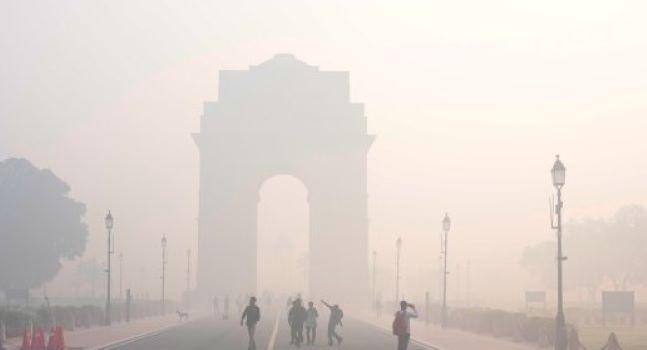
Every November, Delhi enacts a familiar ritual of collective anxiety. As the air thickens into a toxic haze, emergency meetings are convened, masks reappear, construction is halted, and politicians engage in a predictable cycle of mutual blame. Yet, once the seasonal winds shift, the sense of urgency vanishes. Decades of court directions, policy frameworks, dedicated committees, and massive public expenditure have yielded little change. The fundamental question remains largely unaddressed: why does India’s capital continue to breathe toxic air year after year despite an elaborate regulatory architecture?
The failure is rooted in compromised enforcement and structural neglect across all major pollution drivers. Festive cracker bans are routinely defied with minimal consequence, standing in stark contrast to the swift police deployment often seen managing peaceful citizen protests. Beyond these seasonal spikes lies a systemic breakdown in year-round industrial oversight, exemplified by offline, malfunctioning, or manipulated continuous emission monitoring systems. Ambient air monitoring itself suffers from data gaps and a reliance on color-coded AQI numbers that mask the actual concentration of dangerous PM2.5 particles, obscuring the true extent of public health exposure.
Addressing seasonal stubble burning similarly demands economic transformation rather than superficial statistical fixes.
Farmers are repeatedly made the convenient face of the crisis, yet the problem stems from deep-seated agricultural economics—paddy procurement incentives, tight sowing windows, labor shortages, and expensive residue management. Real progress requires viable crop diversification, robust market support, and accurate ground-verified burnt area assessments rather than convenient satellite counts. Likewise, urban vehicular policies have focused narrowly on changing engine standards while ignoring chaotic traffic management, dusty roads, illegal parking, and underdeveloped public transit infrastructure.
Instead of targeting emissions at their source, governance has relied on short-term reactive measures designed to project the appearance of action. Emergency construction bans, smog towers, and water sprinklers fail to substitute for year-round dust control, waste segregation, and strict industrial compliance. This cycle reflects weak institutional accountability, administrative silos across the National Capital Region (NCR) airshed, and potential regulatory capture. Judicial directives, such as the Supreme Court’s recent demand for strict compliance affidavits and prosecution reports, underscore that accountability must extend beyond individual offenders to the regulatory authorities tasked with enforcing the law.
Delhi's air crisis carries a profound human cost that has been dangerously normalized. While affluent residents retreat behind indoor air purifiers, outdoor workers, daily wage earners, and traffic personnel remain exposed on the frontlines. Delhi does not need another temporary November rescue operation. It requires integrated, year-round airshed governance, transparent raw data, fully staffed enforcement agencies, and institutional accountability. The real test of environmental governance is not the number of emergency meetings held when the skies turn grey, but the violations prevented when public attention wanes.





[[comment.comment_text]]