When a City Cannot See Its Runway, It Has a Governance Problem

 an hour ago
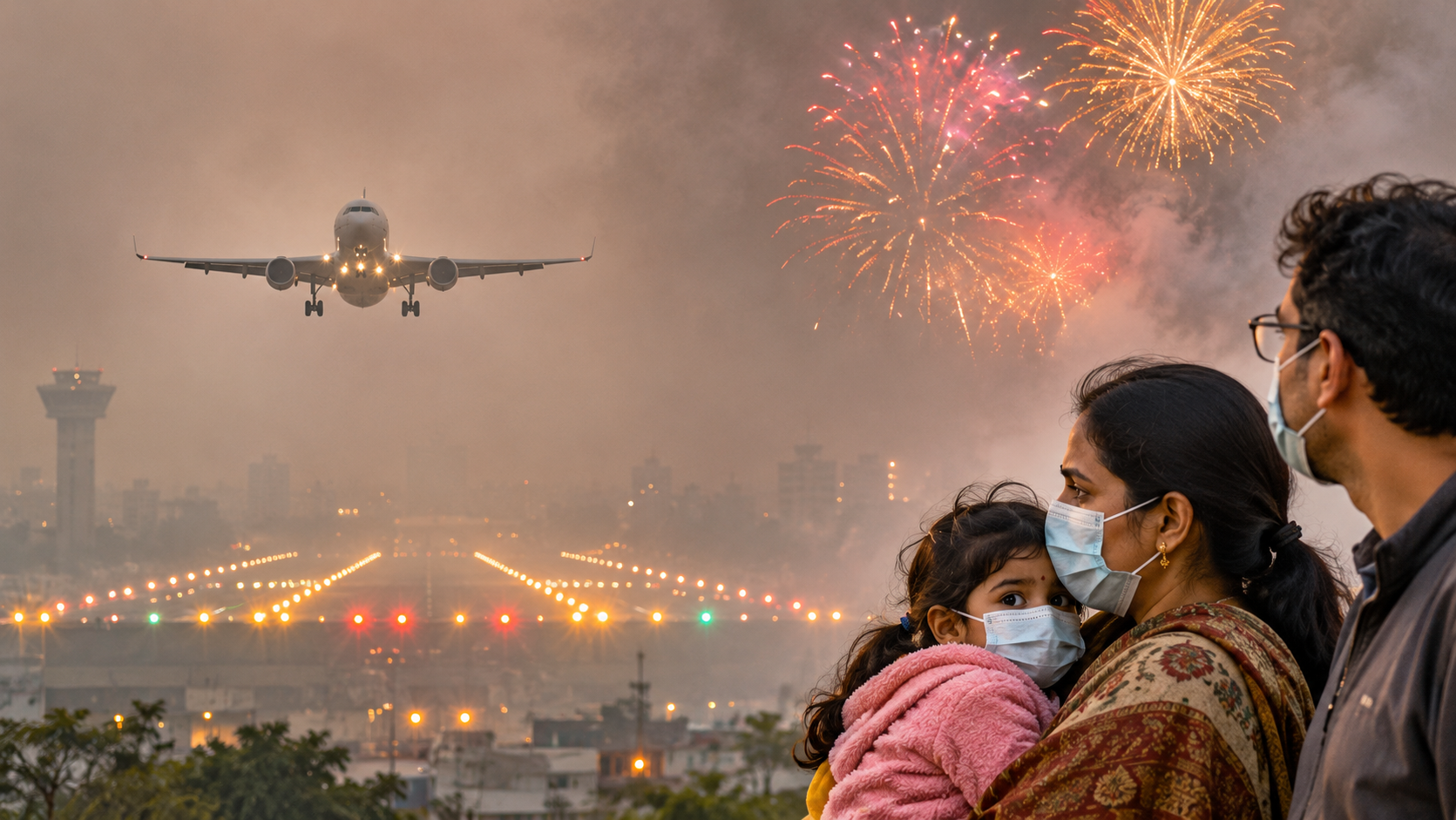
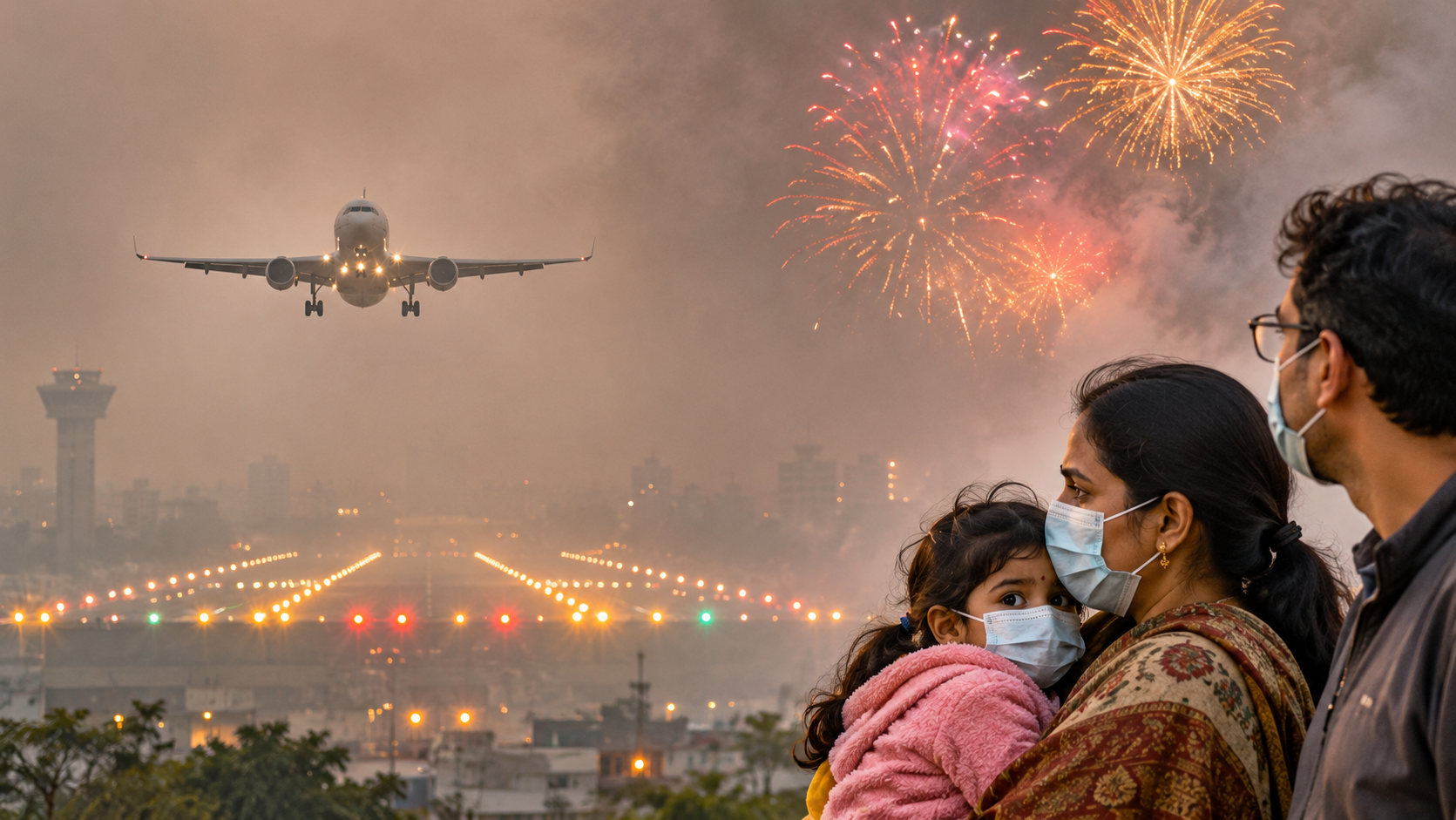
On Sunday night, an IndiGo flight carrying 156 passengers from Raipur could not see Chennai’s runway. It was diverted to Bengaluru and landed in Chennai at 1.54 am. Eleven other arrivals circled overhead and fifteen departures sat waiting. At the SDAT stadium, rain had already pushed back the Chennai Open women’s final from 6.30 pm to 9 pm. Then firework smoke settled over the court, and both finalists walked off without a point played. Rain deserves its share of the blame for that delay. The smoke deserves the rest.
It is tempting to file this under Deepavali excess and wait for the haze to lift. That would miss the point. The spike was not a surprise. It was the most predictable event on the city’s calendar, and it keeps getting worse.
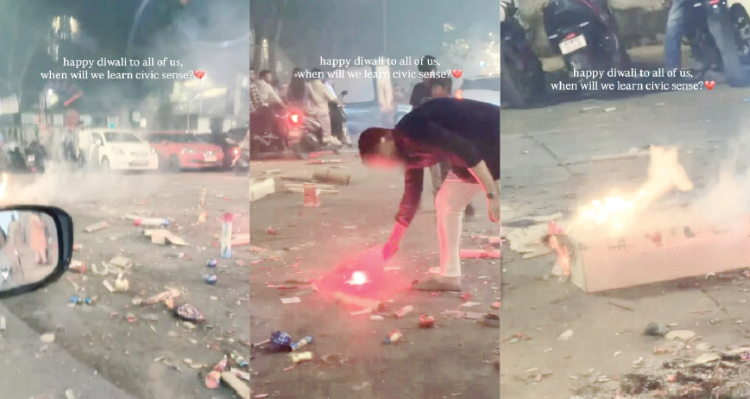
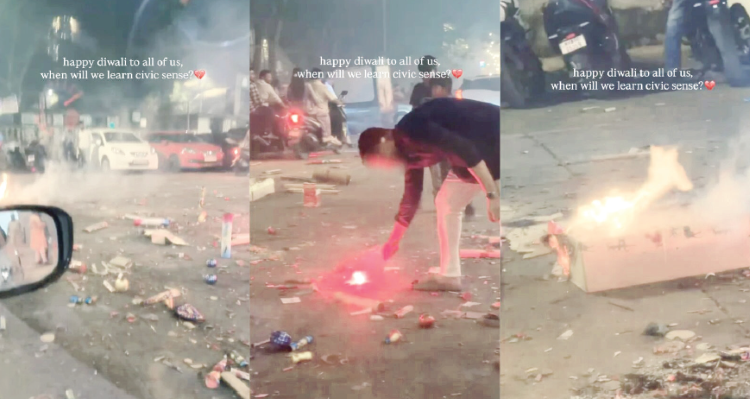
Look at the record. Peak readings at city monitors reached 365 in 2023, 287 in 2024 and 401 in 2025. This year an hourly reading of about 446 was reported at 7.30 pm on Sunday, after a citywide average of just 72 the evening before. Flights disrupted by smoke rose from 15 last year to 26 this year, with a diversion added. Every year the rules are announced: bursting only from 6 to 7 am and 7 to 8 pm, green crackers only. Every year the evening skies ignore them. Chennai police booked 581 cases in 2023 and 319 in 2025. Those are cases filed after the smoke has already done its work. A rule that is enforced only on paper, and only afterwards, does little to protect anyone’s lungs.
Then there is the question of what we are actually breathing. By Monday noon, the Central Pollution Control Board put the city average at 221 (“poor”). Private platforms reported readings above 1,200 on Sunday night, and a screenshot of 1,556 was circulated by a player’s camp. India’s official index tops out at 500, and the origin of that number is unclear. Yet nobody should shrug off the gap. Private sensors and official monitors are measuring different places at different moments with different methods, and when a resident’s phone says one thing and the government says another, trust is lost. The city needs to close that gap. It cannot do so while only seven of its nine official monitoring stations were operating the day before the festival.
The Greater Chennai Corporation has approved 75 sensors across all 15 zones at a cost of ₹6.36 crore, linked to its command centre. That is a good idea in principle. But the public has been told the data will appear on display boards, and officials have sent mixed signals on whether a live public dashboard will exist. Sensors that citizens cannot read, and independent researchers cannot verify, are an expensive way of keeping bad news indoors. Real-time, neighbourhood-level data should be public by default, with the methodology stated plainly.
Data matters because people act on it. A father in Madipakkam kept his six-month-old daughter indoors all day, and she still developed eye irritation and a cough that kept her awake through the night. An asthma patient in the city sealed every window and ran the exhaust fans, and still needed an inhaler on Sunday night. These are not people who ignored advice. They are people who were given none. When the air crosses dangerous thresholds, the state should say so loudly and early, with specific guidance for children, older people and those with heart and lung conditions. Schools, outdoor employers and event organisers need postponement protocols tied to air quality, so that nobody has to wait for a player to post a photograph before asking whether a match should go ahead.
Nor can the festival carry all the blame. The air Chennai breathes on an ordinary day is shaped by traffic, windblown road dust, construction sites, open waste burning and the smoke from landfills. Studies of the city’s emissions have repeatedly pointed to road dust as a major contributor to coarse particulate pollution. A city whose everyday air is already fragile has little cushion when thousands of households light fireworks within the same hour. The fix for Deepavali and the fix for the rest of the year are the same work, done on different days.
None of this requires abandoning a festival that millions love. Celebration and public health are not opposites. But the state must make the safe choice easier than the unsafe one. That means stopping unlicensed and non-compliant crackers at the point of sale, before they are lit, rather than counting violations afterwards. It means designated community bursting areas with proper supervision, public advisories issued before the festival and not after it, and a permanent clean-air plan with published targets and a named official accountable for meeting them.
Chennai should not have to wait for flights to circle overhead or a tennis final to be abandoned before it treats clean air as a basic public service. The runway has told us what the city’s own monitors could not. The question is whether anyone in authority is listening before next Deepavali.





[[comment.comment_text]]