Genocide in Gaza: A World Complicit in Silence

 1 year, 3 months ago
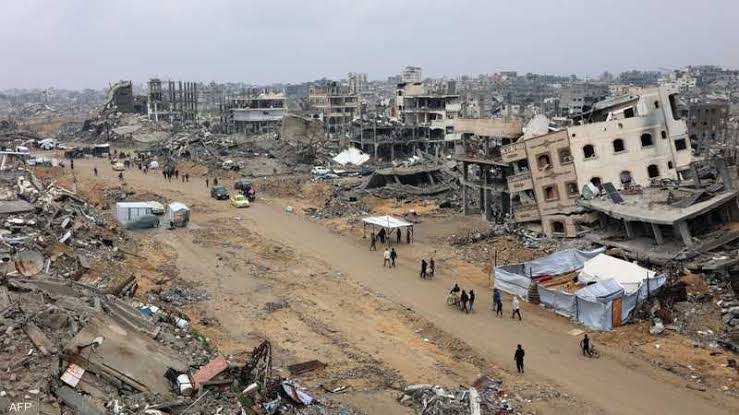
The ongoing crisis in Gaza, marked by relentless Israeli military operations and the displacement of Palestinians, has reignited global debates about justice, sovereignty, and human rights. As the world watches, the plight of Palestinians under what many call a genocidal regime raises urgent questions about international accountability and the moral failures of global powers. This piece critically examines Israel’s actions, its historical and ideological underpinnings, and India’s troubling alignment with a state accused of apartheid and territorial expansionism.
Israel’s Undefined Borders: A Revanchist State
Unlike every other nation that has submitted its geographical map to the United Nations, Israel stands alone in its refusal to do so. This omission is not an oversight but a deliberate act rooted in its revanchist ambitions. While India and Pakistan, despite their disputes over Kashmir, clearly delineate their territorial claims without encroaching beyond contested areas, Israel’s undefined boundaries signal expansive territorial aspirations across the Middle East. This refusal to commit to a fixed map underscores a state ideology that thrives on annexation and displacement, most visibly in its actions against Palestinians.
The absence of a defined map is not merely bureaucratic; it is a strategic tool that enables Israel to justify encroachments into Palestinian territories and neighbouring regions. Recent military actions against Iran further illuminate this expansionist agenda, positioning Israel as a state that prioritises territorial gain over regional stability. Such actions challenge the international community’s commitment to sovereignty and self-determination, principles enshrined in the UN Charter.
Apartheid as Policy: Israel’s Jewish State Doctrine
Israel’s identity as a Jewish state is not just a cultural or religious assertion; it is a constitutional framework that institutionalizes discrimination. Non-Jews in Israel, including Arabs, Christians, and others, are relegated to second-class status, a policy that mirrors the apartheid system once enforced in South Africa. While countries like Pakistan may declare an official religion, their constitutions grant equal rights to minorities. In contrast, Israel’s laws explicitly privilege Jewish citizens, from land ownership to political representation, creating a system where equality is structurally impossible.
This apartheid policy extends beyond Israel’s borders into the occupied Palestinian territories. In Gaza and the West Bank, Palestinians face systemic violence, restricted movement, and economic strangulation. The blockade of Gaza, coupled with periodic military assaults, has turned the region into what human rights organizations describe as an “open-air prison.” The international community’s failure to dismantle this apartheid system raises questions about its commitment to universal human rights.
A Legacy of Violence: From Imperialism to Genocide
The creation of Israel in 1948, following a series of violent acts orchestrated by Zionist militias and supported by imperialist powers, was a moment of profound injustice for Palestinians. Mahatma Gandhi, a global icon of nonviolence, condemned Israel’s formation, arguing that it was built on terrorism and dispossession. Israel’s actions in Gaza—characterised by indiscriminate bombings, targeted killings, and forced displacements—echo this violent genesis. The goal, critics argue, is clear: to erase Palestinian presence through death or exile, paving the way for further annexation.
Comparisons to the Holocaust, while sensitive, are increasingly invoked to highlight the scale of Palestinian suffering. The systematic dehumanisation, collective punishment, and mass casualties in Gaza evoke memories of historical atrocities. Yet, unlike the global reckoning that followed the Holocaust, Israel’s leaders, particularly Prime Minister Benjamin Netanyahu, face little consequence. The call for accountability grows louder, with many equating Netanyahu’s policies to those of history’s worst oppressors. For a world that vowed “never again,” the silence on Gaza is deafening.
India’s Moral Failure
India, a nation shaped by Gandhi’s principles of truth and nonviolence, once stood as a beacon of anti-colonialism and solidarity with oppressed peoples. Yet, under the current government, this legacy has been eroded. India’s deepening ties with Israel, including military and economic cooperation, signal a departure from its historical stance. Rather than condemning Israel’s atrocities, the Modi administration has embraced what critics call a “predatory state,” aligning with a regime accused of genocide and apartheid.
This shift is not merely pragmatic; it reflects an ideological alignment that critics liken to the influence of Nathuram Godse, Gandhi’s assassin, whose worldview rejected universal humanism in favour of narrow nationalism. India’s failure to suspend diplomatic relations with Israel or issue a strong condemnation of its actions in Gaza betrays the values of its independence struggle. For a country that once championed Palestinian self-determination, this complicity undermines its global moral standing.
A Call for Action
The crisis in Gaza is not Israel’s alone; it is a failure of the international community. Western powers, particularly the United States, continue to provide military and diplomatic cover for Israel, shielding it from accountability. The UN, despite its resolutions, remains toothless in enforcing justice. Meanwhile, nations like India, which could leverage their influence to advocate for Palestine, choose silence or complicity.
The parallels between Gaza and historical genocides demand a global response. Boycotts, sanctions, and diplomatic isolation proved effective against South Africa’s apartheid regime; similar measures could pressure Israel to end its policies. Grassroots movements, from student protests to international solidarity campaigns, are already amplifying Palestinian voices. Yet, without state-level action, these efforts risk being marginalized.
India, in particular, has a unique opportunity to reclaim its Gandhian legacy. By suspending ties with Israel and advocating for Palestinian rights, it could galvanise the Global South to challenge the status quo. Such a move would not only honour Gandhi’s vision but also restore India’s role as a moral leader on the world stage.
A World at a Crossroads
The genocide in Gaza, as the world watches, is a test of humanity’s resolve. Israel’s apartheid, expansionism, and violence against Palestinians expose the fragility of international justice. For India, the choice is stark: to continue down the path of complicity or to revive the spirit of Gandhi in defence of the oppressed. As Palestinians endure unimaginable suffering, the global community must decide whether it will uphold the principles it claims to cherish or remain a bystander to history’s latest tragedy.
The time for silence is over. The world must act—before Gaza becomes another chapter in the long book of atrocities humanity swore to prevent.
(Author, a former member of the history faculty at St. Xavier’s College, Mumbai, is a well-recognised columnist and commentator.)










[[comment.comment_text]]