Uttarakhand Congress leader Indira Hridayesh dies.
EW•NN
5 years, 1 month ago
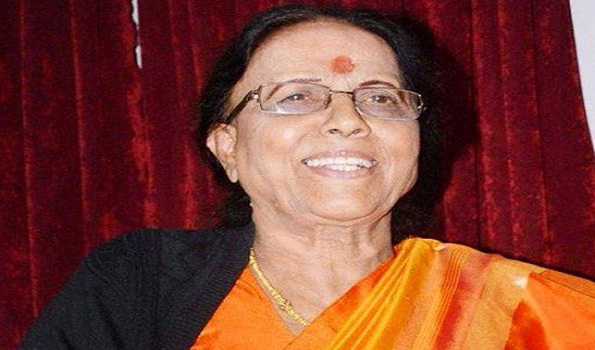
New Delhi, Veteran Uttarakhand Congress politician and Leader of Opposition in the Legislative Assembly Dr Indira Hridayesh passed away due to cardiac arrest here at the Uttarakhand Sadan on Sunday.
The 80-year-old Haldwani MLA was in the capital to attend a party meeting on Saturday and just two days ago, she was seen vociferously protesting against the fuel hike in Haldwani.
Prime Minister Narendra Modi said he was saddened by her demise. "Dr. Indira Hridayesh Ji was at the forefront of several community service efforts. She made a mark as an effective legislator and also had rich administrative experience. Saddened by her demise. Condolences to her family and supporters. Om Shanti," the Prime Minister's office said quoting Mr Modi.
The state wing of the grand-old party termed her demise as extremely painful and unfortunate for the party. "The sudden demise of Dr. Indira Hridayesh ji, a senior member of the Uttarakhand Congress family, who devoted her entire political life to the Congress party from UP to Uttarakhand for the last four decades, in Uttarakhand Sadan, Delhi is extremely painful," the party said in a tweet.
The deceased Congress leader was first elected from the Haldwani constituency in 2012. Under former chief minister Harish Rawat-led government from 2012-2017, Dr Indira served as the state Finance Minister. She also held the portfolio of Parliamentary Affairs, Higher Education, and Planning in the Uttarakhand government.
Congress leader Rahul Gandhi while expressing his condolences, said that Dr Indira worked till the end for the welfare of the public and the party. "Her social and political contributions are an inspiration for all of us," he said.
Uttarakhand Chief Minister Tirath Singh Rawat echoed similar sentiments. He said Dr Indira always remained at the forefront to raise issues of public importance. "I express my condolences to her family and supporters during this difficult time," Mr Rawat said.
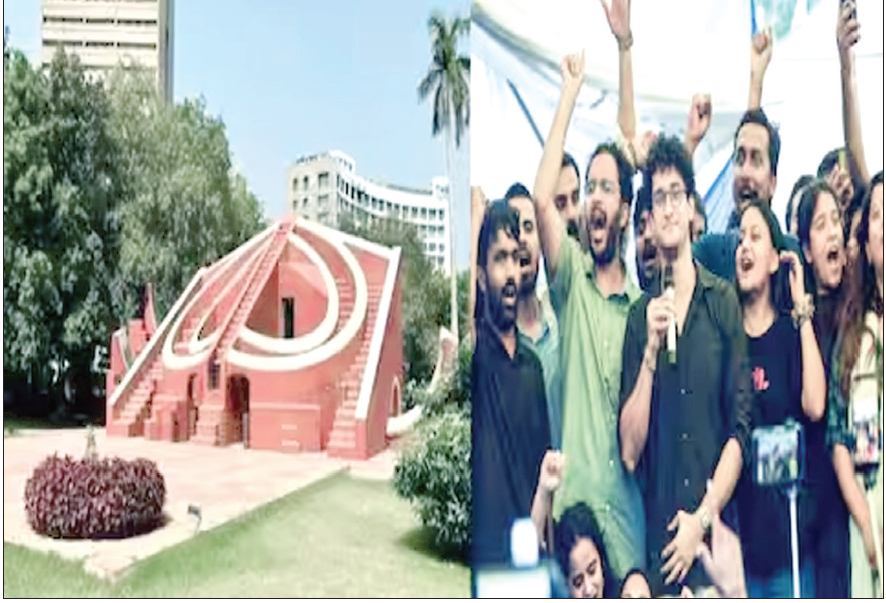
It is the 18th day as of 16th July 2026. For eighteen days, Sonam Wangchuk the visionary engineer, the educator who taught an entire generation that learning could be joyful, the man who inspired millions to think innovatively has been lying on a makeshift bed at Delhi’s Jantar Mantar. He has consumed nothing but salt water. According to medical bulletins released by the youth-led Cockroach Janta Party (CJP), his body weight has plummeted by nearly 9 kilograms, dropping dangerously to 57.15 kg.
There is a photograph that the Ministry of Road Transport and Highways loves to circulate. A freshly laid six-lane expressway stretches into a golden horizon. Smooth asphalt. Clean white markings. The kind of road that makes you believe, for a brief and generous moment, that India has arrived. Minister Nitin Gadkari has built an entire political identity around such photographs — and to be fair, he has earned some of it. When I began my career as a cost engineer on national highway projects in 2010
Temperature soared across the entire European continent in the latter half of June and early July. France, the Netherland and Belgium recorded 3700 excess human deaths and authorities warned that these numbers are preliminary and may even rise. People above 50 years of age accounted for larger proportion of the deaths. Several deaths are reported due to persons drowning in water bodies; those who did not know swimming also jumped in deep water to beat the heat and perished. Experts have found that the current heat waves in Europe is worst recorded in its history.
The contemporary struggle over religious monuments in India cannot be understood without revisiting the deeper historical questions that underlie it: the nature of “Hinduism” in the past, the evolution of temple architecture, the role of Buddhism under state patronage, and the present-day politicisation of Islamic-period monuments. Taken together, these questions reveal not only a contested past but also a deliberate project of mythmaking in the present, designed to forge a unified religious-national identity by cultivating hostility toward Muslims.
Can governments introduce sweeping policy reforms without adequate public consultation? This opinion piece examines the democratic implications of E20 ethanol, governance, accountability, and citizen participation, arguing that lasting public trust depends on transparency, evidence-based policymaking, and meaningful consultation rather than one-way administrative decisions.
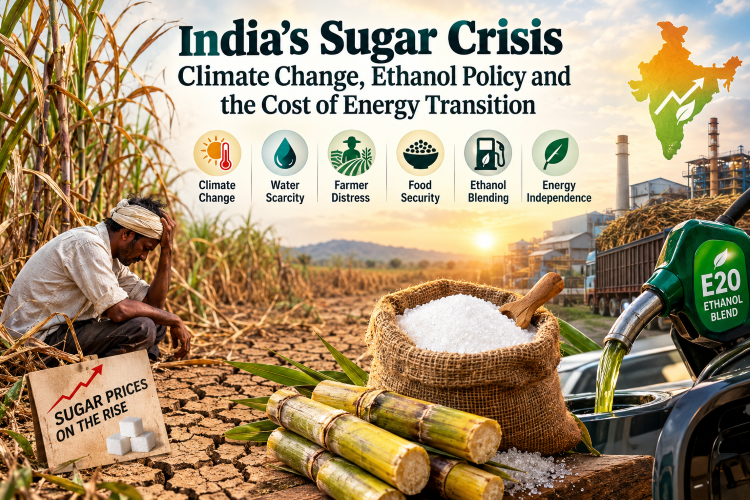
An analytical look at India's ethanol blending programme, examining its impact on energy security, farmers, fuel prices, food security, water resources and the country's clean energy transition.
[[comment.comment_text]]