Ranchi’s private schools will not be able to increase fees, will only take tuition fees, action will be taken if orders will not be not obeyed

 5 years, 3 months ago
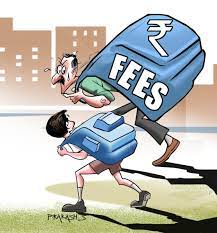
Ranchi; In the current academic session (2021-2022), private schools will not be able to increase the fees in any way. Like the academic session 2020-2021 by the schools, in the academic session 2021-2022 only tuition fee will be charged at monthly rate. No annual fee, traffic fee or any other fee will be charged from the parents till the school is closed.
The concerned fee can be collected from the parents on a pro-rata basis after the school starts. This order has been issued under the signature of Ranchi Deputy Commissioner Chhavi Ranjan. It has been said that in the light of the order issued by the Directorate of Secondary Education, the said order has been issued regarding private schools.
It has also been said in the order that under no circumstances the enrollment of any student can be canceled due to non-deposit of tuition fee. Also, no student will be deprived of the online education system. The school head will have the full responsibility of providing online education system and online learning material to the students enrolled in the schools without any discrimination. Under no circumstances will parents be charged a late fee.
The Deputy Commissioner has also warned that action will be taken against the schools which do not comply with the above instructions. The State Government will cancel or reconsider the No Objection Certificate (NOC) issued to the schools for affiliation. Legal action will also be taken if needed. Apart from this, a district level committee has also been constituted under the chairmanship of the Deputy Commissioner. This order has come into force with immediate effect.
The administration has constituted three teams to ensure compliance of the order and to investigate the complaints received. Akash Kumar, Anurag Kumar, Prakash Chandra Das, Amit Kumar have been included in Team-A. This team will investigate the cases of private schools located in Ranchi-I and Ormanjhi blocks.
Sanjit Kumar, Dinesh Prasad, Shailesh Kumar, Jitendra Kumar have been included in Team-B. Their work area will be the schools of Ranchi-II and Namkum blocks.
Team-C includes Sunanda Chandra, Mouleshwar Das, Paras Chandra Adhikari, Mo Shamshad Alam, Mo Alam. Their work area will be private schools located in Kanke, Ratu, Nagdi and Bedo blocks. Inquiry teams have been instructed that after examining the complaints received, the report should be made available to the District Education Superintendent within a week.
(Agencies)





[[comment.comment_text]]