Nitish announces more relaxations in working hours and in the night curfew

 5 years, 4 months ago
Patna, Following steep decline in fresh positive cases of corona virus, Bihar government on Tuesday announced that it will be relaxing the night curfew by an hour and increasing the working hours of the offices and business establishments by an hour from June 16 till June 22 in the state.
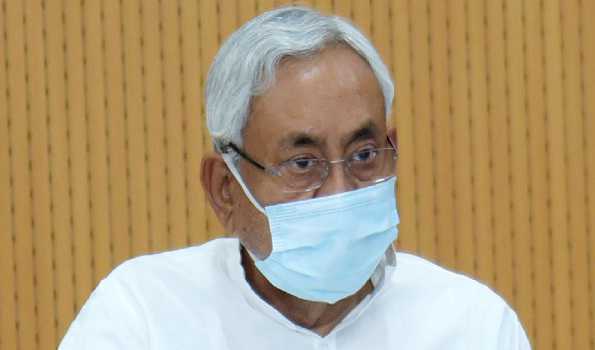
The decision for the relaxations was taken in a meeting of crisis management group held under the chairmanship of Bihar Chief Minister Nitish Kumar during the day to review the scenario.
Soon after the meeting, the Chief Minister informed about the decisions through his official tweet on social media.
Meanwhile State Chief Secretary Tripurari Sharan said here on Tuesday that during the review meeting of the crisis management group it was found that the lockdown has had a positive impact and the number of cases declined as expected. He said that the active cases to have gone down to 5,000 in the state.
He said that the lock down helped in controlling the spread of the infection by breaking the chain however complete revoking of restrictions may prove to be disastrous and in view of this certain restrictions would continue.
Elaborating about the restrictions to be continued from June 16 till June 22, Mr Sharan said that all government and non government offices would now function till 5 PM with 50 percent attendance. All shops and business establishments which were allowed to remain open till 5 PM only on every alternate days would now remain open from 6 AM to 6 PM on alternate days.
Essential services including district administration, police, civil defence, electricity ,water supply, fire brigade, health, disaster management, telecommunication, Postal department offices , hospitals, medicine shops, medical lab, Nursing Home, ambulance services, spectacle shops and other related establishments have been exempted from the restrictions, he informed.
(Agencies)




[[comment.comment_text]]