Jharkhand Assembly Election: Women Voters, Tribal Dynamics, and Emerging Alliances

 1 year, 11 months ago
Manoj Kumar Pathak
As Jharkhand gears up for its Assembly elections, shifting voter demographics and complex social dynamics are set to play a crucial role in determining the outcome. A significant rise in women voters, coupled with tribal and caste-based preferences, is reshaping the state’s political landscape. While the ruling Jharkhand Mukti Morcha (JMM) seems to hold an advantage due to welfare schemes targeting women and tribal communities, the Bharatiya Janata Party (BJP) is grappling with challenges in expanding its appeal in these regions. Meanwhile, local leaders like Jairam Mahto are drawing attention with their focus on community-specific issues, potentially disrupting traditional voting patterns. This election promises to be a pivotal one, as these emerging factors combine to influence Jharkhand’s political future.
Rising Influence of Women Voters
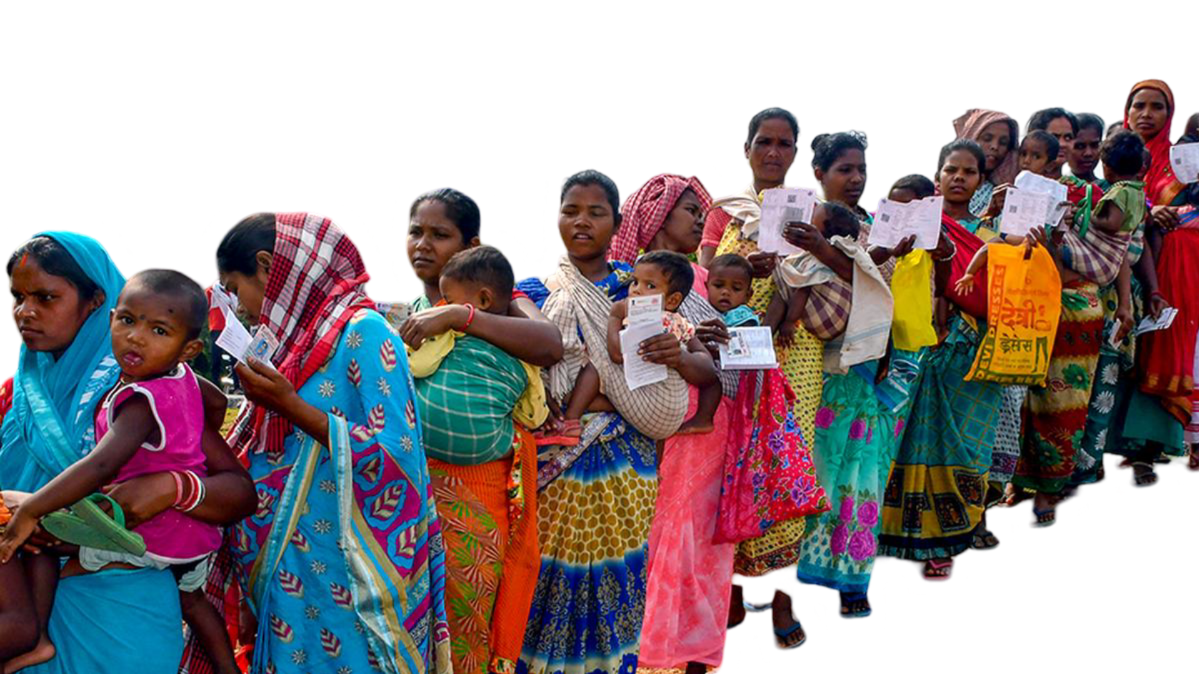
In the upcoming Jharkhand Assembly elections, women voters are emerging as a significant demographic force. Of the 81 Vidhan Sabha seats, 32 constituencies now have more female voters than male voters. This rise in female representation at the polls could sway the election results, particularly in favor of parties that have introduced women-focused welfare schemes.
The ruling Jharkhand Mukti Morcha (JMM), led by Chief Minister Hemant Soren, may have the upper hand with women voters due to the Mukhymantri Maiya Samman Yojana scheme. Under this program, the government provides ₹1,000 to women, with promises of increased benefits if the JMM retains power. Similar welfare schemes in states like Madhya Pradesh have yielded positive results for ruling parties, suggesting this strategy might similarly benefit the JMM in Jharkhand. The support of rural women, particularly in areas where male migration for work is high, could further bolster the JMM's chances, as women are likely to play an active role in voting.
Challenges for BJP in Tribal Strongholds
Jharkhand’s tribal belt is a challenging terrain for the Bharatiya Janata Party (BJP). The party's limited on-ground presence in tribal areas contributed to its loss in all Scheduled Tribe (ST)-reserved Lok Sabha seats in the previous elections. This weak local cadre network has left the BJP vulnerable to rival narratives, particularly from the JMM, which has a stronger foothold in these regions.
If the BJP fails to make substantial inroads in tribal areas, it will likely be due to its insufficient local engagement and the inability to counter JMM’s influence. The BJP's approach to energizing its base and countering allegations from opposition parties could prove critical, especially in areas like Santhal Pargana, where the BJP currently trails the JMM.
Caste and Community Dynamics: The 'Upper Caste,' OBC, and SC Voters
The BJP faces additional hurdles in consolidating votes among the 'upper caste,' Scheduled Caste (SC), and Other Backward Class (OBC) communities. While JMM has garnered favor within the tribal population due to schemes like the Maiya Samman Yojana, the BJP’s challenge lies in gaining support from other communities, particularly among lower socioeconomic classes within these groups.
A new political player, Jairam Mahto, and his party are also complicating the BJP’s outreach efforts. Known for advocating local issues related to domicile, language, employment, and education, Mahto has attracted young voters and a significant base within the Kurmi-Mahto community, a dominant OBC group in Jharkhand. His focus on issues that resonate with the region has made him a formidable vote-cutter, likely to affect both the BJP and JMM. During the 2024 Lok Sabha elections, Mahto’s party gained considerable traction, especially in constituencies like Giridih, Ranchi, and Hazaribagh. His popularity among the youth and his stance on local issues could influence the voting preferences of those disillusioned with mainstream parties.
Bangladeshi Infiltration Issue: Core but Limited Appeal
The BJP has traditionally emphasized the issue of illegal Bangladeshi infiltration as part of its electoral strategy, appealing primarily to its core voter base. While this issue strengthens BJP’s appeal among established supporters, it is unlikely to attract new voters, as those concerned with this issue are already aligned with the party. This trend is seen not only in Jharkhand but also in states like West Bengal, where illegal immigration remains a politically charged topic.
However, bringing this issue to the forefront could consolidate BJP’s existing base, particularly in regions like Santhal Pargana, where the party needs to energize its cadre to stay competitive against JMM’s influence.
As Jharkhand heads to the polls, the electoral dynamics reveal a complex landscape influenced by women’s increased voter turnout, the persistence of tribal disenchantment with the BJP, the impact of caste and community-based alliances, and local issues championed by emerging leaders like Jairam Mahto. The JMM, with its welfare-centric approach, appears poised to benefit from rural women and tribal voters, while the BJP must rely on consolidating its traditional voter base and addressing local grievances to make inroads. As the election unfolds, these demographic and community dynamics will likely shape the outcome in Jharkhand’s politically diverse constituencies.





[[comment.comment_text]]