Palestine, Gaza and the Changing Moral and Diplomatic Landscape of the World

 2 hours ago
“Perhaps one of the most consequential developments came in August 2025, when the International Association of Genocide Scholars, a major international professional body of genocide researchers, adopted a resolution concluding that Israel’s policies and actions in Gaza meet the legal definition of genocide under the 1948 Genocide Convention. This was followed in September 2025 by an equally consequential finding from the United Nations Independent International Commission of Inquiry, which concluded that Israel had committed genocide against Palestinians in Gaza.
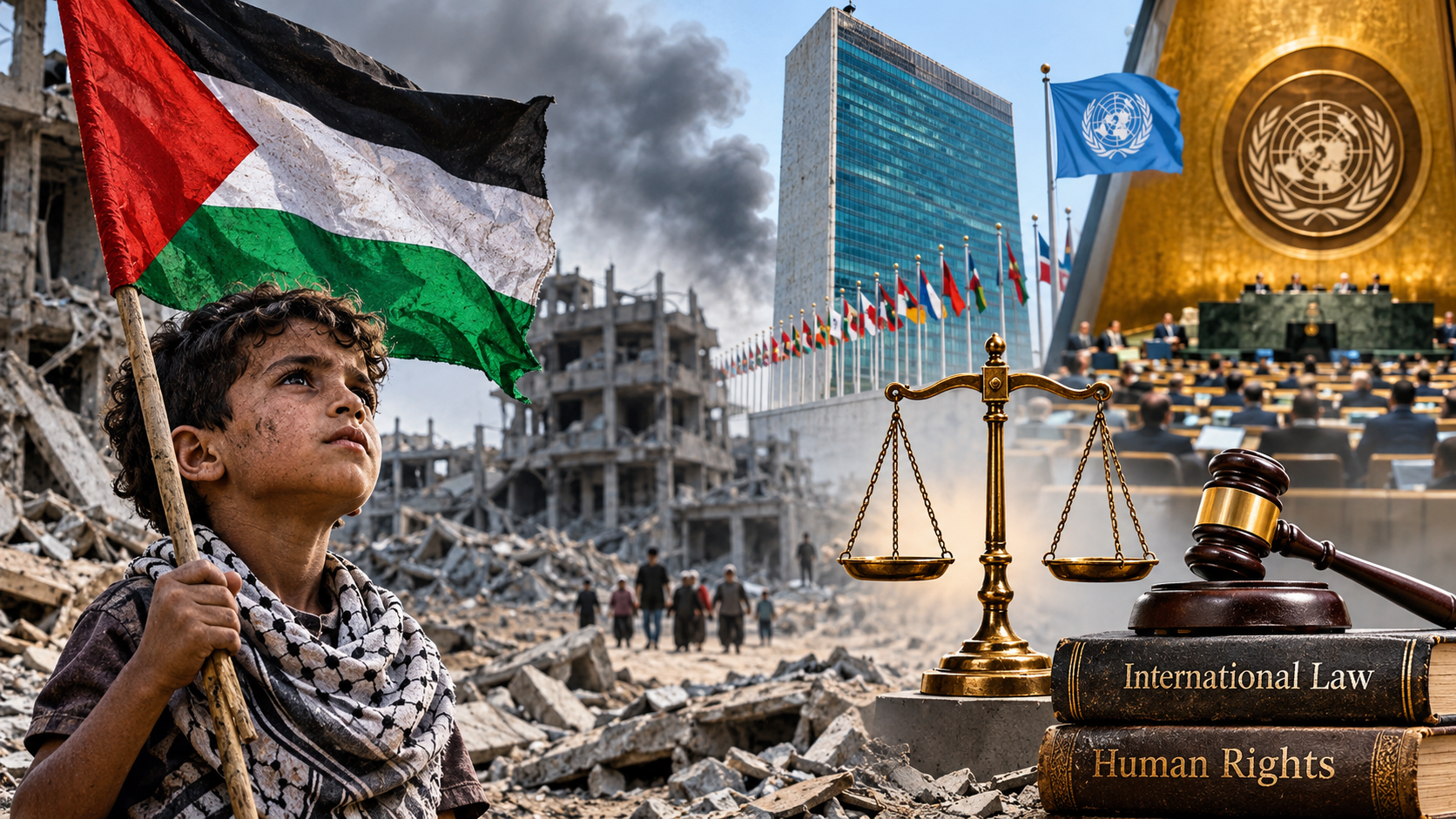
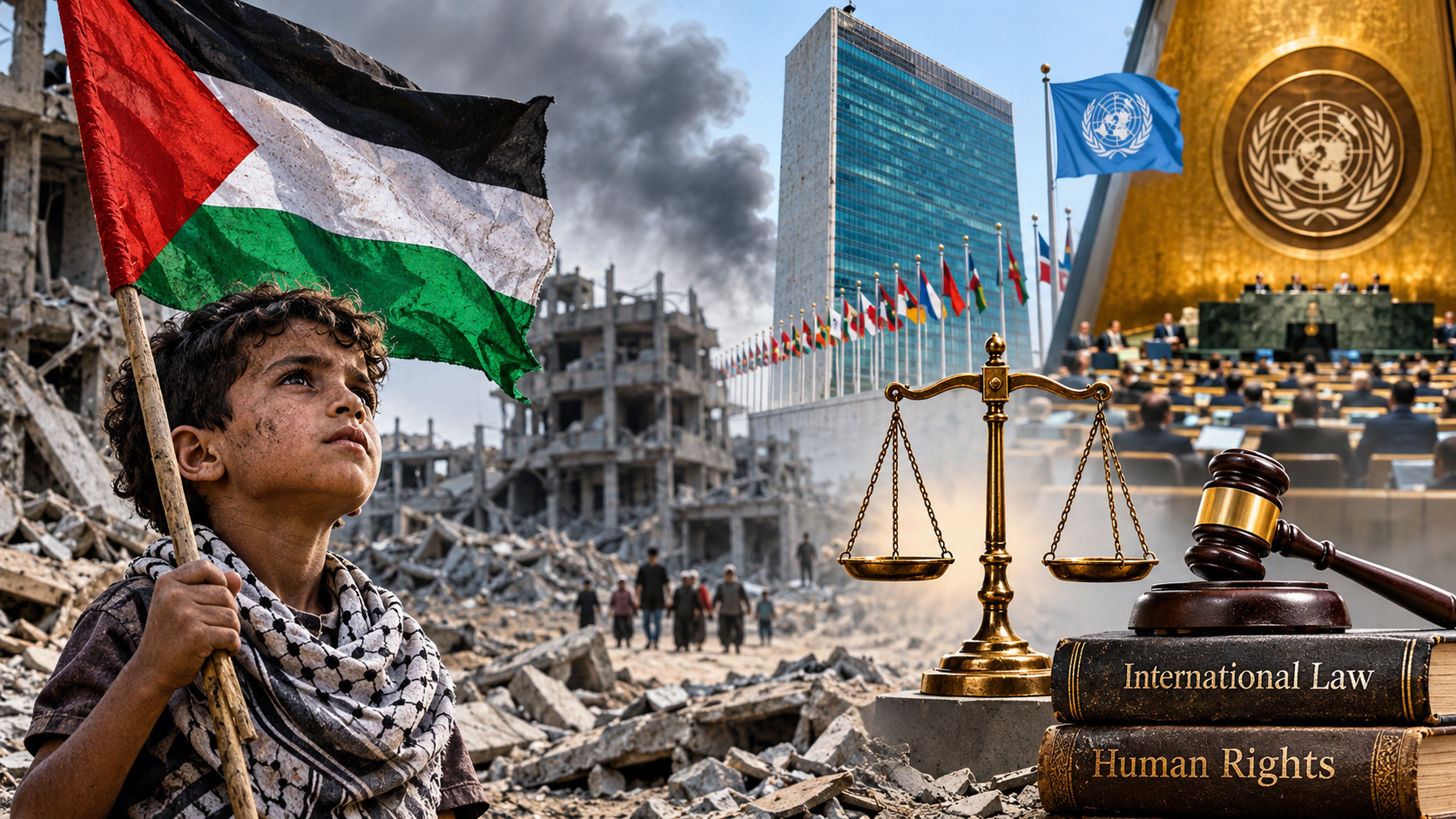
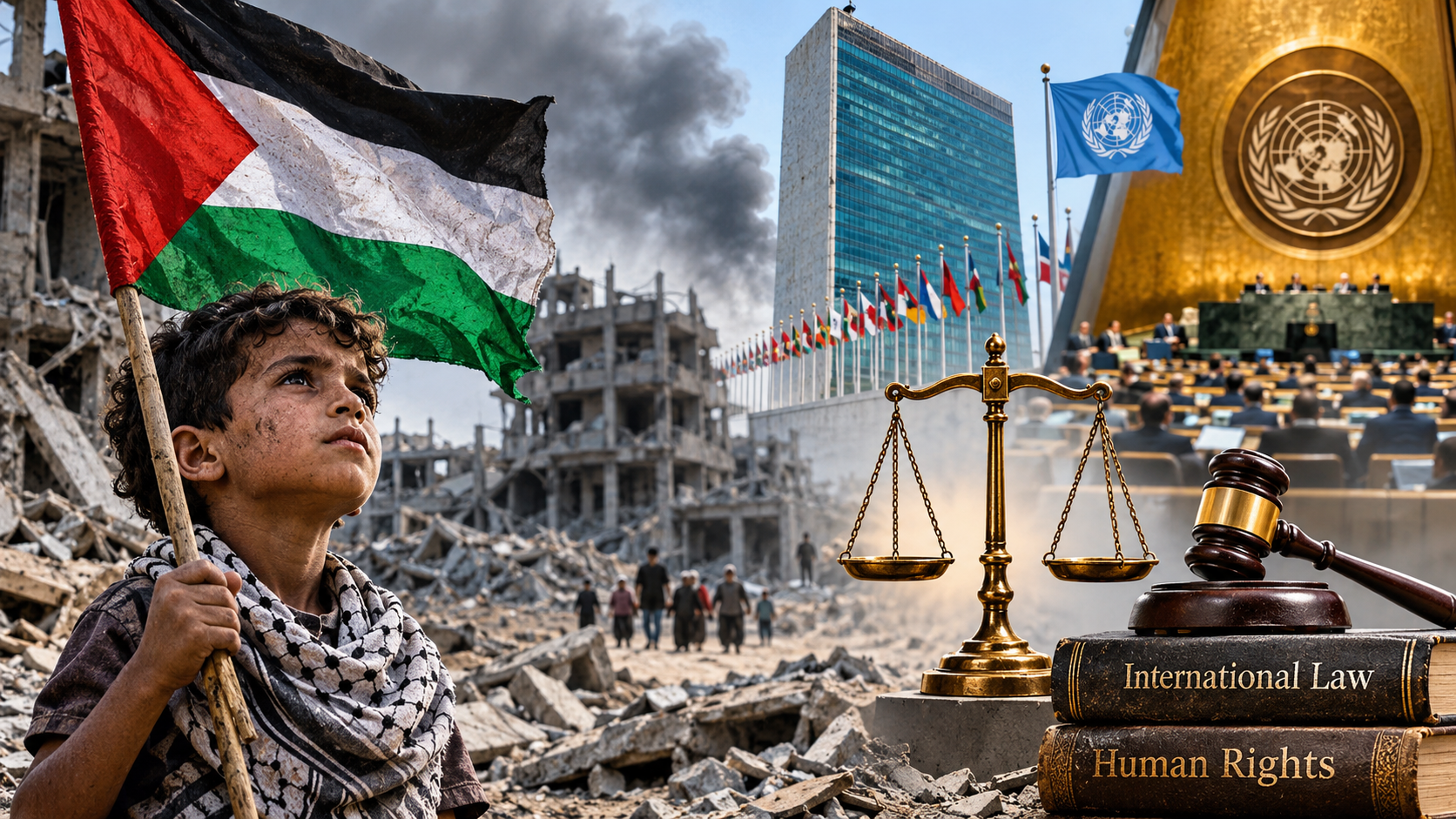
The tragedy of Palestine is no longer viewed merely as a regional conflict or a prolonged humanitarian emergency. It has become one of the most consequential tests of international law, global diplomacy and the moral credibility of the international community. For decades, the Palestinian question remained trapped between diplomatic assurances, geopolitical rivalries and repeated failures to translate international resolutions into meaningful political outcomes. However, developments over the past two years have begun to change the international landscape. The growing recognition of Palestinian statehood, landmark legal assessments, international judicial proceedings and increasingly vocal demands for accountability indicate that the Palestinian question can no longer be confined to the margins of global diplomacy.
The world may not yet have delivered justice to Palestine, but the political and moral arguments surrounding its rights have acquired unprecedented international weight. One of the most significant developments has been the growing recognition of the legal and humanitarian dimensions of the Palestinian struggle. In July 2024, the International Court of Justice delivered an important advisory opinion concluding that Israel’s continued presence in the Occupied Palestinian Territory was unlawful and that it was under an obligation to bring that presence to an end as rapidly as possible.
The Court also addressed the illegality of settlement activities and the obligation of other states not to recognise or assist in maintaining the unlawful situation. This was a landmark development because it placed the question of occupation and Palestinian self-determination within a clearer framework of international law.
Subsequently, the International Criminal Court issued arrest warrants for Israeli Prime Minister Benjamin Netanyahu and former Defence Minister Yoav Gallant in November 2024 over alleged war crimes and crimes against humanity. These proceedings represented an important assertion that political authority and state power do not automatically place individuals beyond international accountability. The warrants are judicial measures, not convictions, but their significance for international justice cannot be overlooked.
Perhaps one of the most consequential developments came in August 2025, when the International Association of Genocide Scholars, a major international professional body of genocide researchers, adopted a resolution concluding that Israel’s policies and actions in Gaza meet the legal definition of genocide under the 1948 Genocide Convention. This was followed in September 2025 by an equally consequential finding from the United Nations Independent International Commission of Inquiry, which concluded that Israel had committed genocide against Palestinians in Gaza. The Commission identified four of the five acts specified under the Genocide Convention and examined the question of genocidal intent. These findings marked a historic moment in the international assessment of the Gaza catastrophe. They must, however, be distinguished from a final judicial determination by the International Court of Justice, where South Africa’s genocide case against Israel remains pending.
The importance of these developments lies in the fact that allegations which had previously dominated political and academic debate were now being examined through formal expert investigations and legal standards. The question of accountability has consequently become much more difficult for the international community to avoid.Diplomatically, Palestine has also witnessed developments of considerable significance. In September 2025, the United Nations General Assembly endorsed the New York Declaration on the peaceful settlement of the Palestinian question and implementation of the two-state solution by 142 votes in favour. During the same month, countries including the United Kingdom, France, Canada and Australia, alongside several other European states, formally recognised the State of Palestine.
These decisions carried particular diplomatic importance because they included influential Western countries whose positions have considerable weight in international affairs. The momentum continued when the General Assembly adopted Resolution 80/195 on 15 December 2025, reaffirming the Palestinian people’s right to self-determination, including the right to an independent State of Palestine, by 164 votes in favour. Such developments demonstrate that support for Palestinian statehood is no longer confined to traditional supporters of the Palestinian cause. It is increasingly reflected in a wider international consensus. Recognition alone cannot end occupation or guarantee sovereignty, but it strengthens Palestine’s diplomatic standing and reinforces the principle that the Palestinian people are entitled to political independence and self-determination.
These developments should not, however, create the impression that the suffering of Gaza has ended or that a durable political settlement has been achieved. The ceasefire that came into effect on 10 October 2025 brought an important reduction in large-scale hostilities and facilitated the return of Israeli hostages and their remains. The subsequent adoption of United Nations Security Council Resolution 2803 in November 2025 provided an international framework for transitional arrangements, reconstruction and the future administration of Gaza. Yet the situation remains fragile.
United Nations assessments during 2026 have continued to report Israeli strikes, civilian casualties, restrictions on humanitarian access, widespread displacement and immense reconstruction requirements. The people of Gaza continue to face the consequences of a conflict that has devastated homes, educational institutions, hospitals, public services and the foundations of ordinary life. A ceasefire must therefore be treated as an essential beginning rather than the final destination. It must develop into a sustainable arrangement that protects civilians, guarantees humanitarian access, enables reconstruction and creates conditions for genuine Palestinian political participation.The international community must also recognise that the Palestinian question cannot be resolved through humanitarian assistance alone. Food, medicines, shelter and reconstruction materials are immediate necessities, but they cannot substitute for freedom, political rights and self-determination. Nor can lasting peace emerge through permanent insecurity, occupation, displacement or the denial of legitimate national aspirations. Israel’s security concerns must be addressed through a credible political framework, just as the rights and security of Palestinians must receive equal recognition.
The attacks of 7 October 2023, including the deliberate killing of civilians and the taking of hostages by Hamas and other Palestinian armed groups, were grave violations that deserve unequivocal condemnation. Equally, those attacks cannot be invoked to justify collective punishment or violations of the fundamental protections afforded to Palestinian civilians. International humanitarian law must apply consistently, irrespective of the identity of the parties involved. Criticism of Israeli government policies must also remain distinct from hostility towards Jewish people, just as support for Palestinian rights must never be used to justify religious or racial hatred.
The present moment offers an opportunity that the international community must not squander. The growing number of countries recognising Palestine, the overwhelming support expressed through United Nations resolutions, the findings of genocide experts and the proceedings before international courts have collectively altered the diplomatic and legal environment. These developments do not themselves guarantee justice, but they have strengthened the institutional and political foundations upon which a just settlement can be pursued. Governments must move beyond statements of concern and translate their commitments into practical action, including respect for international court decisions, accountability for alleged violations, unrestricted humanitarian assistance and meaningful diplomatic engagement. The United Nations, despite its institutional limitations and political divisions, must remain central to this effort.
The genocide in Gaza has profoundly altered the global conversation surrounding Palestinians, Muslims and Islam. The unprecedented scale of death, destruction and human suffering has generated an extraordinary wave of empathy and solidarity across geographical, religious and political boundaries. What was once frequently presented through the narrow lens of security, extremism and religious suspicion is increasingly being questioned by ordinary people who have witnessed the suffering of Palestinian civilians and begun to distinguish between manufactured political narratives and the realities on the ground.
This shift was further intensified by the US-Israeli military attack on Iran in February 2026, particularly the devastating strike on a girls’ school in Minab, which reportedly killed at least 165 schoolgirls. The incident brought the vulnerability of Muslim civilians into even sharper focus and raised serious questions about international accountability and the selective application of human rights principles. An important manifestation of this changing atmosphere can also be seen in the electoral successes of Zohran Mamdani, who became New York City’s first Muslim mayor, and Abdul El-Sayed, who made history as the first Muslim elected to the US Senate. Their victories cannot be attributed exclusively to changing attitudes towards Muslims, as their political programmes, grassroots mobilisation, economic messaging and individual leadership also played significant roles.
Nevertheless, they demonstrate that attempts to weaponise Muslim identity as a political liability are increasingly encountering resistance. Taken together, these developments suggest the emergence of a counter-narrative to Islamophobia, in which growing sections of society are rejecting blanket generalisations about Islam and Muslims and recognising that Muslim communities, like all other communities, are diverse, peaceful and integral contributors to the social, intellectual, economic and cultural progress of nations. The larger significance of this moment is that the world is increasingly being compelled to judge people by their actions and contributions rather than by their religious identity.
The shackles of oppression do not break merely because the world acknowledges their existence. They begin to loosen when recognition is followed by responsibility, when international law is applied without discrimination and when the rights of an oppressed population are translated into tangible political realities. Palestine has emerged as a defining question of our generation, not simply because of the scale of suffering in Gaza, but because of what the international community chooses to do in response.
The objective must never be the defeat or humiliation of one people in favour of another. It must be a future in which Palestinians can live with freedom, dignity and sovereignty, while Israelis can live in security and peace. That is the foundation of a just and lasting settlement, and it is against that standard that the moral credibility of the international order will ultimately be judged.
(The President of capital-based Interfaith Harmony Foundation of India, the author is a well-recognised commentator on nationalism, diversity, and harmony issues. )






[[comment.comment_text]]