Himachal Pradesh to restore old pension scheme for government Employees

 2 years, 8 months ago
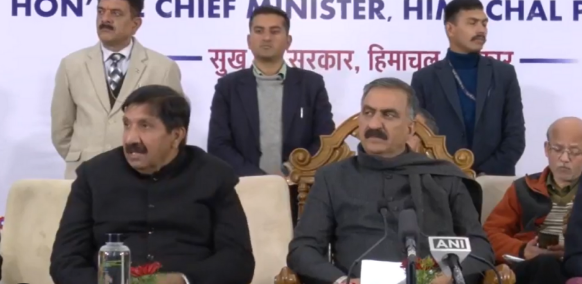
The Himachal Pradesh government has decided to fulfill one of its key poll promises by restoring the old pension scheme (OPS) for its employees. The deputy chief minister Mukesh Agnihotri said that a bill to implement the OPS will be tabled in the state assembly in the upcoming budget session.
The OPS was discontinued by the previous Virbhadra Singh government in 2004 and replaced by the National Pension System (NPS), which required the employees to contribute 10% of their salary to a pension fund. The NPS was opposed by many employees who demanded the revival of the OPS, which offered 50% of the last drawn salary as a pension and was fully funded by the government.
The Congress party, which came to power in the state in December 2022, had promised to bring back the OPS in its election manifesto. The chief minister Sukhvinder Singh Sukhu had also announced the plan to restore the OPS in his first cabinet meeting. He claimed that the government had made adequate budgetary provisions to bear the additional burden of the OPS.
However, some experts have raised doubts over the financial viability of the OPS, given the state's high debt burden and low revenue growth. According to an estimate, the state government spent Rs 7,082 crore on pensions in 2021-22, which was 12% higher than the previous year. The revenue receipts of the state in 2021-22 were Rs 9,282 crore, which showed an increase of only 7.41% over the previous year.
The state government has also promised to create one lakh jobs and fill up over 60,000 vacant posts in the government sector. The state has 1.60 lakh working government employees and 1.30 lakh pensioners. The OPS will benefit around 1.36 lakh employees who were contributing to the NPS.
The deputy CM Agnihotri said that the government was committed to providing a transparent and honest administration and fulfilling all its guarantees to the people. He said that the OPS was a long-pending demand of the employees and the government was happy to meet their expectations. He also said that the government will take steps to improve the fiscal health of the state and generate more resources for development.










[[comment.comment_text]]