For a first time in five years, Monsoon enters Jharkhand on time
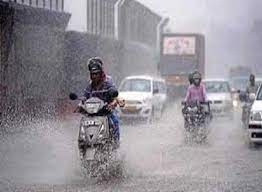

For a first time in five years Monsoon has arrived in the state on time. Normally it takes twelve days for the Monsoon to reach Jharkhand from Kerala but this time around it has reached in just 9 days.

Monsoon made its entry in the state via Sahebganj and has covered all the six districts of the Santhal Pargana region and since the conditions are favourable almost all the 24 districts will be covered by it.

The weather department has predicted good rainfall over the next five days across the state and at one or two places heavy rainfall has been also predicted. The track of the Monsoon is similar to what was reported in the previous year. The Weather Station said initially in pre-monsoon less rainfall was reported but it good covered up in the last due to which this year a good rainfall is expected.

Jharkhand on average receives 1054.7 mm of rainfall in the Monsoon season. Rainfall more than 19 per cent of the average annual rainfall or less than 19 per cent of the average annual rainfall is kept in normal category which means if during the season the state receives rainfall between 854.30 mm to 1255 mm it will be considered normal.

For the period between June 1 to 12, the state has reported 34 per cent more rainfall at 61.5 mm as compared to 45.9 mm generally which takes place during this period. The cyclone Yaas also resulted in heavy rainfall in the state. In May 219.7 mm of rainfall took place in the state which helped to fill the dams and reservoirs.

In the last 24 hours, Hazaribagh has received a maximum rainfall at 65 mm followed by Maithon in Dhanbad at 57.2 mm, Balumath at 51 mm and Ranchi has received 50.4 mm of rainfall.

-Agencies

Renu’s Dhanjal:  Patna, Still Drowning

Patna’s recurring floods echo Phanishwar Nath Renu’s 1975 reportage. Fifty years later, the crisis exposes urban planning failures, drainage gaps and lost lessons.

Niraj Krishna   |  3 days, 13 hours ago

The Price of Profit in Satya Niketan, South Delhi

The Satya Niketan tragedy is not simply a story of one negligent landlord. It raises serious questions about unregulated construction, overcrowded student housing and the failure of civic enforcement in South Delhi.

Dinesh Dubey @ Editorial   |  3 days, 15 hours ago

The Rise of Rogue AI Agents and the Global Rush for Liability Laws

Rogue AI agents are raising new cybersecurity and accountability risks. Why governments need binding liability laws for autonomous AI systems.

Dinesh Dubey @ Editorial   |  4 days, 3 hours ago

NEPAL IN THE GRIP OF WORST FLASH FLOOD DISASTER

Nepal faces a devastating flash flood disaster linked to glacial ice and debris, with hundreds dead, thousands missing and major infrastructure badly damaged.

Alok K.Shrivastava   |  4 days, 4 hours ago

India’s Cities Are Growing Faster Than Their Infrastructure

India’s rapid urbanisation is outpacing infrastructure, governance and planning. Why cities need better housing, mobility, water management and climate resilience.

Ankita Mishra   |  4 days, 4 hours ago

Article 142:  Who Bowed—Power or Democracy?

The withdrawal of protest-related FIRs raises deeper questions about Article 142, public pressure, judicial power, institutional autonomy and the Rule of Law in India.

Niraj Krishna   |  5 days ago

Comments

YOU MIGHT ALSO LIKE

View More

By Niraj Krishna   |   3 days, 13 hours ago
Renu’s Dhanjal:  Patna, Still Drowning
By Alok K.Shrivastava   |   4 days, 4 hours ago
NEPAL IN THE GRIP OF WORST FLASH FLOOD DISASTER
By Ankita Mishra   |   4 days, 4 hours ago
India’s Cities Are Growing Faster Than Their Infrastructure
By Niraj Krishna   |   5 days ago
Article 142:  Who Bowed—Power or Democracy?