Why Is Our Food Unsafe Despite Strong Laws?

 2 hours ago
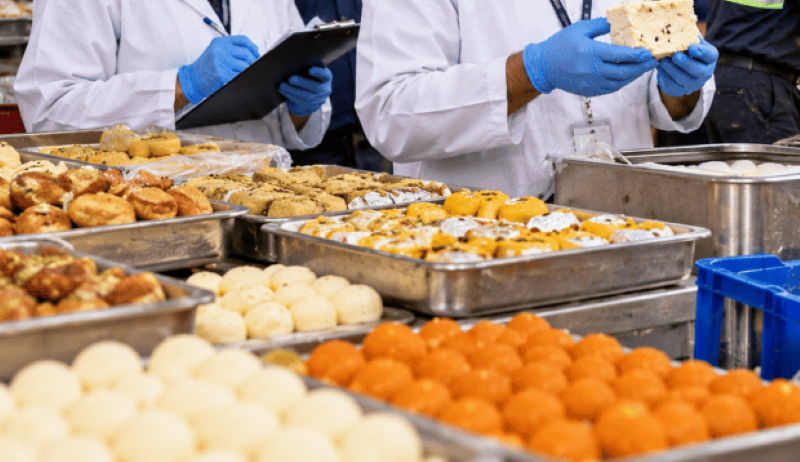
Food adulteration is not merely a regulatory offence; it is a direct threat to public health. Every day, millions of Indians consume food without knowing whether it meets prescribed safety standards. Moreover, food can become unsafe through contaminated water, unhygienic kitchens, improper storage, dirty utensils and poor handling practices, even when no deliberate adulteration has occurred.
The central question is simple: Why does India struggle to guarantee safe food despite having comprehensive laws and a regulatory framework?
Laws Exist, but Implementation Falls Short
The Food Safety and Standards Act, 2006, provides a comprehensive legal framework, with the Food Safety and Standards Authority of India (FSSAI) setting standards and state agencies enforcing them. Licensing, inspections, sampling, laboratory testing, penalties and prosecution are all part of the system.
Yet enforcement remains a major challenge. Government figures show that 170,535 food samples were tested in 2024–25, of which 34,388 were found non-compliant—approximately 20 per cent. These results do not represent the entire food market or establish the nationwide prevalence of unsafe food, but they highlight concerns about compliance.
India’s vast food supply chain makes continuous monitoring difficult. From farmers and manufacturers to transporters, retailers, restaurants and street vendors, food passes through numerous hands before reaching consumers. No regulator can inspect every establishment daily.
The solution is not simply to conduct more raids but to make enforcement systematic, risk-based and consistent. Inspections should prioritise high-risk establishments and repeat offenders, while violations must trigger timely, proportionate and transparent action. Technology, traceability and effective complaint mechanisms can strengthen oversight.
Recent enforcement campaigns in Maharashtra under FDA Commissioner Tukaram Mundhe, including actions reported in May 2026, have highlighted the importance of decisive intervention against unsafe products and non-compliant establishments. However, such campaigns must become part of routine administration rather than depend on individual officers or temporary drives. Strong institutions, adequate staffing and clear accountability are essential to sustain enforcement over time.
Food Safety Extends Beyond Adulteration
A valid licence does not guarantee safe food. Contaminated water, pests, unclean utensils, poor personal hygiene, incorrect storage temperatures and cross-contamination can all cause illness.
India must therefore address food safety across the entire supply chain, from preparation and processing to transportation, storage and serving.The country has expanded its testing infrastructure, with government figures indicating 252 NABL-notified food laboratories and 24 referral laboratories.
Nevertheless, laboratories are effective only when samples are collected properly, results are reliable and violations lead to prompt corrective action. Testing alone cannot prevent unsafe food from reaching consumers. The objective must be to identify and control risks before consumption, not merely detect failures afterwards.
From Punishment to a Culture of Compliance
The success of food safety regulation cannot be measured solely by the number of inspections, raids, seizures or penalties. These interventions are necessary when violations occur, but they do not automatically establish that the food supply has become safer. A better measure is whether food businesses follow safety standards even when inspectors are absent.
The government must ensure consistent inspections, effective monitoring, adequate laboratory capacity and impartial enforcement. Food businesses, meanwhile, must recognise that obtaining an FSSAI licence or registration is only the beginning of their obligations. Hygiene, safe storage, quality control and responsible food handling require continuous attention.
Training, clear standards, regular risk assessments and proportionate penalties can encourage compliance. Enforcement should deter deliberate violations while helping smaller businesses understand and meet their obligations. Ultimately, compliance may begin with the fear of penalties, but it becomes sustainable only when safety is embedded in everyday business practices.
Safe Food Is Every Citizen’s Right
Access to safe food must not depend on income or purchasing power. Consumers dining at expensive restaurants deserve the same fundamental protection as those buying affordable meals from street vendors. Cheap food must not mean unsafe food.
Responsibility is shared by the government, businesses, consumers and society. Authorities must enforce standards fairly across businesses of every size. Consumers should check labels and expiry dates, pay attention to hygiene and report suspicious products or establishments. Society must also recognise that affordability and safety are compatible objectives.
Strong enforcement also protects honest businesses. Enterprises that invest in sanitation, testing and quality control face higher costs than competitors who cut corners. When violations go unchecked, non-compliant businesses gain an unfair advantage, encouraging a race to the bottom in which quality and safety are sacrificed for lower prices.
Effective regulation is therefore not anti-business. It creates a fair marketplace in which responsible enterprises can compete without being undercut by those who profit from unsafe practices.
Beyond Laws: Building a Sustainable Food Safety System
India already has a legal framework, regulatory institutions and an expanding laboratory network. Its principal challenge is bridging the gap between formal rules and their implementation.
The goal should not be to maximise raids or penalties but to reduce violations, prevent contamination and establish consistent compliance throughout the food supply chain. This requires sustained institutional capacity, risk-based inspections, reliable testing, public awareness and accountability at every level.
The ultimate test of success is whether food served at a street-side stall, school canteen, hospital kitchen or five-star hotel meets essential safety and hygiene standards.
Safe food must be the norm, not a privilege. Compliance must become routine rather than exceptional, and food safety must be treated as a public health priority—not merely a regulatory obligation fulfilled on paper.
(The interviewer, an NGO leader, is the Special Representative of TEW.)









[[comment.comment_text]]