Jammu & Kashmir Darbar Move: A Glorious Tradition or an Expensive Administrative Ritual?

 45 minutes ago
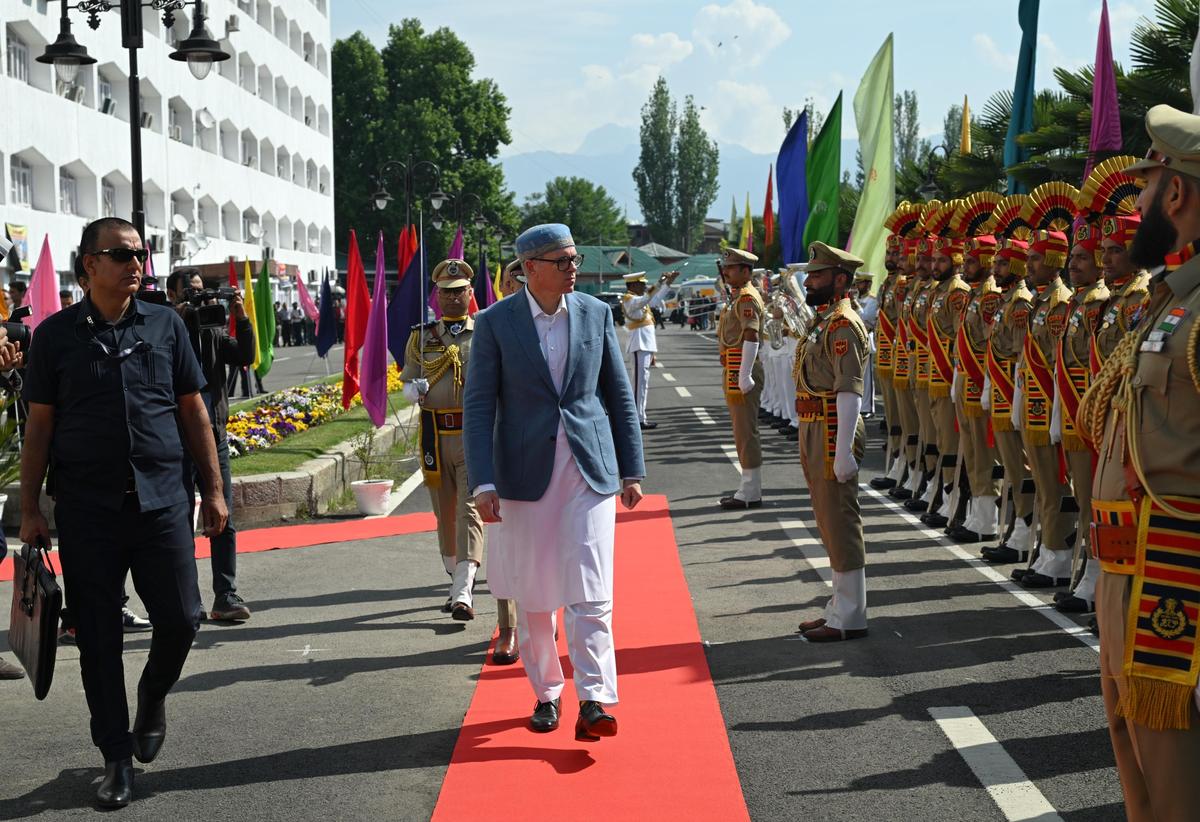
Few administrative practices in India carry as much historical significance, political sentiment and regional symbolism as the Darbar Move of Jammu and Kashmir. The biannual movement of the seat of government between Srinagar and Jammu is not merely a change of office location; it is a tradition deeply embedded in the political, social and economic history of the region. For generations, the Civil Secretariat and several government departments have shifted from Srinagar to Jammu during the winter months and returned to Srinagar with the arrival of summer. While the practice has long been celebrated as a symbol of regional balance and administrative inclusiveness, it has also attracted criticism for the enormous expenditure, logistical arrangements and administrative inconvenience associated with it. The fundamental question, therefore, is whether a tradition conceived in a different historical era should continue unchanged in an age of digital governance and modern administrative infrastructure.The origins of the Darbar Move can be traced to 1872, during the reign of Maharaja Ranbir Singh, when the royal court began shifting between Srinagar and Jammu in response to the extreme climatic conditions prevailing in the two regions. Srinagar, with its pleasant summers, provided a suitable environment for the administration during the warmer months, while Jammu offered comparatively favourable conditions during the harsh winter. What began as a practical arrangement gradually acquired the character of an established administrative convention. Over time, the practice became an inseparable feature of Jammu and Kashmir's governance system and continued through successive political and constitutional changes.
Under the traditional arrangement, the government functioned from Srinagar during the summer and from Jammu during the winter. The movement involved not only ministers and senior bureaucrats but also thousands of government employees, official records, office equipment, furniture and other administrative material. The sight of trucks carrying official files along the Jammu-Srinagar National Highway became a familiar feature of the changing seasons. For many people, the Darbar Move represented the physical presence of the government in both the major regions of the erstwhile State, ensuring that neither Jammu nor Kashmir remained entirely disconnected from the seat of power for an extended period.Its significance, however, extended beyond the functioning of government offices. The movement generated considerable economic activity in both cities. Hotels, rented accommodation, transport operators, shopkeepers, restaurant owners, labourers and numerous small businesses benefited from the periodic arrival of government employees and their families. In Jammu, particularly, the winter months brought an increase in commercial activity, while Srinagar experienced a similar economic stimulus during summer. For sections of the business community, the Darbar Move was not simply an administrative exercise but an important source of livelihood. Its continuation also carried a political message: the government belonged equally to both regions and was expected to remain accessible to their people.
Nevertheless, the economic and emotional arguments in favour of the practice cannot be considered in isolation from its financial implications. The Darbar Move has historically involved substantial expenditure on transportation, accommodation, movement allowances, loading and unloading of official records, security arrangements and other logistical requirements. A report submitted by the Finance Department before the Jammu and Kashmir High Court in 2020 highlighted the considerable expenditure incurred during the two movements in 2019. The reported expenditure on the movement itself, together with temporary movement allowances, accommodation and related arrangements, demonstrated the scale of the financial commitment involved. Public estimates frequently placed the annual burden at around ₹200 crore, although different figures have been reported depending on the expenditure heads included.
At a time when the government has to meet pressing requirements relating to healthcare, education, road connectivity, drinking water, unemployment and rural infrastructure, such expenditure naturally invites public scrutiny. The issue is not whether money should be spent on maintaining an administrative tradition, but whether the same resources could be utilized more productively. In a region where many villages still await better road connectivity, where healthcare facilities require strengthening and where young people are seeking meaningful employment opportunities, every major item of public expenditure must be examined in terms of its actual utility and public benefit. Another important concern is the disruption of administrative work. The process of packing, transporting, unpacking and reorganizing official records and equipment requires time and manpower. Government departments, public sector undertakings and other institutions have historically experienced interruptions during the transition. The movement of files, even when properly supervised, can delay the disposal of administrative cases and the delivery of public services. For an ordinary citizen seeking a revenue extract, a land-related clarification, a pension matter or the disposal of a pending official representation, administrative efficiency matters far more than the ceremonial movement of offices. Governance must ultimately be judged by the speed, transparency and quality of public service delivery.
The debate became particularly significant in June 2021, when the then administration discontinued the traditional Darbar Move, citing the transition to the e-office system and the digitisation of government records. The decision was projected to save approximately ₹200 crore annually. With official files increasingly accessible through digital platforms, the administration argued that the physical shifting of entire offices was no longer essential. The decision was also based on the understanding that the Civil Secretariat could function throughout the year from both Jammu and Srinagar, thereby ensuring administrative accessibility without the recurring costs of a biannual relocation.However, the discontinuation was not welcomed by everyone. The business community in Jammu expressed concern over the loss of economic activity associated with the arrival of government employees and their families. Several political parties and employee organisations also advocated restoration of the practice, describing it as a longstanding symbol of regional equality and administrative integration. For many, the issue was not limited to expenditure or office management; it was also about the historical relationship between the two regions and the need to maintain public confidence in an institution that had existed for nearly a century and a half.
The matter once again acquired political importance during the 2024 Assembly elections, when the restoration of the Darbar Move became a prominent electoral commitment. Following the formation of the elected government, the practice was revived in 2025. The 2026 winter movement further confirmed its continuation. Under the arrangements announced for the 2026-27 winter season, government offices were scheduled to close in Srinagar at the end of October and reopen in Jammu on November 2, with a fixed Special Move Travel Allowance of ₹25,000 for each eligible moving employee. At the same time, certain departments were permitted to operate in camp with a reduced staff strength, while a Winter Secretariat arrangement was provided at Srinagar. These arrangements indicate an attempt to preserve the tradition while accommodating the realities of modern administration. In my view, neither unconditional restoration nor complete abolition offers the most sensible solution. The Darbar Move should not be allowed to survive merely because it has existed for 150 years, nor should it be dismissed without considering its wider social, economic and political significance. Traditions deserve respect, but public institutions must also evolve with changing circumstances. The real objective should be to retain the advantages of regional accessibility while eliminating unnecessary expenditure and administrative disruption.
A more practical arrangement would be to establish fully functional secretariats at both Jammu and Srinagar throughout the year. Important departments should maintain adequate staff and decision-making authority at both locations, rather than functioning through temporary arrangements. Ministers and administrative secretaries could divide their working schedules between the two cities, ensuring that public grievances and official matters are addressed without requiring the entire machinery of government to relocate. The existing e-office infrastructure should be strengthened so that files, approvals and official communications can be processed electronically without depending upon the physical presence of records.At the same time, the economic concerns of Jammu's business community deserve serious consideration. The government should explore alternative measures to sustain commercial activity, promote tourism, organise official conferences and encourage institutional events in Jammu during the winter months. Economic development should not remain dependent upon the periodic arrival of government employees. Jammu has sufficient potential to develop as a major commercial, educational, tourism and administrative centre in its own right.Equally important is the question of public convenience. Citizens from remote areas of both divisions should not have to travel long distances merely to approach an office that has shifted to the other capital. The purpose of administration is to serve people at their doorsteps, not to make people adjust to the geographical location of government offices. A responsive government is one that remains accessible throughout the year, irrespective of the season.
Ultimately, the Darbar Move represents both the historical legacy and the administrative dilemma of Jammu and Kashmir. It reminds us of an era when geographical and climatic limitations shaped the functioning of government. Today, technology has substantially reduced those limitations. The challenge before the present administration is to strike a balance between preserving the region's shared heritage and adopting a financially responsible, efficient and citizen-oriented model of governance.The question is not whether Jammu and Srinagar deserve equal administrative importance; both unquestionably do. The question is whether that equality must necessarily be demonstrated through the costly physical movement of an entire administrative establishment twice a year. True regional balance cannot be measured by the number of trucks carrying government files from one city to another. It must be reflected in equitable development, institutional presence, employment opportunities and equal access to public services. A tradition may be historic, but its continuation must always serve a contemporary purpose. The Darbar Move should therefore be viewed not merely as a ceremonial inheritance but as an opportunity to rethink governance in Jammu and Kashmir. After all, the ultimate measure of any administrative arrangement is not the distance travelled by the government, but the distance it travels to reach the common citizen.
The author is a commentator on Kashmir affairs, particularly Pak-occupied Kashmir and Gilgit-Baltistan. He can be reached at Email: syedjahanzeeb2@gmail.com)






[[comment.comment_text]]