Pakistan Is Not Kashmir’s Protector: What Farooq Abdullah’s Remark Should Teach India’s Intellectuals
 1 day, 1 hour ago
A senior Kashmiri leader says Islamabad has saved the Valley. The record, the ballot box and the Valley’s own streets say otherwise, and the people who pay for careless words are ordinary Kashmiris.
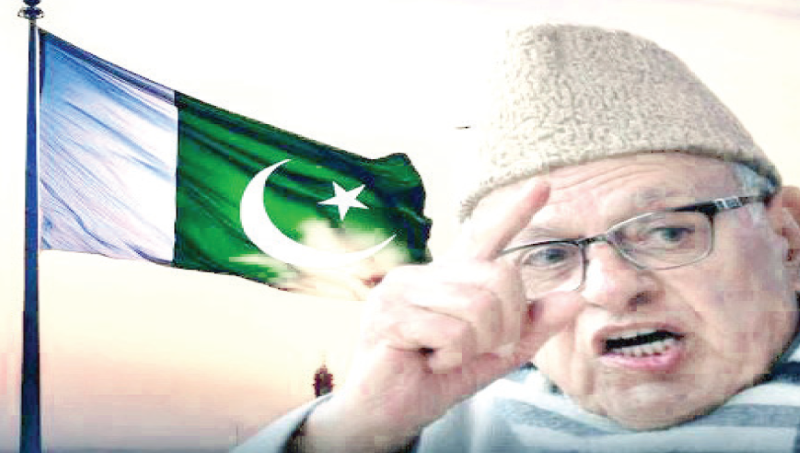
On Saturday, 24 October, at a National Conference workers’ convention in Baramulla, Dr Farooq Abdullah told his audience that Pakistan had, in effect, protected Kashmiris by keeping the Kashmir question alive at international forums. He asked what hope people could place in Delhi, urged them to find the courage to confront it, and warned that their identity could be erased. He also insisted that the people of Jammu and Kashmir had never denied being Indian. The Bharatiya Janata Party answered within hours. Its J&K spokesperson called the remarks “seditious and anti-national” and demanded police action, while the party’s state president suggested that Abdullah should go to Pakistan if he admires it so much. The exchange has already been absorbed into the familiar national pageant of outrage and counter-outrage. The remark deserves a serious answer, and the people best placed to give it are neither television anchors nor party spokespersons. They are Kashmiris themselves, who have answered it for years with their votes, their shutdowns and their daily lives. This article argues that Abdullah’s claim is wrong on the record, costly to the people he says he defends, and best met with facts and democratic confidence rather than demands for arrest.
The Claim Against the Record
The idea of Pakistan as Kashmir’s protector collides with seven decades of evidence. The Valley’s first violent encounter with Pakistan came in October 1947, when tribal raiders supported by Pakistan swept in and ransacked Baramulla, the very district in which Abdullah spoke, before accession to India and the arrival of Indian troops pushed them back. Since the late 1980s, cross-border sponsorship of militancy has killed civilians, driven the Kashmiri Pandit community from its homes, hollowed out the local economy and orphaned a generation. Kashmiri Muslims, the majority community, bore a heavy share of that loss. Raising a dispute at international forums is also not the same as protecting the people who live inside it. Diplomatic speeches have built no clinic and created no job in the Valley.
What they have helped sustain is the label of a conflict zone, which deters investors and frightens tourists. The BJP’s spokesperson was on solid ground when he said that Pakistan has given Kashmir little beyond terrorism and bloodshed, and Ghulam Nabi Azad, a former chief minister who knows the region’s politics intimately, called Abdullah’s statement completely incorrect and named Pakistan as an enemy of India and of the people of J&K alike. Abdullah’s own record supplies the sharpest rebuttal. Exactly one year ago, after an attack near Gulmarg killed two soldiers and two porters, he asked publicly whether Pakistan was taking revenge on Kashmiris for not having joined it, and begged it to stop its “cheap machinations” so that people could get on with their work. A leader who asked that question in 2024 cannot credibly present Pakistan as a guardian in 2026. One of the two statements has to be wrong, and the earlier one is far better supported by events.
What Kashmiris Have Already Said
No one can speak for every Kashmiri, and any writer who claims to is selling a slogan. But behaviour is evidence, and the pattern of Kashmiri behaviour in recent years points firmly away from Abdullah’s framing. On 23 April 2025, the day after the Pahalgam massacre, shops, fuel stations and schools across the Valley shut in a bandh against terrorism. Reports described it as the first Valley-wide shutdown against a terror attack in some thirty-five years. The National Conference, the PDP, the People’s Conference and the Apni Party backed it, as did the religious coalition headed by Mirwaiz Umar Farooq. The ballot box tells the same story. In the 2024 assembly elections, the first since 2019, the Election Commission reported overall turnout of 63.88 per cent, with the opening phase the highest in the Union Territory in thirty-five years, in a Valley where boycott calls once emptied polling booths. People who queue to vote in an Indian constitutional election are asking Delhi for governance, jobs and statehood. They are not asking Islamabad for protection. Kashmiris have grievances and voice them vigorously inside the constitutional framework.
The Price Kashmiris Pay
Remarks like Abdullah’s are not harmless, because their cost is not borne by the speaker. Consider the Kashmiri shawl seller who travels each winter to towns across northern India with merchandise rather than a manifesto. The Indian Express reported in January 2026 that two shawl-selling brothers were assaulted in Dehradun, one suffering a head injury, and Al Jazeera documented in February how a run of attacks and intimidation had made vendors rethink where they can safely work. Nothing links Abdullah’s remark to any specific attack, and it would be dishonest to pretend otherwise. But the mechanism is plain. Each time a prominent Kashmiri leader appears to validate Pakistan’s claims, he hands a ready justification to people who treat every Kashmiri as a suspect. The damage runs in other directions too.
Pakistani diplomacy thrives on quotations from inside Kashmir, and an endorsement from a senior Kashmiri politician is propaganda gold. It undermines the many Kashmiris who spent years persuading fellow Indians that they are partners rather than problems. It also works against the restoration of statehood that Abdullah’s own party demands, because statehood rests on trust between Srinagar and Delhi, and provocative rhetoric spends that trust faster than any ministry can rebuild it. A leader serious about regaining statehood should be building the case that Kashmir’s future is secure within India, not that its defender sits in Islamabad.
Outrage Is Not an Answer
The BJP is entitled to condemn the remark, and its factual rebuttal on Pakistan’s record is strong. But parts of its response help Abdullah more than they hurt him. A demand that a senior politician be booked for sedition over a political opinion, however mistaken, invites a legal test that Indian courts have long set high: since the Kedar Nath Singh judgment of 1962, the Supreme Court has confined the offence to speech that incites violence or public disorder. A claim about the effect of Pakistan’s diplomacy is not incitement. A failed case, or an arrest abandoned later, would turn a man contradicted by his own earlier words into a martyr. The suggestion that he should go to Pakistan is worse.
It tells every Kashmiri who loves India and criticises its government, and there are millions, that dissent is disloyalty. That is exactly the raw material of the collective suspicion that endangers shawl sellers. The most effective pro-India reply is confident rather than vengeful: set the record against the claim and let Kashmiris answer for themselves. Equally, Abdullah’s allegations that mosques and homes are being demolished and Muslims oppressed in BJP-ruled states call for specific facts, not silence. Where the allegations are exaggerated, show it. Where courts or evidence reveal wrongdoing, remedy it. A democracy grows stronger by answering its critics, not by declining to hear them.
Why the Cycle Keeps Repeating
Why do such rows recur? A structural answer is more useful than a conspiratorial one, and nothing here requires assuming any secret understanding between rivals. Electoral politics rewards drama. A provocative statement wins a leader attention and consolidates a base that feels under siege. A thunderous condemnation does the same for the other side, and each reaction strengthens the narrative on which the other depends. Meanwhile the slower questions are crowded out: the road to statehood, jobs for graduates, the quality of local governance. The pattern breaks only when audiences reward substance. Editors can decline to lead with the shouting match. Readers can ask what a statement changes for a Kashmiri farmer, student or trader. And intellectuals can name the cycle whenever they see it.
The False Choice Kashmiris Are Offered
Much of the noise around Kashmir depends on a binary: that a Kashmiri must either echo Pakistan’s narrative or recite the government’s. Most Kashmiris stand at neither pole. They carry different memories, hold different views on autonomy and statehood, and share a weariness with being treated as symbols. Abdullah’s remark pushes them towards one pole, and the demand that he be sent across the border pushes them towards the other. Yet one can condemn terrorism and still demand accountability from Delhi. One can reject Pakistan’s record without surrendering concern for Kashmiri rights. One can defend India’s constitutional order while insisting that every citizen is treated equally, whatever their region or religion. These are not contradictions. They are the ordinary politics of a mature democracy.
A Duty for India’s Intellectuals
Writers, academics, lawyers and journalists face two temptations. One is to treat every Kashmiri statement as proof of disloyalty and join the chorus. The other is to romanticise any criticism of Delhi as courage and excuse the indefensible. The first duty is to hold leaders to account for what they can deliver. The National Conference won a public mandate in 2024 on promises of jobs, dignity and statehood. The questions that matter are whether those promises are being met: a credible roadmap for restoring statehood, secure employment for young people, and protection for Kashmiris who face discrimination elsewhere in India.
A fiery speech about Pakistan is a convenient way to avoid them, and so is a fiery demand for sedition charges. The second duty belongs to the media and to scholars, who must establish what was actually said before judging it, and who should not let a Kashmiri student or trader be reinterpreted nightly as a stand-in for a politician’s speech. The third is to say plainly that citizenship is not a reward for agreeing with a government or for performing patriotism on demand. Kashmiris who closed their shops against terror and queued to vote have already shown loyalty to peace and to the Constitution. India’s side of that bargain is safety, opportunity and respect, wherever they travel.
Conclusion: The Answer Is Already in the Valley
The row over Farooq Abdullah’s remark will fade, as such rows do. What should endure is a clearer understanding of where Kashmir’s true voice lies. It lies in the shuttered shops of Srinagar on 23 April 2025, in the long queues of 2024, and in the quiet ambition of young Kashmiris who want work and peace more than they want victory in an argument between politicians. India’s intellectuals can honour that voice by declining to be recruited into either camp’s outrage. Abdullah should be answered with evidence, the BJP with a reminder that confidence beats vengeance, and every Kashmiri should be defended from collective blame. A pro-India position worthy of the name is not one that demands loyalty tests from citizens. It is one that earns their trust and keeps it.
References
1. The Indian Express, “Shawl sellers from Kashmir asked where they’re from, assaulted in Dehradun,” January 2026.
2. The Hindu, coverage of Farooq Abdullah’s Baramulla remarks on Pakistan and the BJP’s response.
3. The Times of India, coverage of Farooq Abdullah’s Baramulla remarks on Pakistan and the BJP’s response.
4. PTI / ThePrint, “Farooq Abdullah’s statement regarding Pakistani claims on Kashmir incorrect: Ghulam Nabi Azad.”
(Author, a Kashmiri sociologist, is a writer, -researcher, and columnist. His research Interests Include Kashmir Affairs, South Asian Politics, Human Rights, and Public Policy issues.)




[[comment.comment_text]]