A Reflection on Regional Dynamics and National Ambitions

 2 years, 7 months ago
Amit Pandey

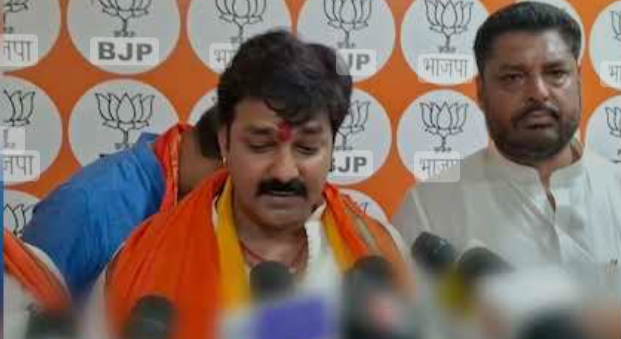
Asansol, a city in West Bengal, has recently witnessed a significant shift in its political landscape with the withdrawal of popular Bhojpuri singer and actor Pawan Singh from the Bharatiya Janata Party (BJP). This unexpected move has not only raised questions about the party's internal dynamics and strategy but also reflects the intricate dance of political allegiances and aspirations. Singh's withdrawal highlights the absence of a strong candidate who can challenge Satrughana Singha, also known as Bihari Babu, a prominent name in saffron politics.
The BJP's decision to field Pawan Singh as a candidate was seen as an attempt to capitalize on his popularity. However, Singh's exit has put the party in an uncomfortable position and has highlighted the challenges it faces in maintaining its stronghold. Many aspiring Bhojpuri candidates have joined the BJP, but Singh's refusal raises questions about his motives for denying the party's candidature.
The BJP has been striving to replicate the success of film stars in South Indian politics, where actors like MGR, Jayalalithaa, Vijaykanth, Kamal Hassan, and finally, Thala Pati Vijay have made significant inroads. These actors have dedicated their time, money, and thought to uplift South India as a prosperous region of the country. However, the comparison with Bhojpuri actors raises questions about their contributions to society and culture. While South Indian actors have a history of philanthropy and societal engagement, the same level of involvement does not seem evident with some Bhojpuri stars.
Asansol, being an industrial city, has a rich industrial and mining landscape. The city's population is a diverse mix of Bengali locals and migrants from various parts of India, contributing to its vibrant cultural fabric. Historically, the Congress party had a significant presence in Asansol, but over time, the Left parties gained prominence. The BJP made substantial progress in 2014, winning the Lok Sabha seat as part of a broader national wave. However, the party faced defeat in a subsequent by-election, attributed to various local grievances and political dynamics. Babul Supriyo, who had won the seat for BJP in 2014 and 2019, expressed dissatisfaction with the party, citing unrecognized talent and internal conflicts as reasons for his departure. The MP who won the Asansol seat in 1999, 2004, and 2009 belonged to the Communist Party of India (Marxist), reflecting the Left's historical strength in the region.
The debate over the status of the Bhojpuri language and its cultural implications adds another layer to this political saga. The demand for recognizing Bhojpuri as an eighth minority language and the push for educational reforms to include it reflect a broader struggle for linguistic and cultural recognition.
The BJP's approach to politics, which often involves the induction of outsiders with mass appeal, is a double-edged sword. While it can bring fresh faces and energy to the party, it also risks alienating the party's core cadre and creating a disconnect with the grassroots level of politics. The unfolding events in Asansol and the BJP's broader political manoeuvres illustrate a party at a crossroads. Balancing regional aspirations with national ambitions and cultural integrity with political pragmatism remains a formidable challenge. As the BJP looks to the future, it must navigate these complexities to maintain its relevance and resonance with the diverse tapestry of Indian society.
The political narrative in Asansol is a microcosm of the larger shifts and currents shaping Indian politics. It underscores the significance of cultural identity, regional representation, and the strategic use of popular figures in the quest for political power. As the BJP recalibrates its approach, the outcomes of such strategies will be closely watched and will undoubtedly influence the contours of Indian democracy.
The withdrawal of Pawan Singh from the BJP in Asansol reflects the intricate regional dynamics and national ambitions at play in Indian politics. It raises questions about the party's strategy and internal dynamics while highlighting the challenges it faces in maintaining its stronghold. The BJP's attempt to replicate the success of film stars in South Indian politics also brings into focus the contributions and societal engagements of Bhojpuri actors. Asansol's political landscape serves as a microcosm of the larger political shifts in India, emphasizing the importance of cultural identity, regional representation, and the strategic use of popular figures. The BJP must navigate these complexities to maintain its relevance and resonance with the diverse tapestry of Indian society.




[[comment.comment_text]]