One Ghat, One Sun, One Society
 57 minutes ago
Chhath Mahaparv holds a special place among India’s innumerable festivities. It is not merely a regional custom or a ritual dedicated to a deity. Originating in Bihar and Purvanchal, this celebration has become an expression of India’s wider cultural consciousness, reflecting the values of equality, social harmony, and collective belonging.
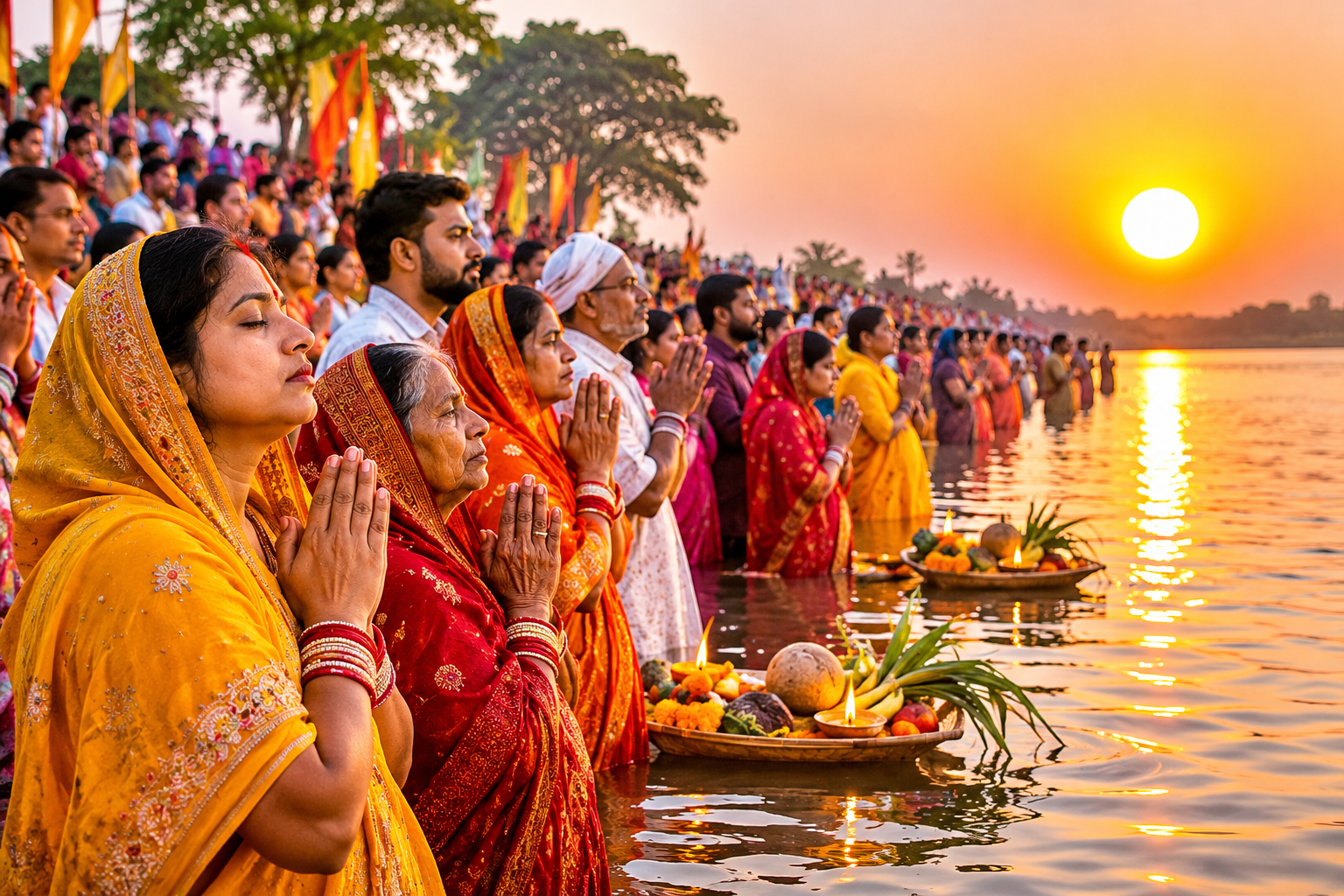
At its heart, Chhath is both an act of devotion to the Sun and a celebration of humanity. Standing in water and offering prayers to the rising and setting Sun is a sacred ritual, but it also carries a powerful social message. The Chhath Ghat symbolises an India where people come together, leaving behind the distinctions of caste, class, wealth, and status.
This is the democratic spirit of faith, where devotion is measured not by social standing but by sincerity, discipline, and commitment. The Sun belongs to no particular caste or community, and every hand offering arghya deserves equal respect.
There is neither high nor low at the Chhath Ghat. Mothers of migrant workers, daughters of farmers, and women from affluent families gather along the same riverbank. They carry the same sacred water, diya, and soop, and offer prayers to the same Sun. Its golden rays illuminate every face without distinction. Few celebrations offer such a striking picture of social togetherness.
The Sun God, the only deity visible to the human eye, occupies the centre of Chhath worship. Perhaps this is why the festival conveys such a profound understanding of equality. The Sun does not distinguish between palaces and humble huts; its light reaches every home and every human being. Nature, too, nourishes all without discrimination, reminding us that humanity shares a common existence.
As millions gather in rivers, ponds, and village reservoirs, social identities appear to dissolve. People from cities and villages, rich and poor, stand together in the same waters. There are no privileged spaces or separate arrangements of worship. Everyone looks towards the same horizon, folds their hands, and waits for the same divine light.
In that moment, the Chhath Ghat becomes more than a place of religious observance. It becomes a living expression of social equality. Migrant workers, farmers, labourers, doctors, traders, and professionals stand side by side. Their occupations and economic positions become secondary to their shared devotion. The purity of faith and the sincerity of the heart matter more than the colour of one’s clothing or the privileges one enjoys in everyday life.
Chhath’s spiritual discipline also reminds us that the essence of religion lies not merely in scriptures and ceremonies but in human conduct. Genuine worship should strengthen compassion, respect, and a sense of responsibility towards others. It is a rare religious experience in which devotion to God naturally becomes an expression of solidarity with society.
Women occupy a central place in this celebration. Through their fasting, discipline, and devotion, they become custodians of a living cultural tradition. Their commitment goes beyond personal prayer, embracing the well-being of families and communities. The Chhath observance is therefore not simply an individual religious undertaking; it is a collective expression of hope, sacrifice, and concern for others.
The multitude gathered along riverbanks is perhaps Chhath’s most picturesque sight. The same water receives everyone’s offering, and the same sunlight falls upon every worshipper. This shared experience gives the festival its extraordinary social character. The Chhath Ghat can be described as a social parliament without political leaders, where the earth becomes the platform and folk songs provide the collective voice.
Indian society has historically been divided by caste and class. Yet Chhath creates a space where these distinctions become less visible. Dalits and Brahmins, farmers and traders, workers and professionals offer arghya to the same Sun. There are no separate boats or designated lines of privilege in the spiritual experience itself. This quiet coming together represents a deeply rooted social transformation, achieved not through political slogans but through shared cultural practice.
At a time when religious celebrations elsewhere are increasingly vulnerable to spectacle and commercialisation, Chhath retains a remarkable simplicity. Its message of equality is experienced rather than proclaimed. Its folk songs express affection, longing, hope, and collective vulnerability. When people sing together, their voices transcend social divisions and connect generations through a shared cultural inheritance.
Songs such as “Ketana ke Dinwa Bache He Chhathi Maiya” and “Uga Ho Suruj Dev” are more than expressions of devotion. They carry the emotions of mothers, daughters, husbands, neighbours, and entire communities. They reflect the anxieties and aspirations of ordinary people, giving voice to a common humanity that exists beyond social and economic boundaries.
This shared cultural experience also explains why Chhath has such a powerful emotional connection with migration. Every year, the festival draws millions of people back to their ancestral villages, ponds, and riverbanks. Even those who have spent years in metropolitan cities or settled far away make an effort to return home. For migrant workers, in particular, Chhath is not simply a religious obligation; it is an emotional homecoming and a reaffirmation of their roots.
The younger generation, too, often takes time away from work and urban life to participate in the celebration. This return demonstrates that home is not merely a building of bricks and walls. It is a community shaped by shared memories, traditions, relationships, and a sense of belonging. Chhath renews these connections and reminds people that cultural identity is sustained through collective participation.
The festival also carries an important ecological message. Its worship revolves around the Sun, rivers, ponds, water, and the natural environment. Air, water, and sunlight are essential to every living being, irrespective of wealth or social position. Chhath therefore reinforces the idea that harmony among human beings cannot be separated from harmony with nature.
The celebration invites us to ask a fundamental question: if nature does not discriminate, why should society? The river gives water to everyone, the Sun provides light to everyone, and the earth sustains all forms of life. By bringing people together in direct contact with these elements, Chhath reminds us of our shared responsibility to protect the environment that sustains us.
Its message is particularly relevant today, when social divisions, economic inequalities, and environmental degradation threaten collective well-being. Faith becomes meaningful when it inspires people to respect one another and recognise their common responsibilities. Chhath demonstrates how a religious tradition can become a powerful instrument of social cohesion without losing its spiritual character.
The festival also reminds us that social harmony cannot be achieved through legislation and political declarations alone. It must be cultivated through everyday experiences of mutual respect and shared participation. At the Chhath Ghat, equality is not an abstract constitutional principle; it becomes a visible and lived experience.
As the Sun rises over the river, millions of hands offer arghya in a moment of collective devotion. The boundaries of caste, class, and status seem to recede, replaced by a common identity—that of a devotee looking towards the same Sun with folded hands and an open heart.
Chhath is therefore much more than an act of sun worship. It is a celebration of the social light that shines within every human being. Its enduring message is that humanity shares one earth, one natural environment, and one common destiny.
One ghat, one Sun, and one society: this is the profound idea that makes Chhath Mahaparv one of India’s most beautiful expressions of faith, equality, and human solidarity.







[[comment.comment_text]]