The Real Battle Is for Fair Examination
 2 months, 3 weeks ago
History shows that student movements have often been among the most powerful catalysts for democratic reform. From demanding educational reforms to challenging corruption and institutional failures, students have repeatedly compelled governments to become more accountable. Yet history also teaches another lesson: the greatest strength of any student movement is not the size of its crowds, but the moral legitimacy of its cause. The moment that legitimacy is diluted, the movement itself begins to lose its persuasive force.
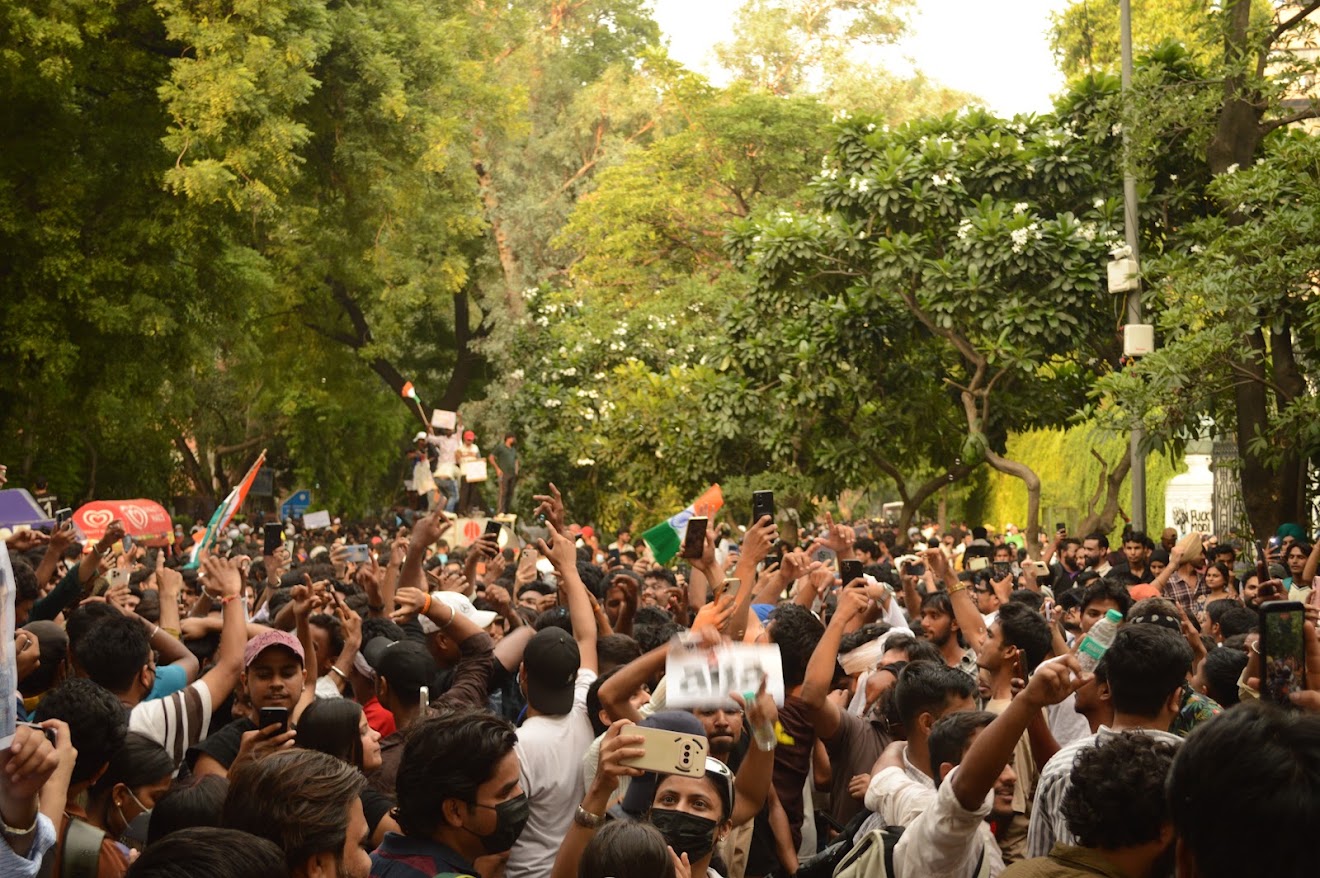
The alleged leak of the National Eligibility-cum-Entrance Test (NEET) question paper understandably triggered outrage across India. For millions of aspirants, the controversy was not merely about an examination; it was about years of relentless preparation, financial sacrifice by families, and dreams built around merit and fair competition. In such circumstances, demanding transparency, accountability and structural reforms in the examination system was not only justified but essential. Peaceful student protests, after all, are a legitimate expression of democratic rights.
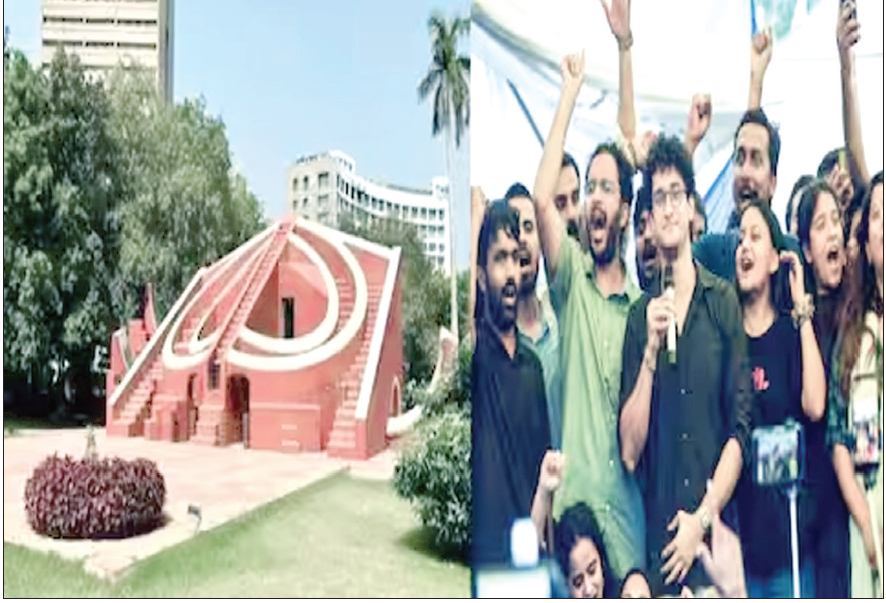
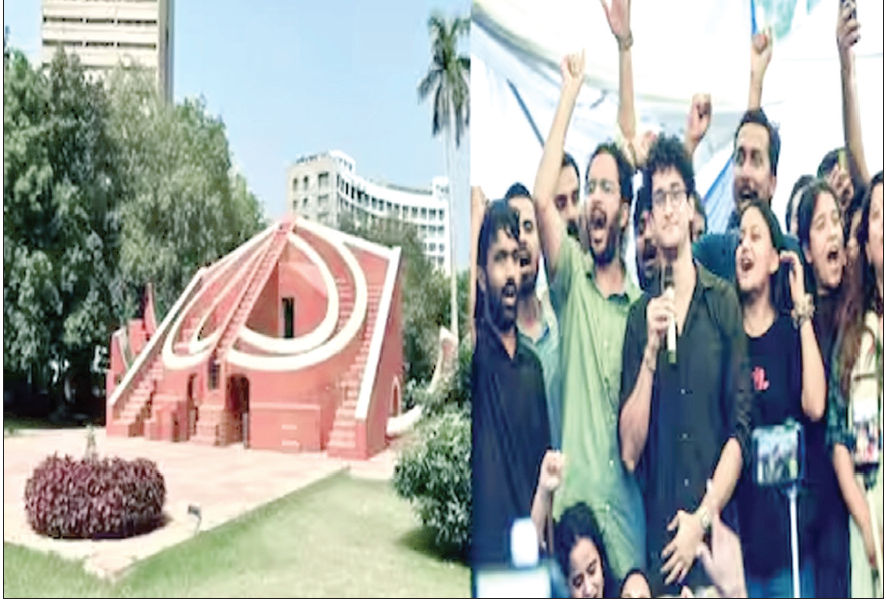
However, every public movement eventually faces a defining test: can it remain focused on its stated objective, or does it become a vehicle for broader political and ideological agendas? The developments surrounding the recent protests at Delhi's Jantar Mantar have brought precisely this question into public debate.
Over the past several days, numerous videos, social media posts and public discussions have claimed that slogans unrelated to NEET, examination reforms or educational accountability were raised during the demonstrations. Some reports allege that slogans targeted the Rashtriya Swayamsevak Sangh (RSS), Hindu beliefs and religious symbols, while others referred to broader political and ideological issues. These claims require independent verification, and no definitive conclusions should be drawn without credible evidence. Nevertheless, if such slogans were indeed raised, they would represent a significant departure from the movement's declared objective.
The issue is not merely about controversial slogans. It is about whether a movement launched to demand educational justice should gradually evolve into a platform for ideological confrontation. Once the public discourse shifts from examination reforms to political rhetoric, religious controversies or identity-based conflicts, the original issue inevitably begins to fade into the background. The debate ceases to be about securing fair examinations and instead revolves around who controls the stage and what messages dominate the protest.
Questions have also emerged regarding the visible participation of political parties, farmer unions, women's organisations and various ideological groups. In any democracy, citizens and organisations are free to support public causes. Support itself is not problematic. The concern arises when support begins to shape the movement's agenda rather than merely strengthening its voice. A student movement derives its credibility from its independence. If it increasingly appears to reflect the priorities of political organisations rather than students themselves, public confidence is likely to weaken.
Social media has also carried unverified claims that demonstrators received food deliveries and other assistance from individuals outside India, while certain accounts from neighbouring countries allegedly encouraged the protests online. Such allegations should neither be accepted nor rejected without proper investigation. If there are credible concerns regarding external influence, they should be examined impartially by the appropriate authorities. Transparency ultimately strengthens, rather than weakens, any democratic movement.
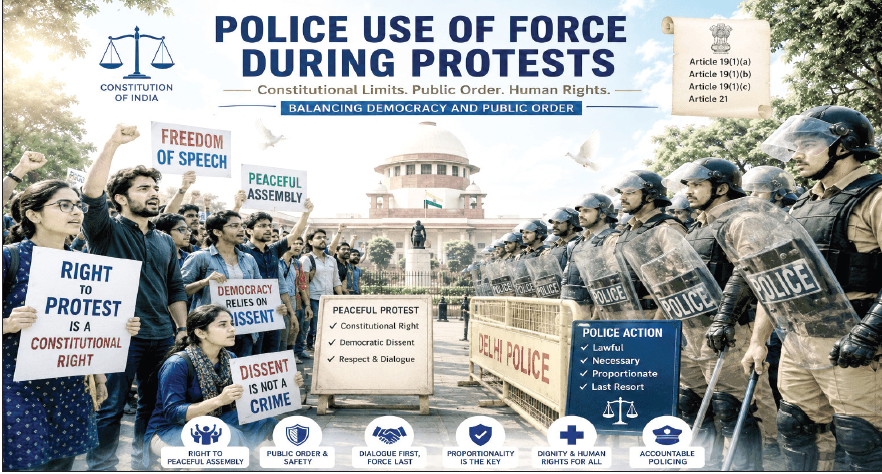
Equally concerning are allegations of misconduct during the demonstrations, including reported harassment of journalists, damage to public property and disruption to ordinary citizens. The right to protest is a constitutional guarantee, but that right carries corresponding responsibilities. Violence, intimidation and destruction of public assets cannot be justified in the name of democratic dissent. Public sympathy for any movement depends as much on its methods as on its demands.
Criticising the government is an integral part of any healthy democracy. If serious deficiencies exist within the examination system, governments and public institutions must be held accountable. However, there is an important distinction between demanding institutional reform and transforming a student movement into a broader political campaign. The central objective should remain educational reform—not political polarisation.
At the same time, fairness demands another important qualification. It would be inappropriate to judge an entire movement solely on the basis of the alleged conduct of some participants. If objectionable slogans were raised or unacceptable incidents occurred, responsibility should rest with those directly involved, following an impartial investigation. Equally, the organisers bear responsibility for clearly articulating the movement's objectives and distancing themselves from activities that contradict those objectives. Democratic movements preserve their credibility not only through protest but also through discipline, accountability and self-correction.
Ultimately, this movement concerns neither the fortunes of the government nor those of the opposition. It concerns the future of millions of young Indians who simply seek a fair opportunity to compete on merit. Their primary concern is not which political organisation supports the protests or which ideological group joins the demonstrations. Their concern is whether years of hard work will be undermined by examination leaks, administrative failures or institutional weaknesses.
History has consistently honoured those movements that remained faithful to their original purpose. They succeeded not because they raised the loudest slogans but because they convinced society that their struggle was rooted in the public interest rather than partisan politics. Their moral authority became their greatest strength.
The same standard applies today. If the student movement succeeds in keeping the focus on transparent examinations, institutional accountability, secure testing mechanisms and meaningful educational reform, it has the potential to strengthen India's democratic institutions. But if the aspirations of millions of students become overshadowed by ideological battles, partisan politics and divisive rhetoric, the greatest loss will not belong to any government or opposition party. It will belong to the very students whose future inspired the movement in the first place. And for any democracy, there can be few failures more consequential than allowing the pursuit of educational justice to be eclipsed by political noise.





[[comment.comment_text]]