Are We Educated or Just Literate?
 an hour ago
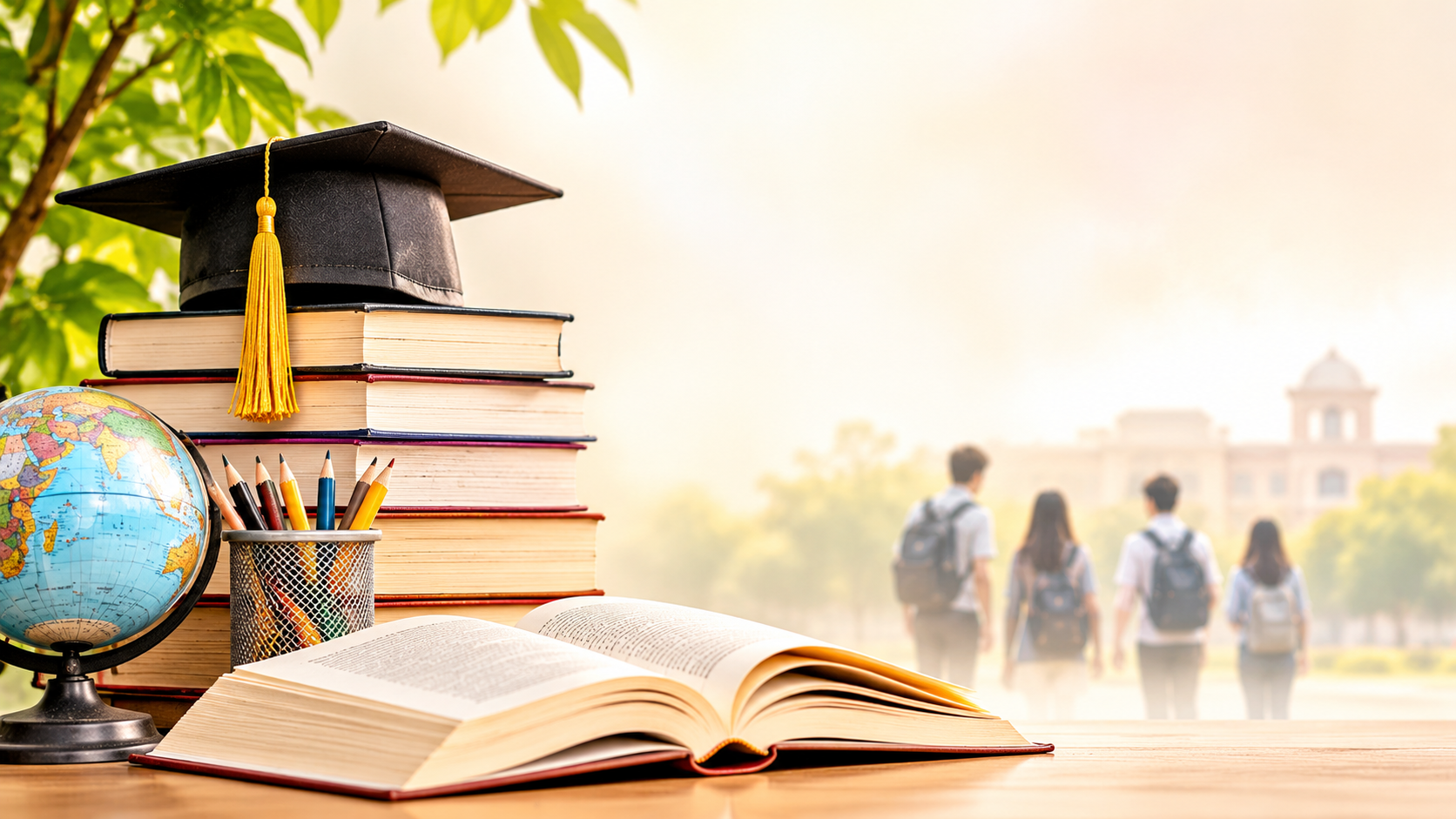
Education is one of the necessities of human life, just like food, shelter and money. Every individual has the right to education, irrespective of gender, age or economic background. An educated society plays an important role in the development of a nation. For a country to progress, it needs educated, skilled and responsible citizens who can contribute to different fields.
Every year, 11 November is celebrated as National Education Day in India. The day marks the birth anniversary of Maulana Abul Kalam Azad, India's first Minister of Education. His contribution to the development of education in the country is remembered on this occasion.
When we talk about education, we should understand that it is different from literacy. Literacy means having the ability to read and write, while education teaches us how to understand things, make decisions and behave in different situations. Today, we are living in the 21st century, where information and knowledge are available through different sources. Schools, colleges, universities and digital platforms have made learning easier than before. However, the question is whether we are using this knowledge in our daily lives.
When we talk about India’s development since independence, we find that there has been quite an impressive rise in the level of literacy. When we look at the data on literacy from the 1951 Census, which was the first Census conducted after the country attained its independence, the total level of literacy in India was 18.33%,while female literacy was just 8.86%. The total literacy level has increased to 74.04%, while female literacy has risen to 65.46%, according to the 2011 Census figures. The female literacy has risen to 74.6% as per PLFS 2023-24, while the total literacy level is 81.1% as per PLFS 2025. Several changes have been brought into the education sector as well over time.
During British Rule, Macaulay's Minute on Education was introduced in 1835. After that, the Sargent Report of 1944 provided a model of development in education. Post-independence, the University Education Commission (1948-49) led by Dr. S. Radhakrishnan, emphasized higher education. This was then followed by the Secondary Education Commission (1952-53), also called the MudaliarCommission.
The first National Policy on Education of India was implemented in 1968. This policy emphasized the need for improving education and increasing access to education. The second National Policy on Education came into being in 1986. This policy sought to decrease disparity in education among various parts of society and geographical locations. It also brought in Operation Blackboard in order to improve the infrastructure of primary schools and child-centric education.
In 1992, the Programme of Action reviewed the policy of 1986 and brought about some changes. In 2000, NCERT brought out the National Curriculum Framework to direct school education. In 2001, Sarva Shiksha Abhiyan was started with the objective of providing elementary education to all children.
In 2002, another milestone was achieved with the help of the 86th Constitutional Amendment, through which Article 21-A was added. Through it, free and compulsory education became a fundamental right for all children aged between 6 to 14 years old. In 2005, the National Curriculum Framework was launched. In 2009, the Right to Education Act was passed, and the same act was enforced in 2010. Finally, in 2020, the National Education Policy led to certain reforms in the system of education.
From these developments, we can understand that the education system has changed considerably. New subjects, better facilities, digital classrooms, online learning and different skill-based programmes have opened more opportunities for students. The way children learn today is quite different from what it was a few decades ago.
But despite all these improvements, one question still comes to mind: Are we applying what we learn in our real lives?
We study different subjects in schools, colleges and universities. We read about moral values, discipline, equality, respect, cleanliness and our responsibilities towards society. These topics are part of our education from an early age. However, when we look at what is happening around us, we sometimes find a huge difference between what we learn and what we actually practise.
Every day, we come across different news reports about domestic violence, crimes against women, sexual assaults, cyber fraud and other criminal activities. We often discuss these issues and express concern over them. But who is responsible for such incidents? These are individuals from within our own society. Many people involved in such activities may have received formal education and hold different qualifications. This makes us think about whether education has really influenced their thinking and behaviour.
A person may have several degrees and certificates, but that alone cannot make someone educated in the real sense. If education teaches us to respect others, why do we still see disrespect and violence? If we are taught about equality, why do discrimination and harmful practices continue? These are questions we should ask ourselves.
For me, being educated means that my actions should reflect what I have learned. I remember when someone once said to me, "You seem educated." At that moment, I started thinking about the actual meaning of these words. It made me realise that being educated is also about how we speak, how we treat people and how we respond to situations. Our behaviour should reflect our learning.
The same applies to our surroundings and environment. If I consider myself educated, I should also take responsibility for keeping my neighbourhood clean, protecting water resources and caring for the environment. But what do we see around us? People throw garbage on roads, wastewater and sometimes dump waste into streams and rivers. Air pollution, water pollution and improper waste management have become serious concerns in different parts of India and across the world.
We discuss environmental protection in classrooms, read about pollution in books and even organise awareness programmes. Yet, many people do not follow these basic lessons in their daily lives. What is the use of learning about cleanliness if we cannot keep our own surroundings clean? What is the purpose of studying environmental science if we continue to damage the environment through our actions?
This is where we need to understand the difference between having information and using that information properly. Education should be visible in small things, whether it is helping someone, respecting others, following rules, keeping public places clean or taking responsibility for our actions.
Parents, teachers and educational institutions also play an equally significant part in this context. Children learn through books, but they also learn by observing their surroundings. Teachers can tell them about the significance of honesty and discipline; however, their practice becomes more important for children when they observe it in their daily lives. Likewise, parents can teach their children about respect and responsibility from an early age.
On the occasion of National Education Day, while paying tribute to Maulana Abul Kalam Azad, we should also take into account our responsibilities. We have achieved a lot in terms of literacy and educational facilities. More and more children are going to school, and more girls are becoming educated. Moreover, the availability of information through digital media is easier now.
Nevertheless, our development must also manifest itself in our society. There must be an improvement in the way we relate to each other, the way we conserve our environment, and how we discharge our obligations.
Education must make us better human beings. It must teach us about our obligations to our families, society, environment, and country. The true worth of education will become apparent when we apply our education in practice.
Being literate means knowing how to read and write, but being educated means understanding how to live, how to behave, and how to make a positive difference in the lives of others.
(The Author is a writer, social educator, and researcher from Baramulla, and holds a master’s in Gender Studies and a BED.)

[[comment.comment_text]]