We Keep Talking About Unity, But Do We Actually Live It?

 5 months, 2 weeks ago
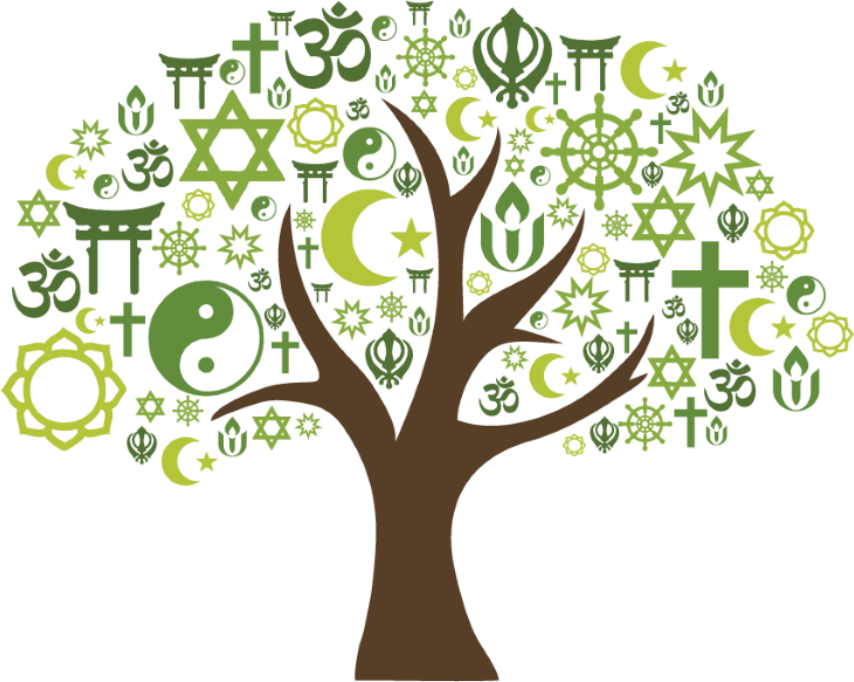
We often talk about unity these days as if it is something we have completely lost and now need to rebuild from zero. But that itself feels like an exaggeration. The truth is, unity did exist in everyday life for a long time. People did not wake up every morning thinking about identity. They simply lived together, with differences, without turning those differences into constant conflict. This does not mean everything was perfect. It never was. There were disagreements, tensions, and even conflicts at times. But those differences did not define everything. They did not consume public life the way they seem to today. Somewhere along the way, something changed in how we started looking at each other.
If you look back, especially at times of larger crisis, you see something interesting. People who otherwise had little in common found ways to stand together. That tells us unity was not artificial. It was already there, just not always visible. It surfaced when it mattered. At the same time, it would be too easy to say that all divisions came from outside. That is not entirely honest. Differences existed within society too. But what has clearly changed is the intensity of those differences. They have become sharper, more rigid, and far more political than they used to be. Earlier, diversity felt like a part of life. Now, it often feels like a boundary. That is a big shift. When people begin to see each other primarily through labels, everything else becomes secondary. Relationships become conditional, and trust starts to weaken. And once trust weakens, even small issues begin to look serious. Things that would have been ignored or adjusted earlier now become points of confrontation. It is not always about the issue itself—it is about the lack of comfort between people.
We also tend to oversimplify history to suit present arguments. There is this idea that everything would have naturally fallen into harmony if certain events had not happened. But history does not work like that. It is messy. There has always been both adjustment and conflict. Pretending otherwise does not help. Still, one point does stand out—no system, no law, no policy can replace social trust. You can create rules, you can enforce order, but you cannot force people to feel connected. That has to come from within society. This is where the idea of fraternity becomes important, though we rarely take it seriously. We speak about equality all the time, but equality without basic human respect feels incomplete. You can give rights on paper, but if people do not see each other as equals in daily life, those rights feel hollow.
Identity adds another layer to this problem. It gives people a sense of belonging, which is important. But when identity becomes too rigid, it starts pushing others away. And when it becomes too broad, people feel it ignores their reality. There is no easy answer here. Philosophically, it sounds nice to say that truth can have many forms and everyone sees things differently. But in real life, accepting that difference is not so easy. It requires patience, and more importantly, it requires restraint—something we seem to be losing. And yet, if you look around, you still find examples of people living together without major issues. Families, neighborhoods, small communities—they manage differences quietly. They do not make everything a debate. That tells us coexistence is still possible. It has not disappeared.
What has grown, however, is mistrust. And that cannot be fixed quickly. It builds slowly, and it takes even longer to reduce. You cannot solve it with speeches or statements. It needs consistent behaviour over time. Dialogue helps, but only when it is genuine. Not when it is done for show, or to prove a point. Real dialogue is uncomfortable. It involves listening, not just waiting to respond. That kind of conversation is rare, but necessary.
Politics, frankly, cannot solve all of this. It works on its own logic—numbers, votes, timing. Expecting it to fix social relationships completely is unrealistic. That responsibility lies with society itself.
At the same time, there has to be clarity on certain things. Violence cannot be justified, no matter the reason. The moment we start explaining it away, we make the situation worse. It damages whatever little trust is left. Maybe the problem is not that unity has vanished. Maybe the problem is that we have stopped practicing it. We talk about it more than we live it. And until those changes, no amount of discussion will really make a difference.
Another problem is that we have started reacting faster than we understand. Earlier, disagreements took time to grow; now they escalate within minutes. A small incident, a statement, even a rumour—everything spreads quickly and hardens opinions before facts settle. This constant state of reaction leaves very little space for patience. And without patience, even well-meaning people begin to see others with suspicion rather than understanding.
Social spaces have also changed. Earlier, interaction was physical and continuous—people met, spoke, argued, and moved on. How much of it happens from a distance, often through screens, where tone is lost and intent is easily misunderstood. It is easier to judge than to engage. This distance makes differences appear sharper than they actually are, because we no longer experience each other as individuals, but as categories.
There is also a growing habit of reducing complex people into single identities. A person is no longer just a neighbour, colleague, or friend—they are first seen through religion, ideology, or background. Once that happens, everything they say or do gets filtered through that label. It becomes difficult to see them beyond it. This narrowing of perception quietly damages relationships that would otherwise remain normal and functional.
At the same time, we underestimate how much everyday behaviour matters. Unity is not built in big moments alone; it is sustained in small ones—in how we speak, how we respond, how we disagree. A society does not break suddenly; it weakens gradually when everyday interactions lose warmth and trust. These are not dramatic changes, but they are powerful.
It is also worth asking whether we are too eager to take positions and too reluctant to listen. Every issue quickly becomes a matter of taking sides. But not everything requires immediate judgment. Sometimes, stepping back and understanding the situation fully is more useful than reacting instantly. That space for reflection seems to be shrinking.
So, restoring trust will not come from one effort or one direction. It will require consistency—from institutions, from communities, and from individuals. It will require a conscious decision to not let every difference turn into distance. That is not easy, and it will take time. But if there is any way forward, it lies in slowly rebuilding the comfort of living together without constantly questioning each other.
(Author is Professor in Comparative Literature and Chairman CNMS Bharat.





[[comment.comment_text]]