Remembering Jim Masselos: Chronicler of Bombay’s Soul

 1 year, 3 months ago
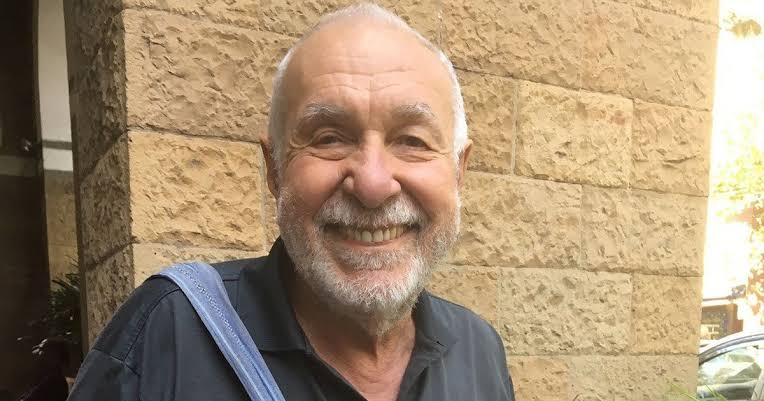
Jim Masselos, the distinguished historian whose work brought the vibrant, complex, and ever-evolving history of Bombay (now Mumbai) to life, passed away on June 25, 2025, in Australia at the age of 86. An honorary reader in history at the School of Philosophical and Historical Inquiry at the University of Sydney, Masselos dedicated over six decades to unraveling the social, cultural, and political fabric of one of India’s most dynamic cities. His scholarship, marked by empathy and intellectual rigour, leaves an indelible legacy in the field of South Asian urban history. In his passing, Mumbai has lost not only a scholar but a friend who saw and celebrated its essence.
A Journey to Bombay: The Beginnings of a Lifelong Passion
Masselos’ fascination with Bombay began in 1961 when he arrived in the city as a young scholar on a Commonwealth Scholarship to study Indian history. Enrolled at the Heras Institute of Indian History and Culture at St. Xavier’s College, University of Bombay, he completed his Ph.D., immersing himself in the city’s rhythms and contradictions. The bustling metropolis, with its diverse communities, vibrant markets, and pulsating crowd events, captivated him. As he wandered through Bombay’s bazaars, neighborhoods, and festivals, Masselos began to see the city not just as a place but as a living archive of human stories, identities, and interactions.
His early experiences, as detailed in his reflective essay in Bombay Before Mumbai: Essays in Honour of Jim Masselos, shaped his understanding of urban space and group identity. From the colorful chaos of Holi and the solemn processions of Ganesh Chaturthi to the charged energy of political demonstrations, Masselos observed how Bombay’s crowds defined its character. These observations became the cornerstone of his academic work, as he explored how space, time, and identity intertwined to create the city’s unique social history.
A Scholar’s Oeuvre: Writing Bombay’s Hidden Histories
Masselos’ scholarship was remarkable for its breadth and depth, traversing the lives of Bombay’s elites and its most marginalized residents with equal care. His seminal works include Indian Nationalism: An History, which examined the evolution of India’s nationalist movement, and Beato’s Delhi: 1857-1997, co-authored with Narayani Gupta, which offered a visual and historical journey through Delhi’s transformation. He also co-edited influential volumes such as India: Creating a Modern Nation and Bombay and Mumbai: The City in Transition, which captured the shifting dynamics of urban India.
His essays and books delved into Bombay’s social history, from its religious festivals like Diwali and Mohurrum to its secular spectacles, such as Yuri Gagarin’s visit to Chaupati Beach in the 1960s. Masselos was particularly drawn to the city’s crowd events, which he saw as microcosms of its social structure. His meticulous analysis of demonstrations, riots, and festivals revealed how collective action shaped Bombay’s identity. For instance, his accounts of the 1969 riots, sparked by protests against politician Morarji Desai, and the devastating 1992–1993 communal riots offered poignant insights into the city’s turbulent moments.
Masselos’ work was not confined to academia. He wrote extensively for newspapers, making his insights accessible to a broader audience. His ability to weave archival research with lived experience—such as his vivid recollections of navigating Bombay’s streets during riots—lent his writing a rare authenticity. His pioneering research opened new perspectives on urban history, inspiring generations of scholars.
Bombay Before Mumbai: A Tribute to a Legacy
In recognition of Masselos’ contributions, 13 scholars came together to honour him with Bombay Before Mumbai: Essays in Honour of Jim Masselos, edited by Prashant Kidambi, Manjiri Kamat, and Rachel Dwyer. Published in 2019, the book explores 13 facets of Bombay’s history that Masselos illuminated, from its colonial past to its modern metamorphosis. The essays reflect his influence in shaping the study of South Asian urban history, particularly his focus on how localities, communities, and crowd events define a city’s character.
The book’s introduction praises Masselos for his “skill and empathy” in bringing Bombay’s hidden histories to life. Whether writing about the city’s elite or its “most humble denizens,” he approached his subjects with curiosity and respect, uncovering stories that might otherwise have been overlooked. His concept of “templates” or “mental maps”—patterns of movement and behavior that city residents follow—offered a novel framework for understanding urban life. This approach, rooted in his observations of Bombay’s neighborhoods and festivals, remains a cornerstone of urban studies.
A Witness to Bombay’s Turbulence
Masselos’ personal experiences in Bombay added a visceral dimension to his scholarship. During the 1969 riots, he found himself stranded amidst burning vehicles and barricades, an episode he recounted with vivid clarity. From his friends’ balcony, he witnessed the city’s skyline punctuated by flames and heard the distant sound of gunshots, a stark reminder of Bombay’s volatility. The 1992–1993 riots, which tore through the city’s social fabric, further deepened his understanding of how communal tensions could fracture urban harmony. These experiences informed his work, grounding his academic inquiries in the lived realities of the city.
His reflections on these events, as shared in Bombay Before Mumbai, highlight his ability to connect personal observation with historical analysis. He saw riots not just as moments of chaos but as windows into the city’s social dynamics, revealing the interplay of identity, space, and power. His accounts of crowd behavior, drawn from both archival records and firsthand encounters, gave voice to individuals and communities often absent from historical narratives.
A Lasting Impact on Urban History
Masselos’ influence extended beyond his publications. As an honorary reader at the University of Sydney, he mentored countless students, encouraging them to explore the intersections of history, culture, and urban life. His work inspired a generation of historians to look beyond elite narratives and focus on the everyday lives of city dwellers. His emphasis on the “social history of urban living” underscored the importance of understanding cities through the lens of their inhabitants’ experiences.
His contributions were recognized globally, with his work cited in academic circles and celebrated in public forums. Masselos was as a bridge between academic and popular history, with his ability to engage readers with vivid storytelling. His collaborations, such as with Naresh Fernandes on Bombay Meri Jaan, further amplified his impact, blending historical rigor with cultural commentary.
A Photographer, Curator and Art Collector
Jim Masselos fell in love with the city of Mumbai (Bombay), the Indian architecture and painting. Motivated by beauty and delight, he collected paintings from the great Mughal and Rajput traditions as well as Company, folk and vernacular art from across India.
Alongside his academic career at the University of Sydney, he made a significant contribution to the scholarship and presentation of Indian art at the New South Wales Art Gallery, including his involvement in the exhibitions 'Divine and Courtly Life in Indian Painting' (1991), 'Dancing to the Flute: Music and Dance in Indian Art' (1997), 'Goddess, Divine Energy' (2006), 'Intimate Encounters: Indian Paintings from Australian Collections' (2008) and 'Indian Empire: Multiple Realities' (2010).
The New South Wales Art Gallery was honoured to hold the Jim Masselos South Asia Archive, acquired in 2011, as well as more than 280 textiles, paintings, prints and photographs donated between 2001 and 2024. Jim’s generous contribution to the Art Gallery’s collection of Indian paintings has made it one of the most significant in the country.
A Friend to Mumbai
In his passing, Mumbai mourns not just a historian but a chronicler who saw its soul. Masselos’ love for the city was evident in his writing, which captured its vibrancy, diversity, and resilience. He understood that Bombay was more than a geographic space—it was a tapestry of human stories, woven together by festivals, protests, and everyday interactions. His work reminds us that cities are living entities, shaped by the people who inhabit them.
As Mumbai continues to grow and transform, Masselos’ scholarship remains a guide for understanding its past and present. His insights into the city’s crowd events, localities, and identities offer a timeless lens through which to view urban life. For scholars, students, and residents alike, his legacy endures in the stories he told and the questions he inspired.
Jim Masselos is survived by his colleagues, students, and the countless readers whose understanding of Bombay was enriched by his work. His passing away marks the end of an era, but his words will continue to illuminate the city he so deeply loved. As he once wrote, “There is so much in Bombay or Mumbai that is worthy of attention.” Through his scholarship, he ensured that this attention would endure.
(Author, a former member of the history faculty at St. Xavier’s College, Mumbai, is a regular EW contributor.)




[[comment.comment_text]]