50 Years Since the Emergency: A Declared Darkness to an Undeclared Dystopia

 1 year, 3 months ago
Looking back at India’s ‘Emergency Era’—and what today’s parallels reveal about democracy, power, and memory
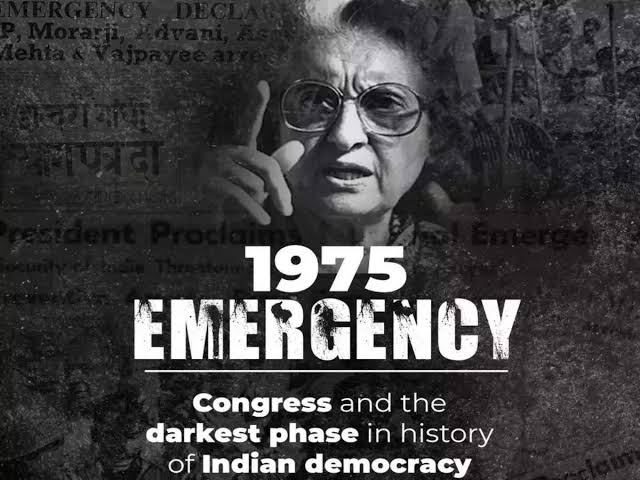
Exactly fifty years ago, on the midnight of June 25, 1975, independent India witnessed its most dramatic democratic collapse when then Prime Minister Indira Gandhi declared a National Emergency. Triggered by the Allahabad High Court’s verdict that invalidated her 1971 Lok Sabha election victory in Indira Nehru Gandhi v. Raj Narain, the Emergency suspended civil liberties, censored the press, jailed political opponents without trial, and concentrated power in the hands of the executive.
Though the Emergency was lifted in March 1977 and democracy was restored, the memory of those 21 months remains seared in the national conscience as a cautionary tale. Today, as the country marks five decades since that infamous proclamation, the Emergency is not only being remembered but politicised, with growing concern that the shadows of 1975 have found fresh forms in the present.
What Happened in 1975?
The political turmoil began with the Allahabad High Court finding Indira Gandhi guilty of electoral malpractices, thus invalidating her election. Facing mounting political opposition, widespread protests led by Jayaprakash Narayan, and potential disqualification from office, Gandhi acted with iron resolve.
The Emergency, under Article 352 of the Constitution, was declared citing “internal disturbance.” This enabled sweeping executive powers. Civil liberties vanished. Newspapers were gagged under pre-censorship rules. The Maintenance of Internal Security Act (MISA) was weaponised to imprison over 100,000 opposition leaders, activists, journalists, and students—often without trial. Among those arrested were Atal Bihari Vajpayee, L.K. Advani, George Fernandes, and hundreds more who resisted the regime.
The 39th Constitutional Amendment placed the Prime Minister’s election above judicial scrutiny, effectively insulating Indira Gandhi from legal accountability. Power was centralized; governance became synonymous with the whims of the Prime Minister’s coterie, particularly her son Sanjay Gandhi, whose coercive population control measures and mass demolitions—such as the infamous Turkman Gate clearance in Delhi—were particularly brutal. Jagmohan, then Delhi’s Lt. Governor and later a minister in the BJP-led NDA, played a significant role in these demolitions.
Post-Emergency Introspection and Reform
Public outrage culminated in the Congress party’s crushing defeat in the 1977 general elections. Indira Gandhi lost her own seat, and the Janata Party formed the government. In retrospect, this peaceful transition reaffirmed the resilience of Indian democracy.
Importantly, the 44th Constitutional Amendment of 1978 sought to correct the systemic loopholes exploited during the Emergency. It made the declaration of future emergencies more accountable—requiring written cabinet advice, periodic parliamentary approvals, and the safeguarding of Articles 20 and 21 (protection of life and liberty).
Subsequent Congress leaders, including Rajiv Gandhi, Dr. Manmohan Singh, and even Rahul Gandhi, have publicly apologised for the Emergency. Indira Gandhi herself expressed regret multiple times between 1977 and 1978.
The Present: A Different, Deeper Crisis?
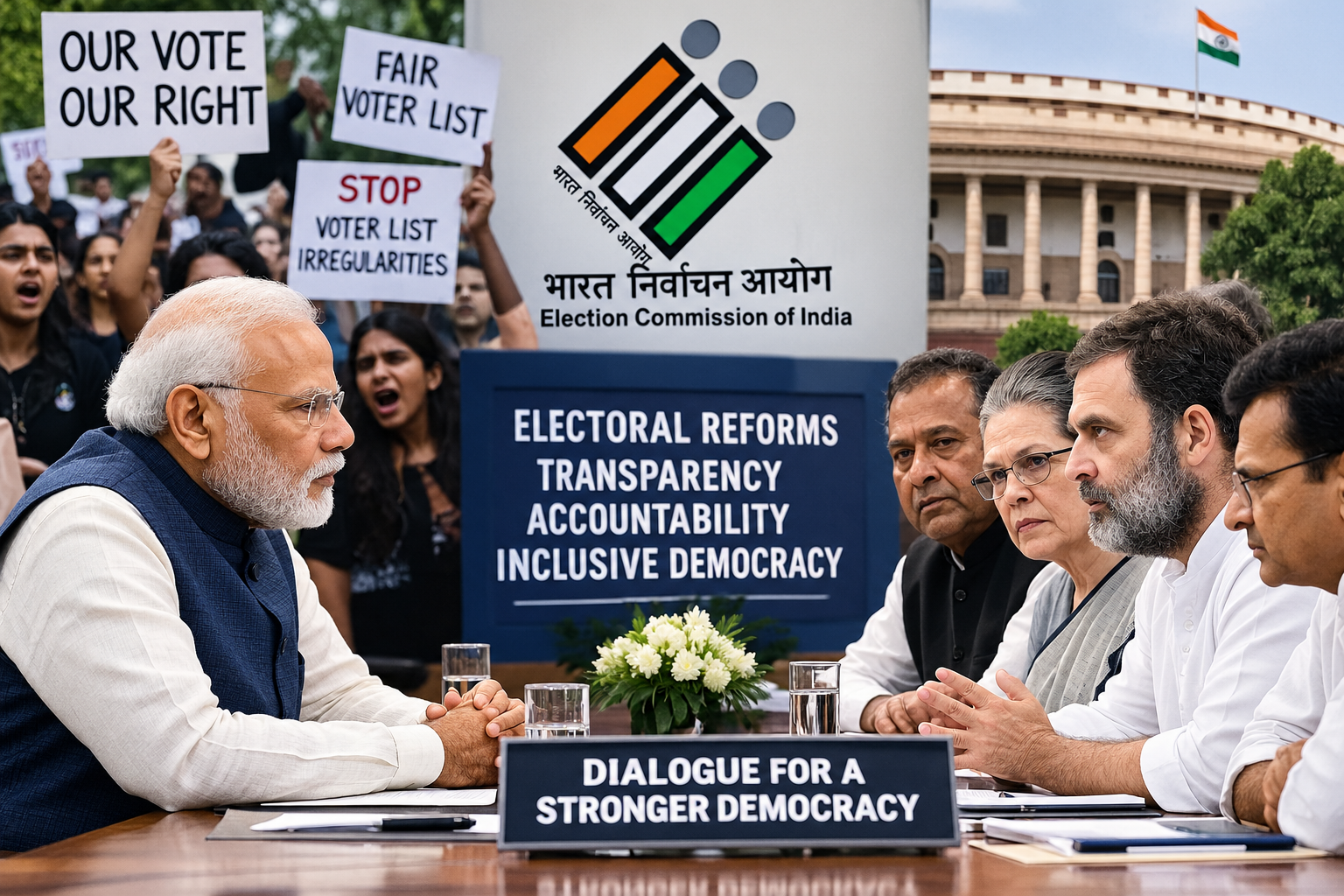
Fast forward to 2025. Prime Minister Narendra Modi and the Bharatiya Janata Party (BJP) have repeatedly invoked the Emergency over the years as a benchmark of authoritarian excess. In the aftermath of the 2024 Lok Sabha elections—where the BJP was reduced to 240 seats and the INDIA bloc came within striking distance at 233—Mr. Modi has again drawn comparisons with 1975, portraying himself as a crusader against tyranny.
But critics suggest that this invocation serves more as a deflection from current democratic backsliding than a genuine historical reflection. “One wrong of the past cannot justify several wrongs of the present,” says a senior observer of Indian politics. “If the Emergency was bad, the present dispensation is worse—in ways more insidious, more systemic.”
Unlike the declared Emergency of 1975–77, the present moment is often described as an undeclared emergency—a steady erosion of democratic institutions, constitutional norms, and civil liberties without an official proclamation.
The ‘Undeclared Emergency’: A Comparative Snapshot
Observers have pointed out striking contrasts and unsettling similarities between the Emergency and the governance of the past decade:
• Civil Liberties & Expression: While the Emergency openly censored the press, today the suppression is more covert—through arrests of journalists, pressure on media houses, digital surveillance, and widespread disinformation. Hate speech proliferates while dissenters face sedition and UAPA charges.
• Religious and Social Violence: During the Emergency, communal riots and targeted killings were largely absent. Since 2014, lynchings of Muslims, attacks on Dalits, and religious vigilantism have become grimly routine. Cow vigilantes roam free; religious extremism thrives under the gaze of the state.
• Majoritarianism vs Constitutionalism: Hindutva ideology has visibly replaced secular democratic norms. From love jihad laws to beef bans and moral policing, majoritarian sentiments often dictate governance. There was no such ideological imposition during the Emergency.
• Judicial Independence: If the judiciary bent under pressure in 1975—infamously evident in the ADM Jabalpur case—it now faces subtler forms of executive influence, from delayed appointments to the stalling of sensitive cases.
• Targeting Intellectuals and Activists: Left-liberal intellectuals, human rights activists, and students face arrests under anti-terror laws. The Bhima Koregaon case, incarceration of voices like Stan Swamy (who died in custody), and the ongoing suppression of dissent mirror the witch-hunts of the 1970s—only this time, without formal legal justification.
• Institutional Decay: Central agencies like the CBI, ED, and IT department are often seen as tools for political vendetta. NGOs have been shut down, foreign funding strangled, and critics branded as “anti-nationals.”
• Public Memory and Disinformation: There was no “WhatsApp University” during the Emergency. Today, social media is weaponised to polarise, manipulate elections, and target dissenters. An entire ecosystem of trolls and digital armies supports the dominant narrative while erasing inconvenient truths.
• Economic and Educational Crises: From the Rafale deal to the Adani stock manipulation allegations, the current regime has faced serious accusations of crony capitalism. Paper leaks in NEET and NET exams have caused nationwide student unrest. There was no such chaos during the Emergency.
The Politics of Memory and Amnesia
The BJP’s present-day vilification of the Emergency serves to discredit the Congress party and consolidate a victimhood narrative. But as facts unfold, it appears that many of those crying foul today have dubious Emergency-era records themselves. Notably, RSS chief Balasaheb Deoras reportedly wrote letters supporting Indira Gandhi’s 20-Point Programme to lift the RSS ban—raising questions about the organisation’s actual resistance during those times.
Even Dr. Subramanian Swamy, a vocal critic of the Congress, has said that Mr. Modi, then a 24-year-old RSS pracharak, had “no role to play during the Emergency.”
A Democratic Reckoning
If 1975 represented the rise of an “undesirable” emergency, 2014 has seen the advent of a more “obnoxious reign of terror,” argue political commentators. “The declared Emergency was brutal but brief. The undeclared Emergency is enduring—and dangerously normalised,” one senior columnist noted.
History, if it is to be meaningful, must not be reduced to a convenient cudgel. If the Emergency is to be remembered as a constitutional aberration, so too must the current threats to democracy be confronted—without equivocation, denial, or deflection.
As the Republic marks 50 years since that midnight knock, the bigger question is: Do we still hear the alarm bells, or have we grown too accustomed to the silence?
(Author, a former member of the history faculty at St. Xavier’s College, Mumbai, is a regular EW columnist. Views are personal.)

[[comment.comment_text]]